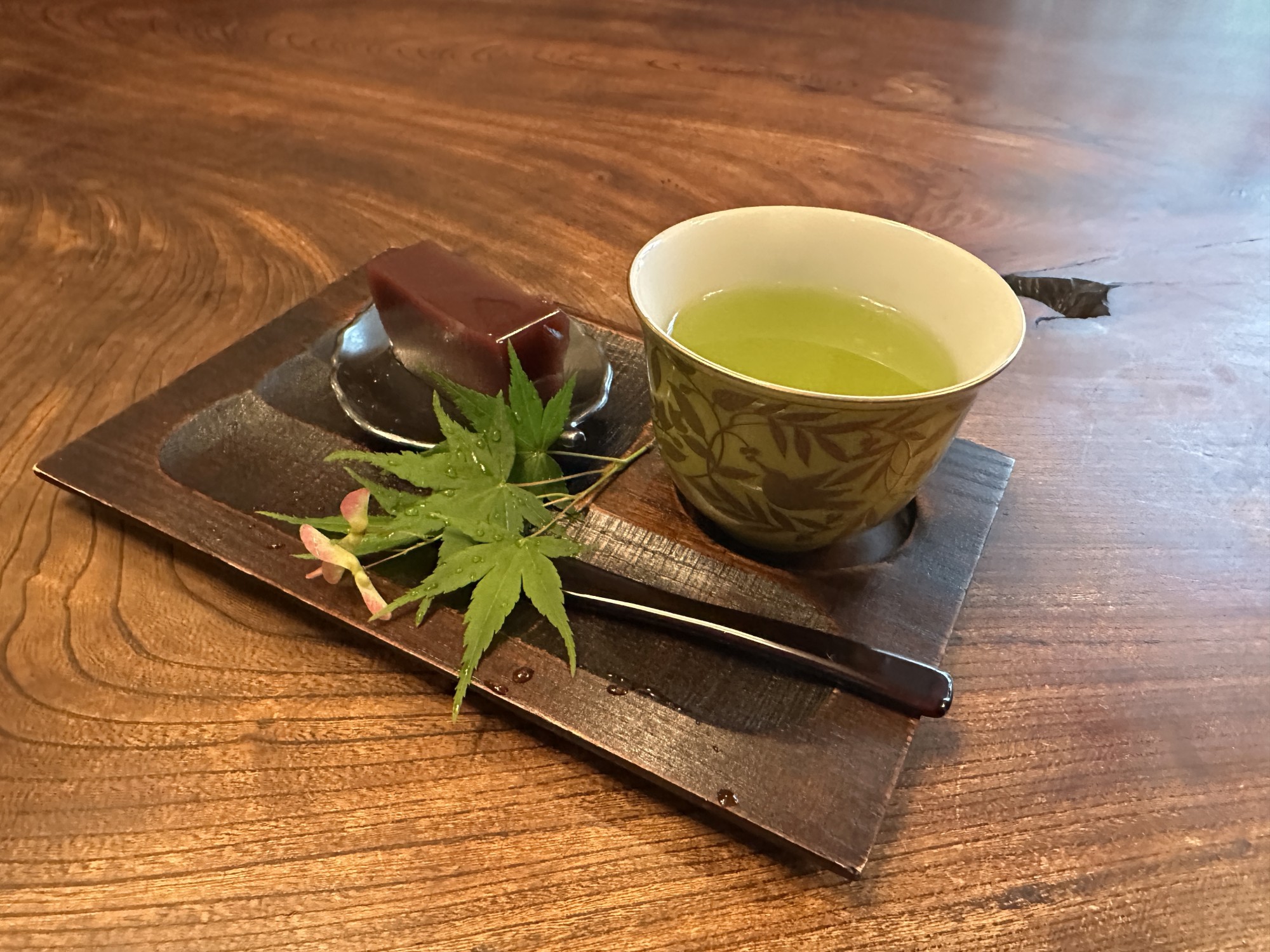
An easy walking tour in rural Nagano Prefecture with strong emphases on onsen thermal hot springs and Japanese gastronomy.
Gentle guided walking along paths through picturesque rural towns and villages set in a lushly verdant valley and on a high plateau with a towering volcano as a continual backdrop. Light walking combined with plentiful onsen hot spring baths and sumptuous cuisine. Accommodation in lovely modern Japanese inns.
Year-round.
Onsen Gastronomy: Kiso in Nagano is a fully-guided tour suitable for moderately active people who can walk comfortably for up to three hours a day. The route is mainly on grassy or gravel paths and quiet country roads, which turn snowy in winter. The terrain is generally even underfoot and over mostly flat or gently rolling countryside. It also includes one climb, which is an easily negotiated incline and descent, over a pass that can be completed in about 75 minutes. Please read more on Tour Levels here.
A five-day, four-night tour starting at Nagoya Station and finishing at Kiso-Fukushima Station. Accommodation is in Japanese inns with onsen hot spring baths. Please read more on accommodation here. The small intimate nature of the tour makes the maximum group size 12 people. We have no minimum size. If we accept a booking we guarantee to run the tour.
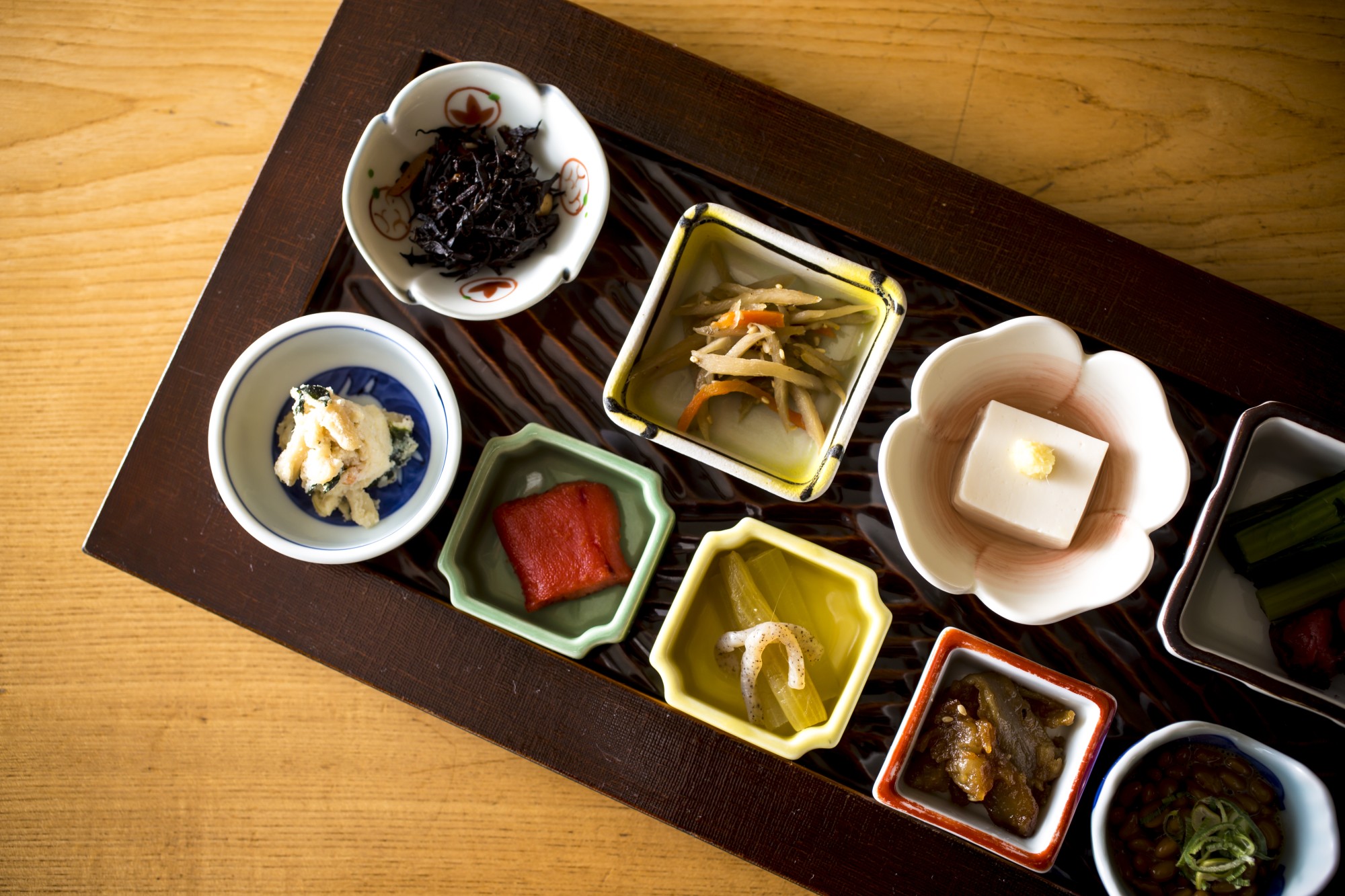
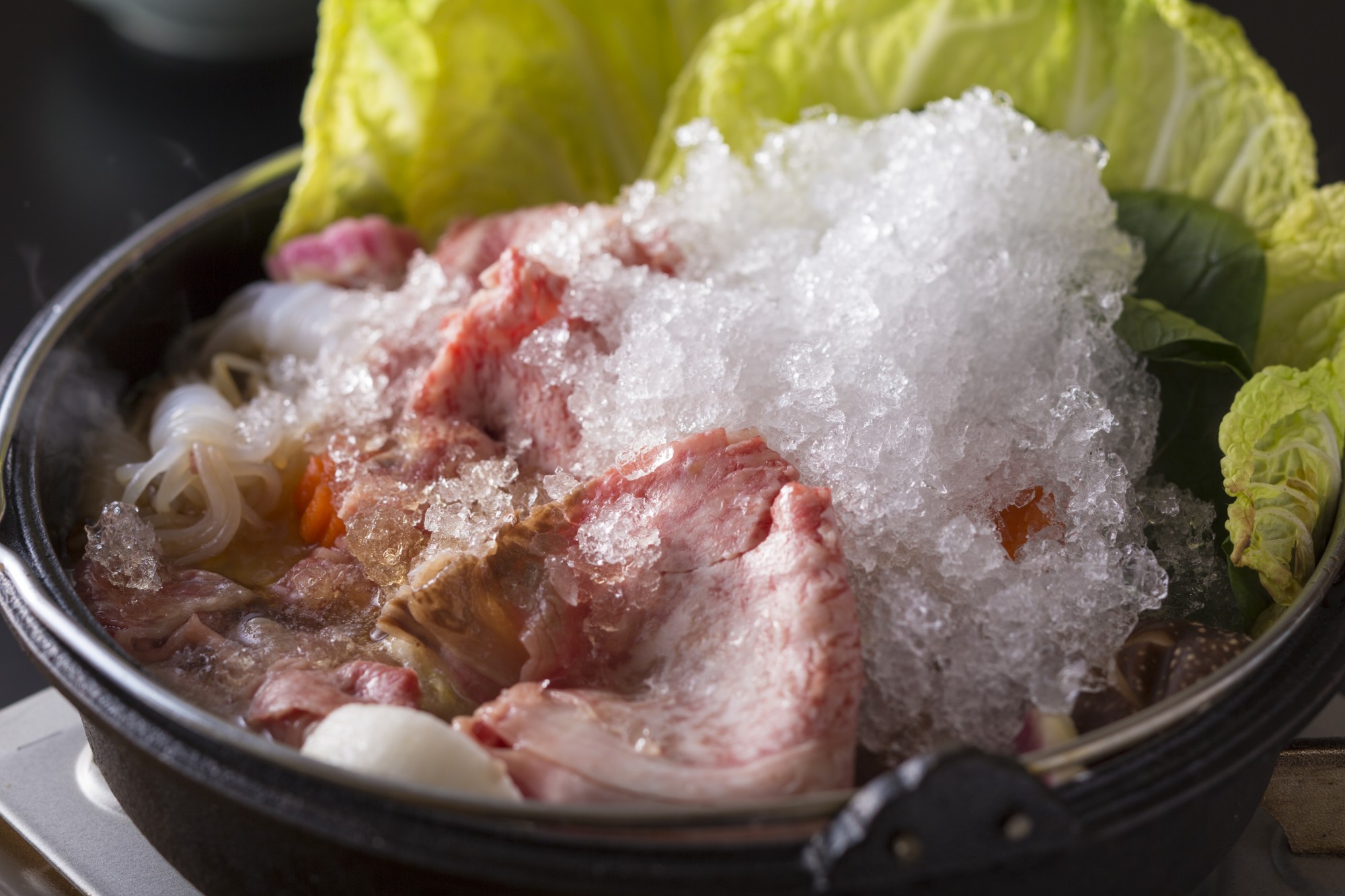
On an Onsen Gastronomy tour, in the company of an expert Walk Japan tour leader, we are immersed in the Japanese way of bathing; stay each evening in pleasant accommodations including some top hotels in the area, almost always with their own onsen; and enjoy sumptuous meals that satisfy both the eye and the stomach. Our light guided strolling allows us to thoroughly enjoy the beautiful countryside we visit and also aids digestion of the gourmet meals, delicious titbits, sakes and other drinks included in the tour.
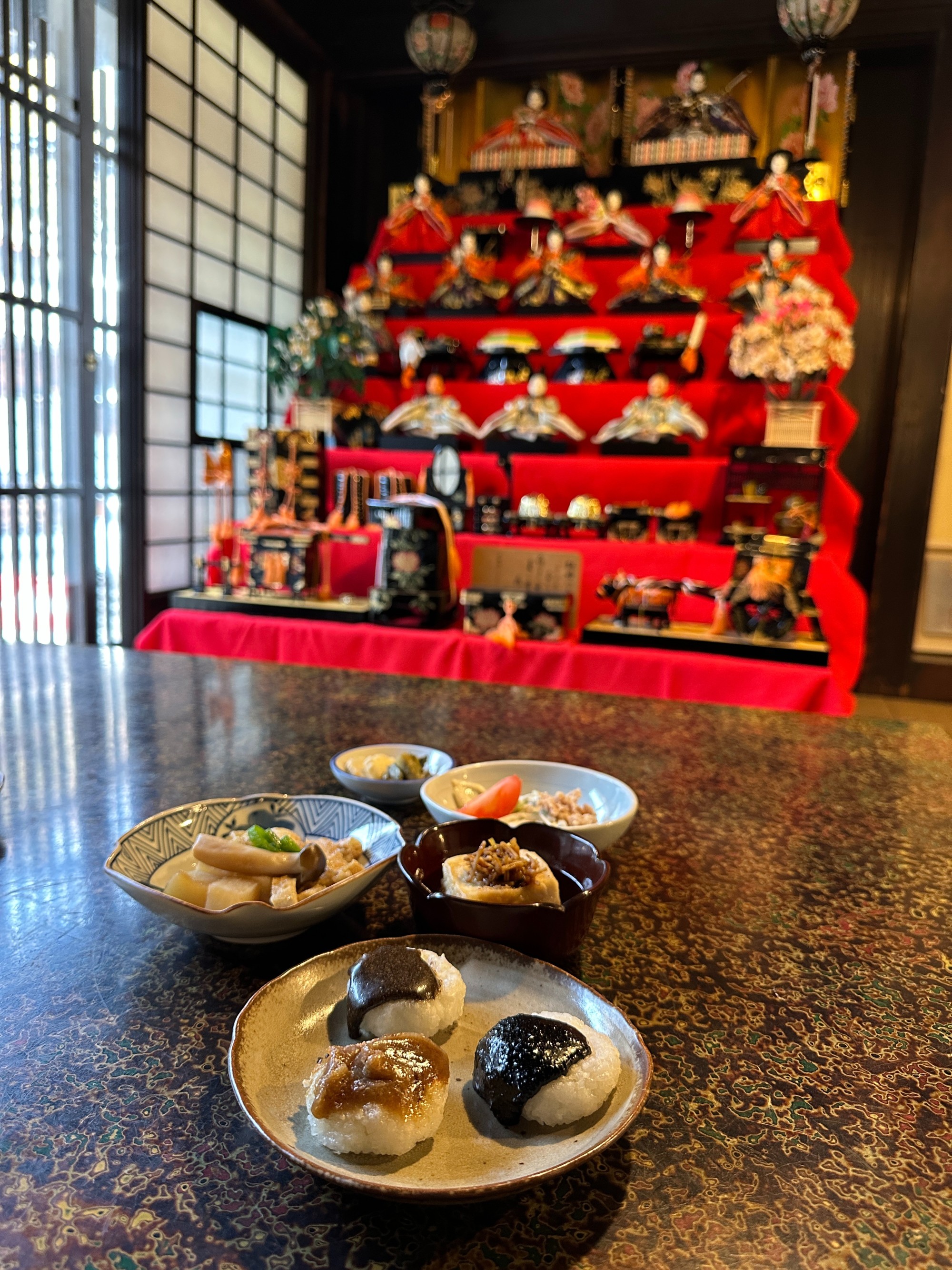
In flavour, quality of ingredients, range of dishes, health benefits, and sheer artistry of presentation, Japanese cuisine counts amongst the world’s best. Japan’s gastronomic offerings are an appetising and convivial element of all our tours, but in the Onsen Gastronomy series of tours we take this feature to a higher level for a celebration of the quintessential Japanese art of dining.
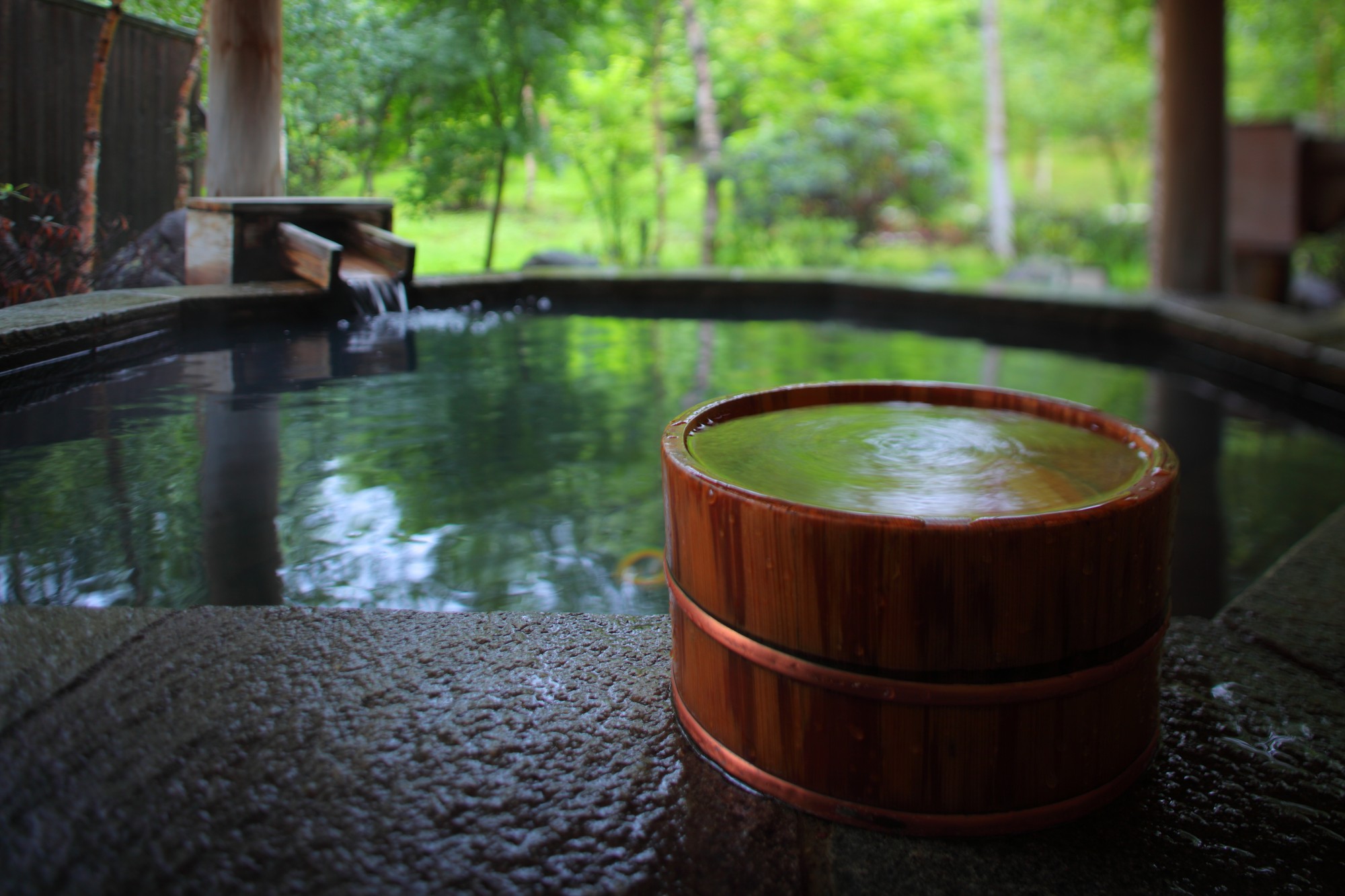
Onsen hot springs, enjoyed on many of our tours, are found throughout the length and breadth of Japan and are one of Japan’s great attractions; a perennial favourite amongst Japanese and overseas visitors alike. Enjoyed over the millennia for their relaxing, curative and restorative powers, onsen were used in Buddhism, which first arrived in Japan in 552, for purification rites. To this day, bathing in Japan remains a ritual, an art distinctly Japanese.
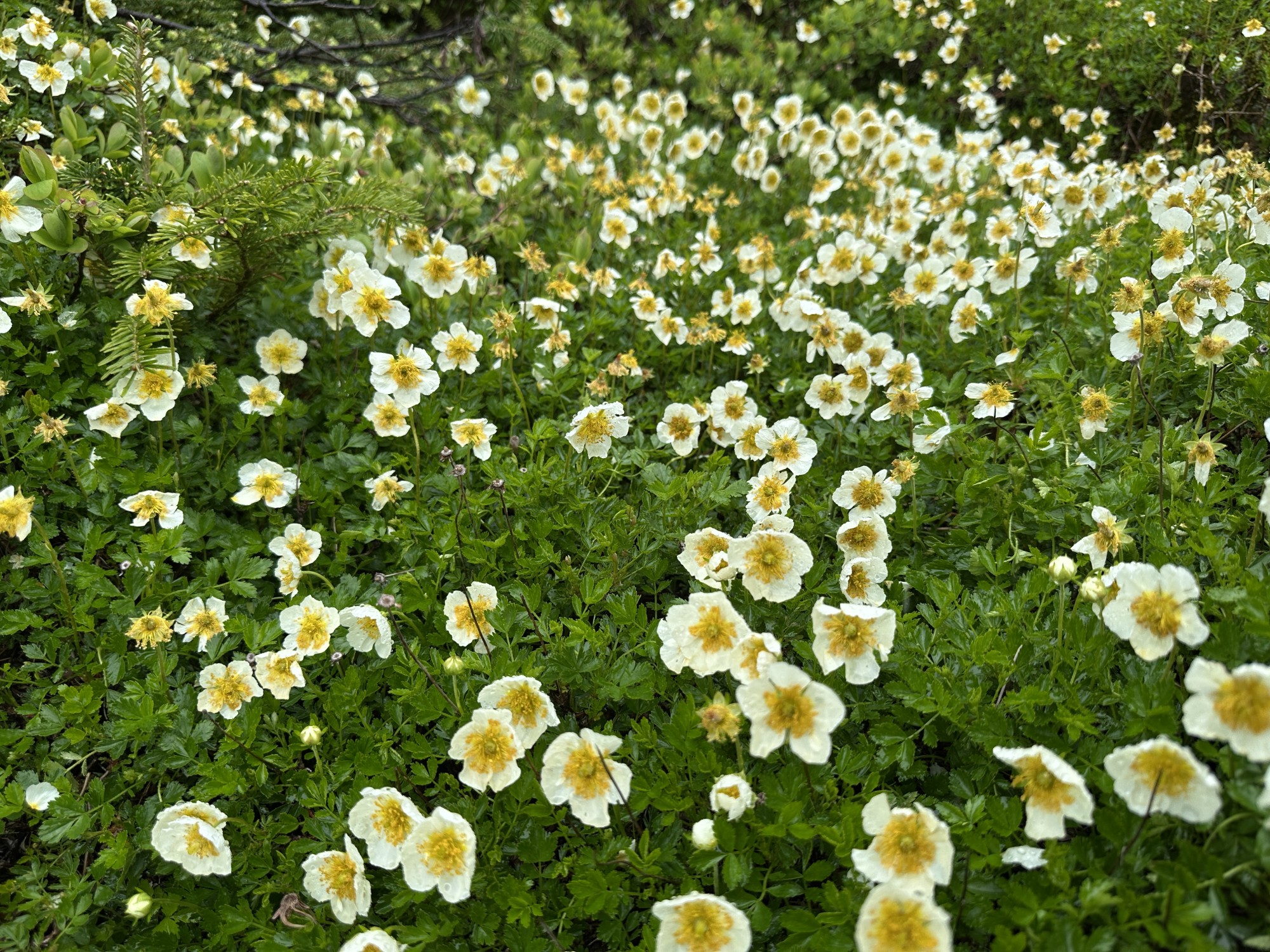
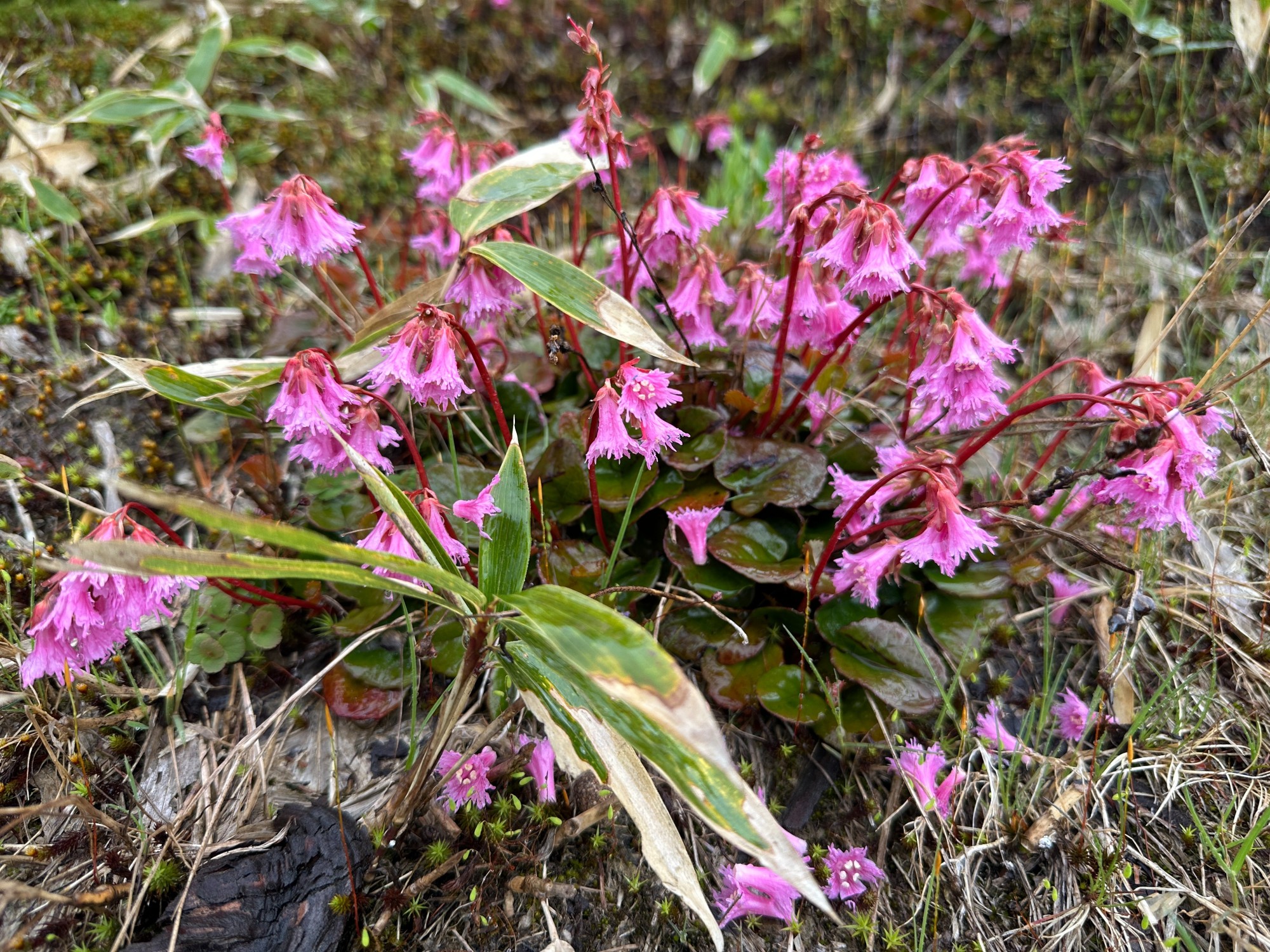
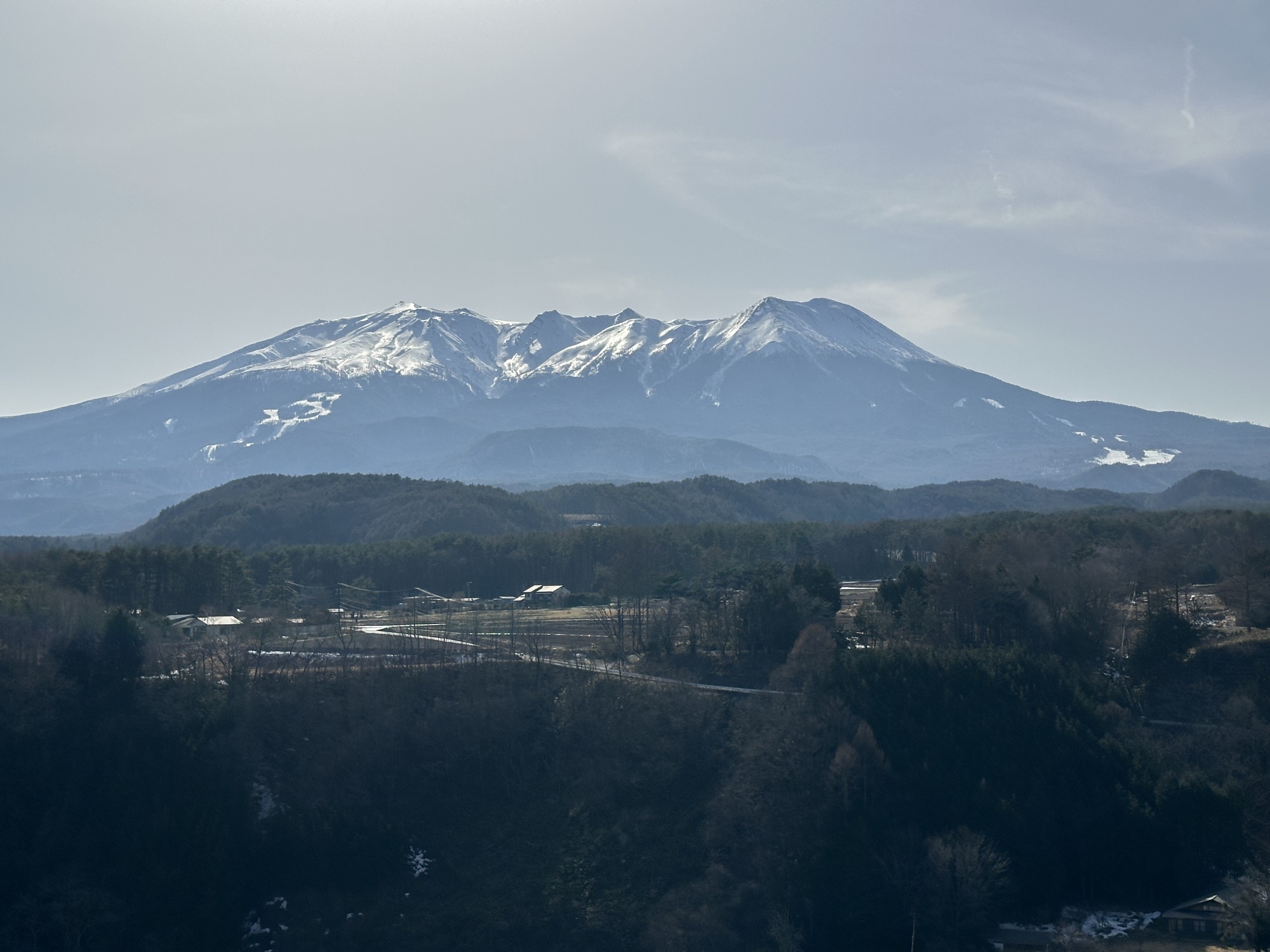
This fully-guided tour visits the northern end of the Kiso Valley and neighbouring Kaida Plateau in southern Nagano Prefecture, an area of Japan renowned for its lush wooded landscapes dominated by Ontake-san, a towering and revered volcano. The Kiso region is deep in central Japan’s rural mountainous countryside, which is gloriously green throughout the spring and summer months, then vividly coloured with autumn leaves before being coated white with winter’s snows.
The Kiso region’s centre is at Kiso-Fukushima, a charming rural town that once played a strategic role in controlling movement along the famed Nakasendo Way making it vital to the shogun. Essences of this older, feudal age are still to be found here and provide us with fascinating insights into the town’s history and the world of the samurai.
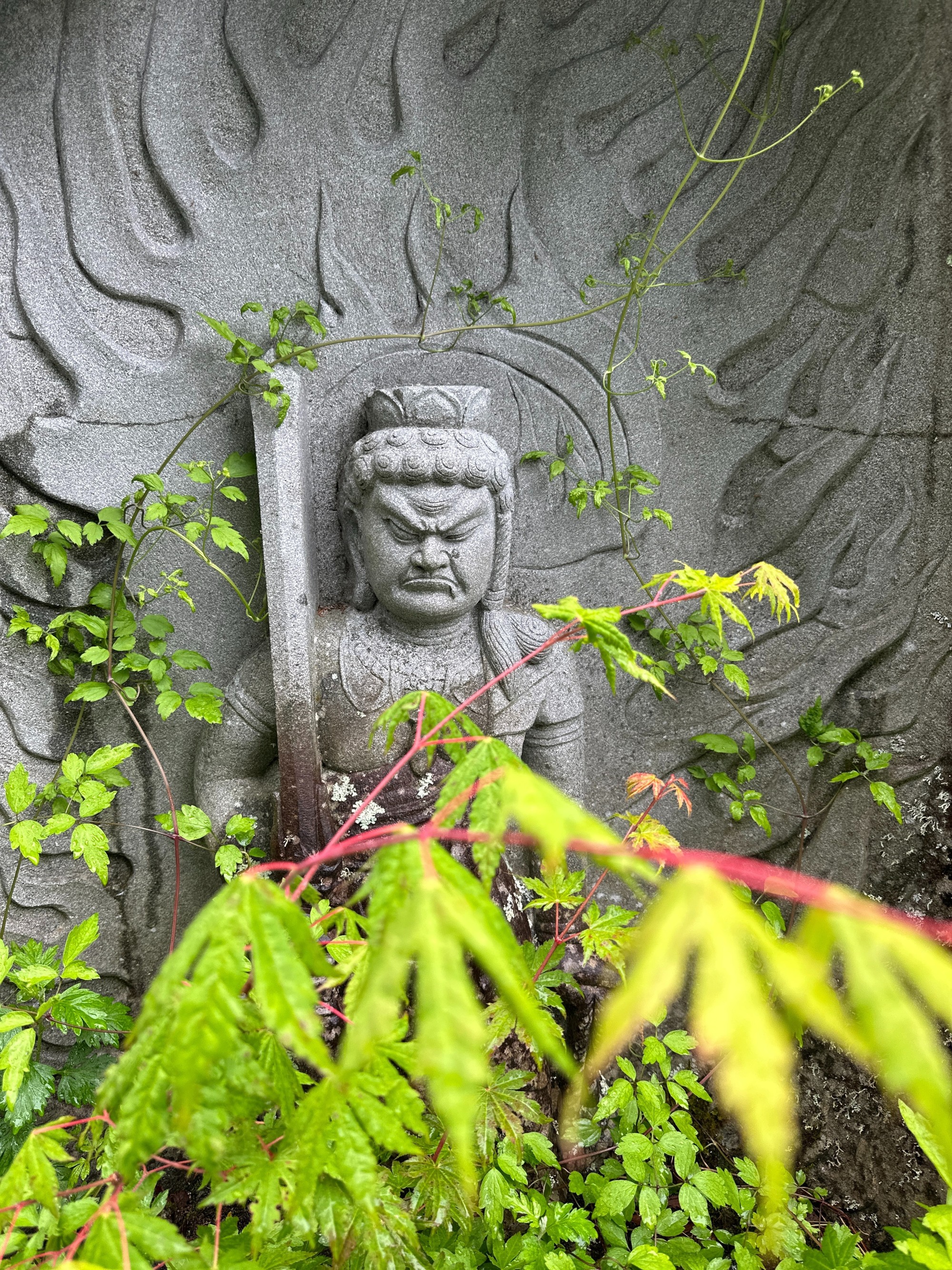
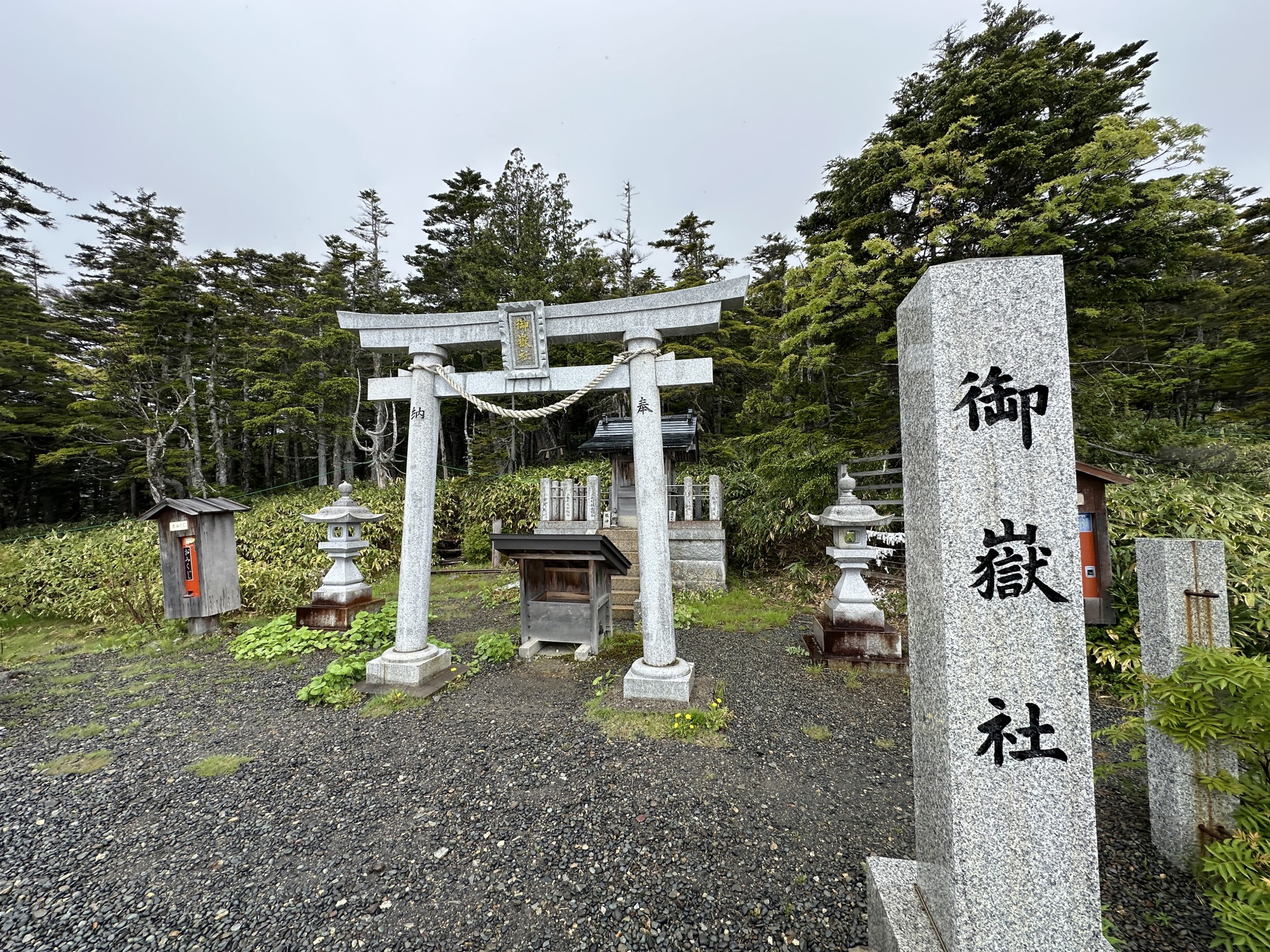
Nearby is Ontake-san, a magnificent volcano that has been the object of religious devotion for centuries. Devotees, who were given special dispensation to travel here along the Nakasendo Way in the Edo Period (1603-1868), would have their credentials checked in Kiso-Fukushima before making an arduous pilgrimage to Ontake-san’s summit. Adherents still make their way to the mountain, although today the majority arrive by train or bus before taking a cable car most of the way up to the summit. In the foothills are many atmospheric shrines and a large number of standing stones that have been erected here over the ages by pilgrims.
Kaida Plateau is officially recognised as one of Japan’s most beautiful areas and certainly deserves the accolade. The rolling hills of the plateau are set in spectacular relief against a backdrop of Ontake-san’s soaring and massive edifice.
The Onsen Gastronomy: Kiso in Nagano tour starts mid-morning at Nagoya Station, where your Walk Japan Tour Leader awaits the group for onward travel together to the Kiso Valley. Thereafter, we stay in modern ryokan inns where we are bathed in warm Japanese hospitality, leisurely soak ourselves in onsen hot spring baths and excite our taste buds with multiple courses of delicious local cuisine.
Important: Please note that in Japan it has traditionally been the custom not to allow anyone with tattoos to use public baths, including onsen. Although this custom is currently being relaxed, entrance is at the discretion of each establishment. Access at additional cost is usually allowed, however, to kazoku-buro private bathing facilities, which are found at many onsen, for anyone – including those with tattoos.
Due to the culinary focus on this tour, we are unable to cater to any dietary preferences, including allergies.
A five-day, four-night tour starting at Nagoya Station and finishing at Kiso-Fukushima Station. Accommodation is in Japanese inns with onsen hot spring baths. Please read more on accommodation here. The small intimate nature of the tour makes the maximum group size 12 people. We have no minimum size. If we accept a booking we guarantee to run the tour.
On an Onsen Gastronomy tour, in the company of an expert Walk Japan tour leader, we are immersed in the Japanese way of bathing; stay each evening in pleasant accommodations including some top hotels in the area, almost always with their own onsen; and enjoy sumptuous meals that satisfy both the eye and the stomach. Our light guided strolling allows us to thoroughly enjoy the beautiful countryside we visit and also aids digestion of the gourmet meals, delicious titbits, sakes and other drinks included in the tour.
In flavour, quality of ingredients, range of dishes, health benefits, and sheer artistry of presentation, Japanese cuisine counts amongst the world’s best. Japan’s gastronomic offerings are an appetising and convivial element of all our tours, but in the Onsen Gastronomy series of tours we take this feature to a higher level for a celebration of the quintessential Japanese art of dining.
Onsen hot springs, enjoyed on many of our tours, are found throughout the length and breadth of Japan and are one of Japan’s great attractions; a perennial favourite amongst Japanese and overseas visitors alike. Enjoyed over the millennia for their relaxing, curative and restorative powers, onsen were used in Buddhism, which first arrived in Japan in 552, for purification rites. To this day, bathing in Japan remains a ritual, an art distinctly Japanese.
This fully-guided tour visits the northern end of the Kiso Valley and neighbouring Kaida Plateau in southern Nagano Prefecture, an area of Japan renowned for its lush wooded landscapes dominated by Ontake-san, a towering and revered volcano. The Kiso region is deep in central Japan’s rural mountainous countryside, which is gloriously green throughout the spring and summer months, then vividly coloured with autumn leaves before being coated white with winter’s snows.
The Kiso region’s centre is at Kiso-Fukushima, a charming rural town that once played a strategic role in controlling movement along the famed Nakasendo Way making it vital to the shogun. Essences of this older, feudal age are still to be found here and provide us with fascinating insights into the town’s history and the world of the samurai.
Nearby is Ontake-san, a magnificent volcano that has been the object of religious devotion for centuries. Devotees, who were given special dispensation to travel here along the Nakasendo Way in the Edo Period (1603-1868), would have their credentials checked in Kiso-Fukushima before making an arduous pilgrimage to Ontake-san’s summit. Adherents still make their way to the mountain, although today the majority arrive by train or bus before taking a cable car most of the way up to the summit. In the foothills are many atmospheric shrines and a large number of standing stones that have been erected here over the ages by pilgrims.
Kaida Plateau is officially recognised as one of Japan’s most beautiful areas and certainly deserves the accolade. The rolling hills of the plateau are set in spectacular relief against a backdrop of Ontake-san’s soaring and massive edifice.
The Onsen Gastronomy: Kiso in Nagano tour starts mid-morning at Nagoya Station, where your Walk Japan Tour Leader awaits the group for onward travel together to the Kiso Valley. Thereafter, we stay in modern ryokan inns where we are bathed in warm Japanese hospitality, leisurely soak ourselves in onsen hot spring baths and excite our taste buds with multiple courses of delicious local cuisine.
Important: Please note that in Japan it has traditionally been the custom not to allow anyone with tattoos to use public baths, including onsen. Although this custom is currently being relaxed, entrance is at the discretion of each establishment. Access at additional cost is usually allowed, however, to kazoku-buro private bathing facilities, which are found at many onsen, for anyone – including those with tattoos.
Due to the culinary focus on this tour, we are unable to cater to any dietary preferences, including allergies.

The itinerary for the Onsen Gastronomy: Kiso in Nagano tour is ground only beginning in Nagoya Station and ending in Kiso-Fukushima Station. Prior to the tour, Walk Japan will provide detailed instructions for travelling to the meeting point at Nagoya Station.
Your tour starts mid-morning at Nagoya Station, where the Walk Japan Tour Leader awaits your arrival. Together we travel on an express train north to Kiso-Fukushima, a compact town set in the narrow and wooded Kiso Valley. Our accommodation, a pleasant modern Japanese inn, is set aside the famous Nakasendo Way, a strategic highway stretching 540km from Kyoto to Edo, now modern-day Tokyo. After leaving our luggage here, we set out on a comfortable stroll to explore our pleasant surroundings. Kiso-Fukushima was the site of a sekisho, a formidable barrier station that strictly controlled travellers along the old highway in the Edo Period (1603 - 1868). This was the time when samurai warriors were at their peak led by the Tokugawa shogunate and, because of relative peace for over 250 years, culture flourished.
First, however, we enjoy lunch nearby at a popular restaurant serving traditional local dishes. Satiated, we begin our amble through the atmospheric post-town district, which is still redolent of the Edo samurai years, via the barrier station to the residence of the daikan, the shogun’s representative and senior official who once held sway over the whole region and anyone passing through.
On return to our accommodation, we luxuriate in onsen hot spring baths before enjoying dinner. Our evening meal feels like a modern approximation of the feasts provided by the daikan to honoured guests when they were staying overnight either on their way to or from paying the shogun homage at his citadel in Edo. Most visitors of yesteryear would usually only stay for one night in Kiso-Fukushima, but we have the luxury of being here for two.
Accommodation: Japanese inn with onsen hot spring baths.
Meals: Lunch & dinner provided.
Total walking: 2.2km (1.3 miles).
Total elevation gain: 72m (236ft).
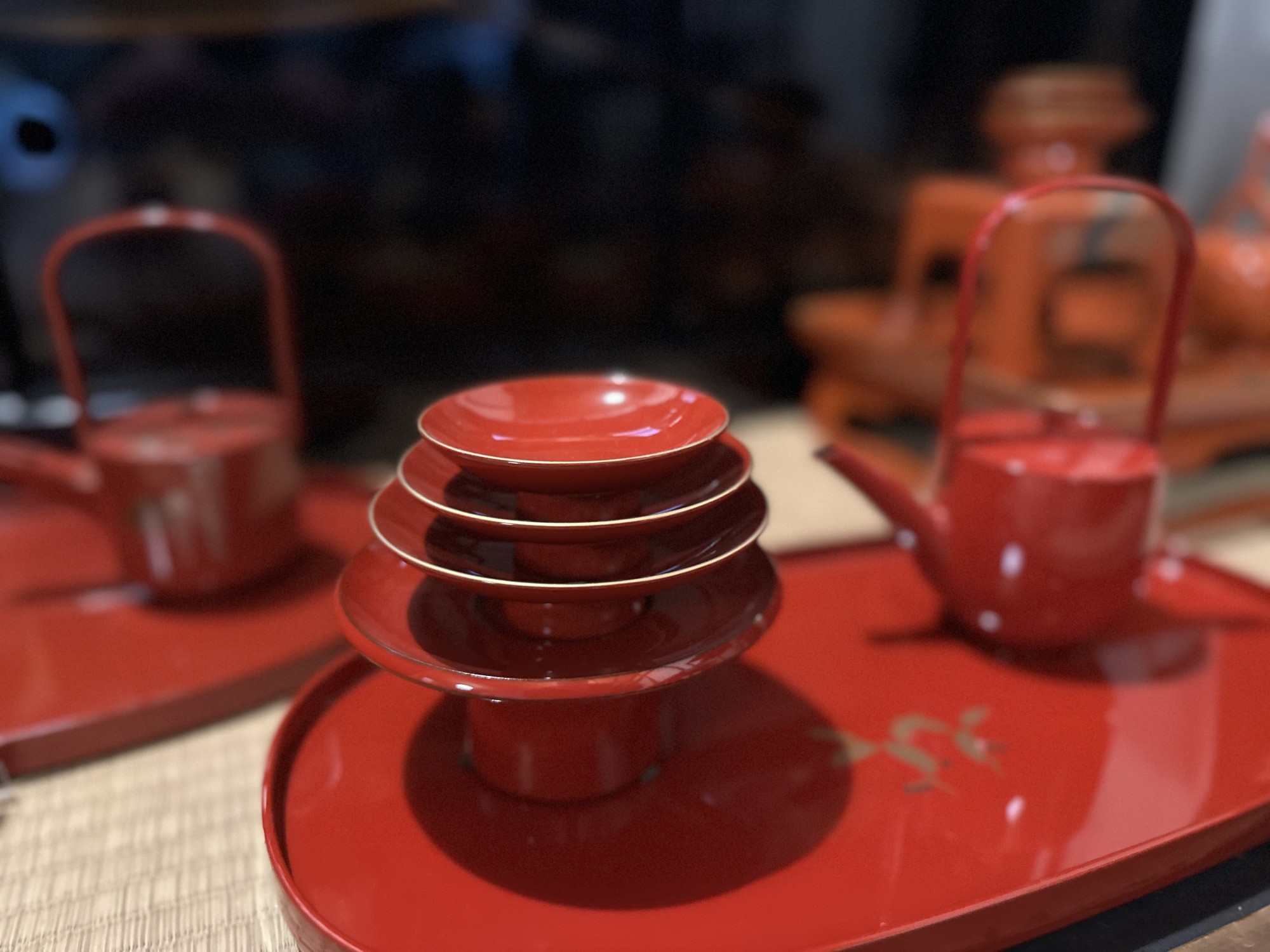
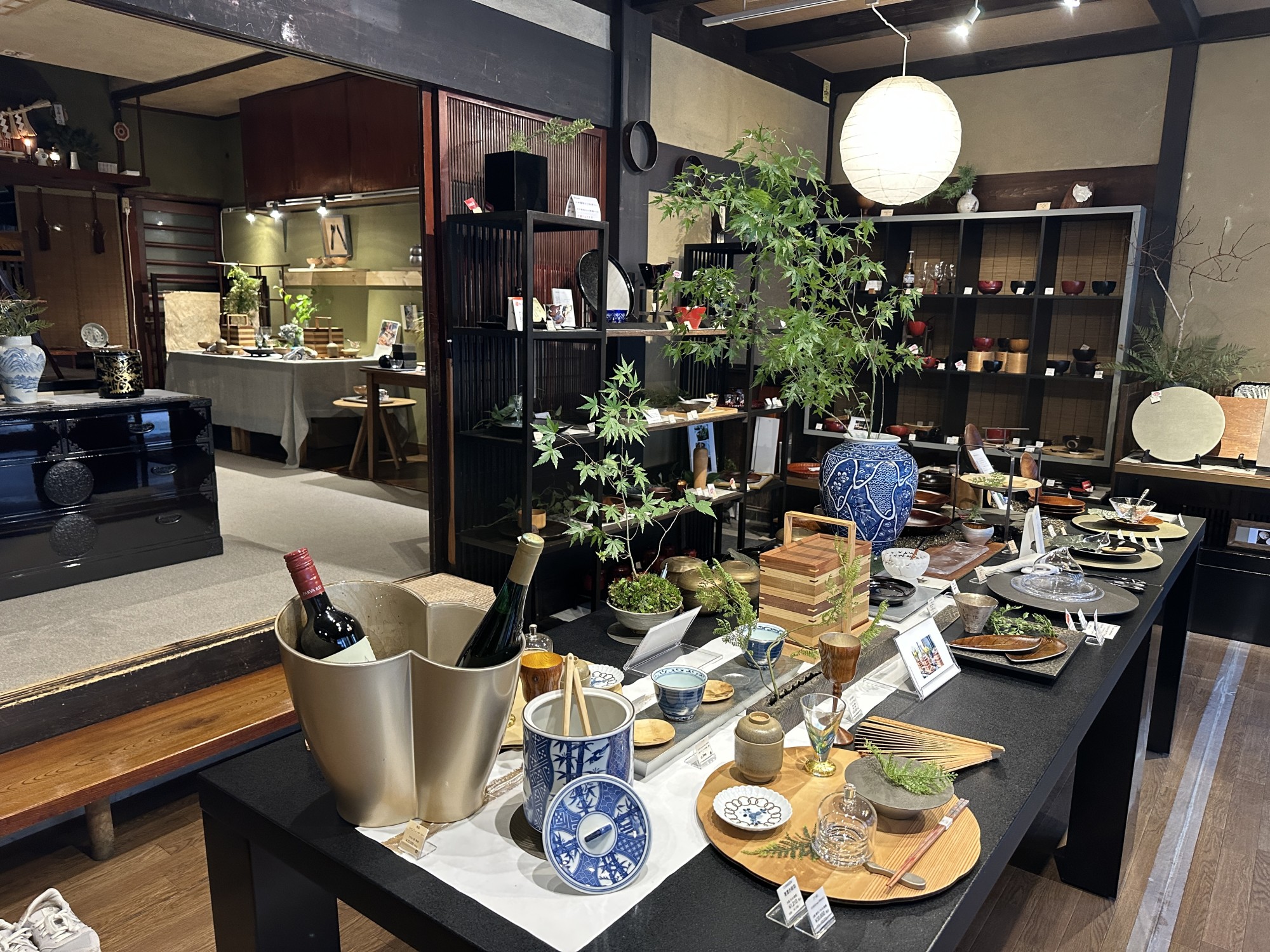
After breakfast, we board a local train to journey a few stops north to Hirasawa, a quiet town locally famed for its lacquerware. The plates and bowls created here were once an essential element of the daikan’s feasts, but today have become a familiar feature in many Japanese homes. We meet an artisan and browse the work crafted in studios throughout the town.
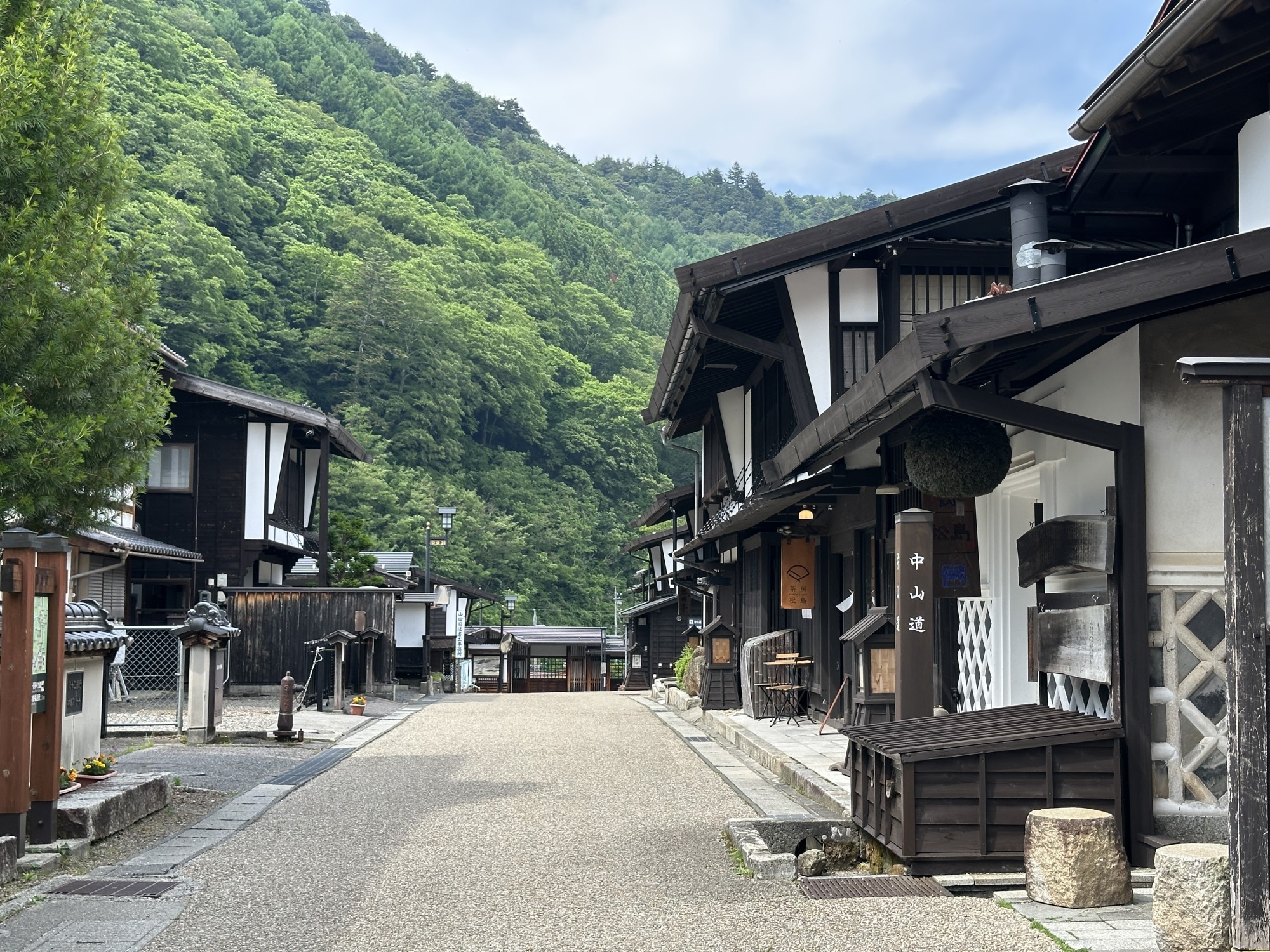
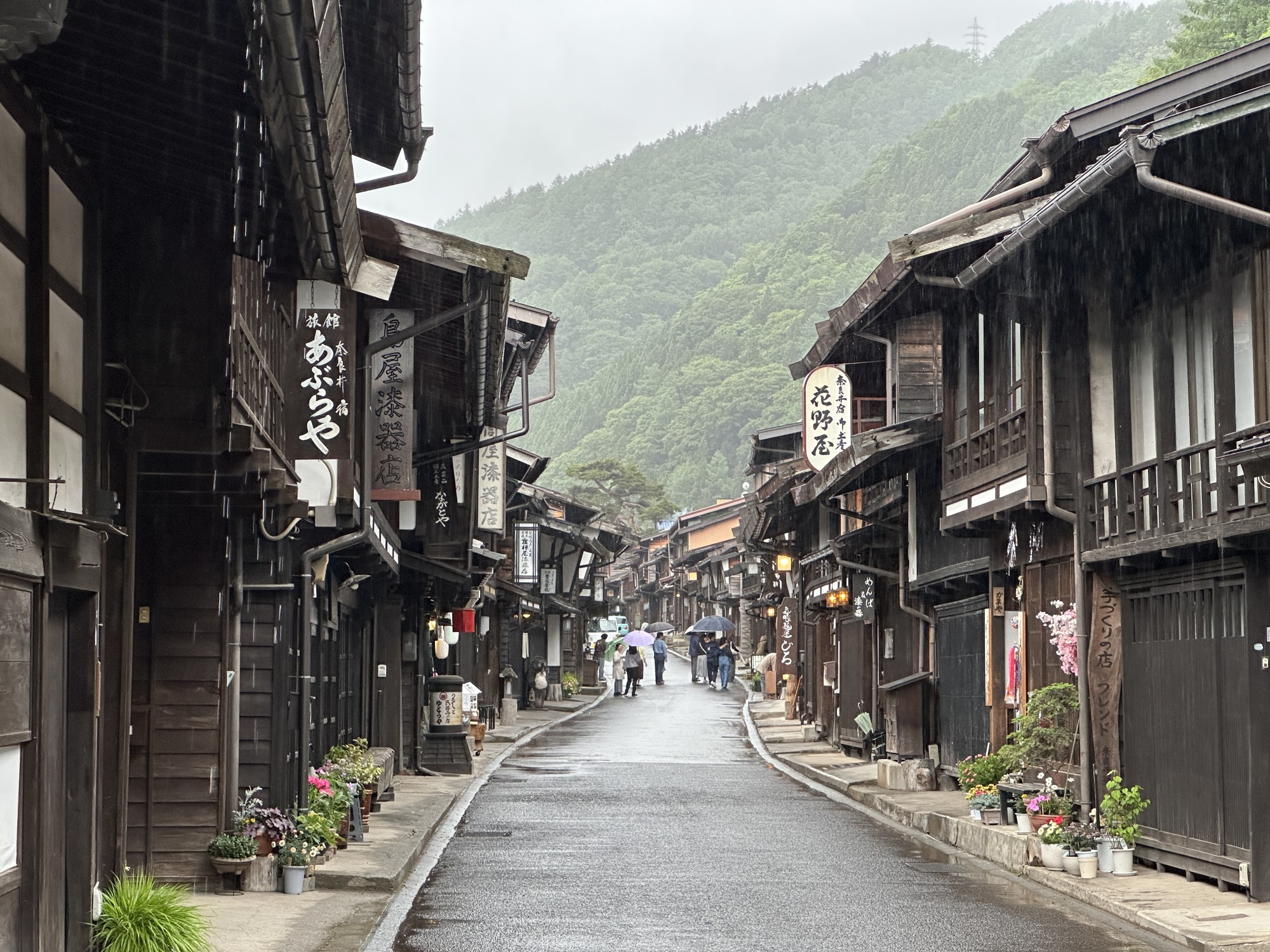
A short stroll alongside a tumbling river brings us to Narai, a post-town that thrived in the Edo Period. It lies on the north side of the Torii-toge, one of the highest mountain passes along the Nakasendo Way. Travellers would rest here anxiously before making the climb or gratefully thank their gods if they had arrived safely after successfully negotiating it from Yabuhara, the post-town on the other side of the pass.
Narai has retained its period charm and is popular with visitors. We explore before enjoying lunch composed of a variety of local delicacies. Before leaving, we visit a shop specialising in an ancient herbal remedy that has its roots in a religious group that venerates Ontake-san, Japan’s second tallest volcano at 3,067m. But more on this tomorrow when we visit the foothills of the mountain.
A private-hire vehicle whisks us through a tunnel so that we do not have to climb the pass to Yabuhara, where we visit a boutique nihonshu Japanese sake brewery. The sakes produced here have won awards and we have an agreeable time sampling the libation to Japan’s gods before returning to Kiso-Fukushima and our accommodation for the evening.
Accommodation: Japanese inn with onsen hot spring baths.
Meals: Breakfast, lunch & dinner provided.
Total walking: 3.3km (2 miles).
Total elevation gain: 41m (134ft).
Kiso-Fukushima has long been the gathering point for pilgrims on their way to worship on Ontake-san and today, in their footsteps, we explore the lower elevation of their pilgrimage that, for the earnest, reaches the very top of the volcanic peak.
After breakfast, we board a private-hire vehicle, which stays with us for the rest of the day, to leave the narrow Kiso Valley and journey into a very different terrain of rolling hills and wide valleys that surround the eastern side of Ontake-san.
A local resident, who is very knowledgeable about the pilgrimage, joins us as our local guide for the day at a delightful and interesting museum. Here we are introduced to the geology of Ontake-san, its sometimes dramatic volcanic activity, the flora and fauna of the area, and the religion that has attracted devotees for centuries. Its displays provide us with a virtual experience of the mountain, which otherwise remains out of our reach on this gentle tour.
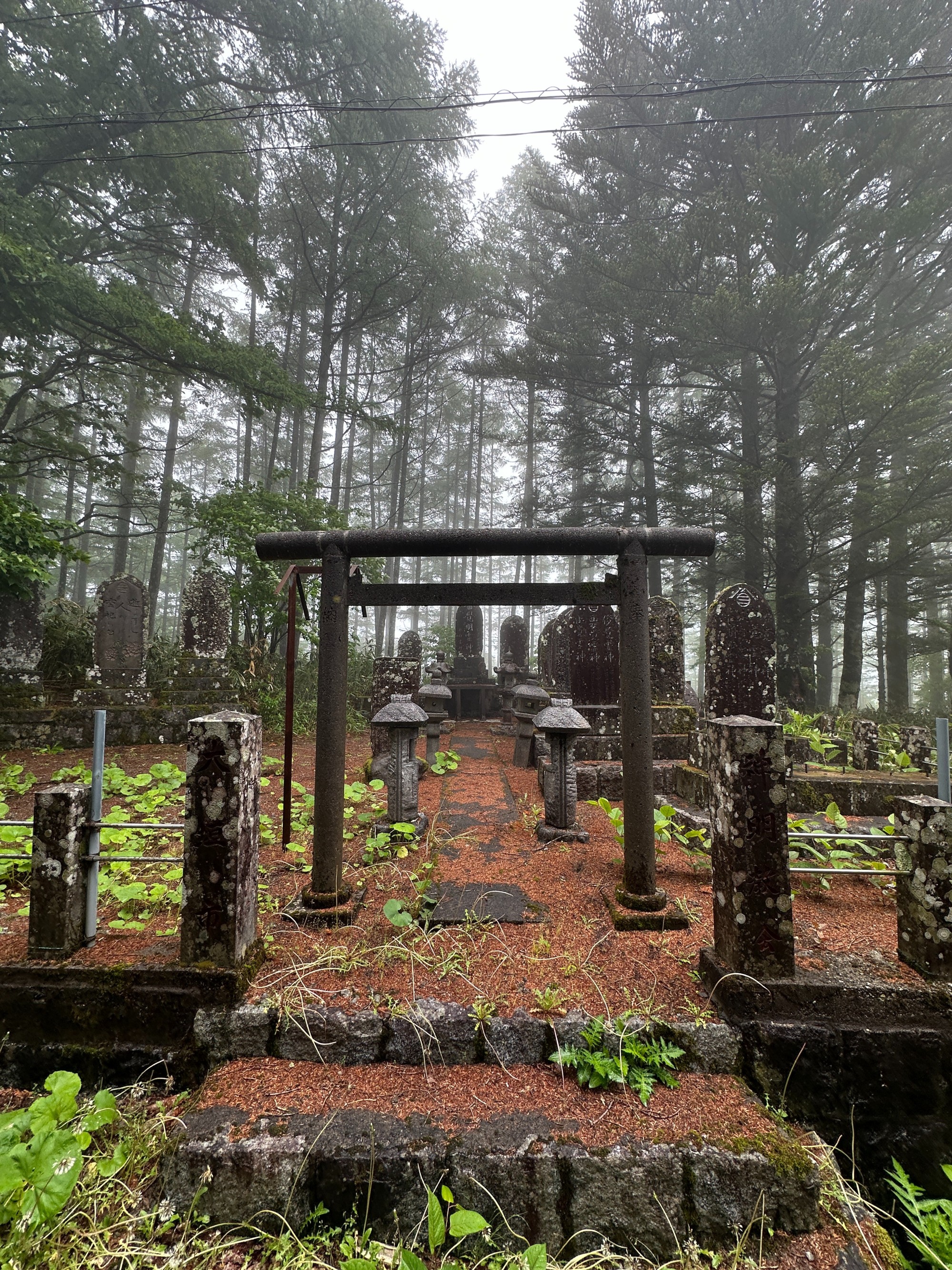
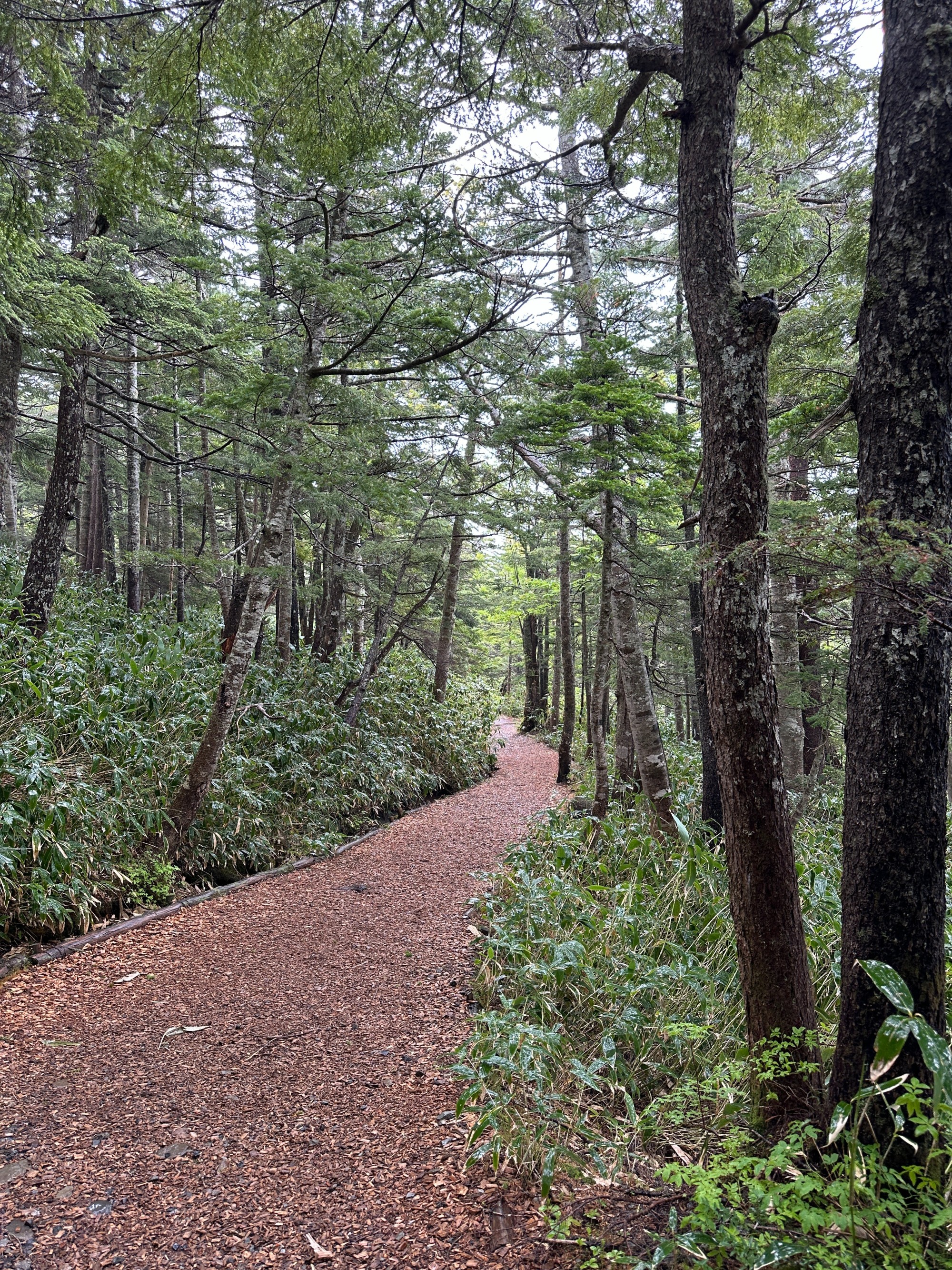
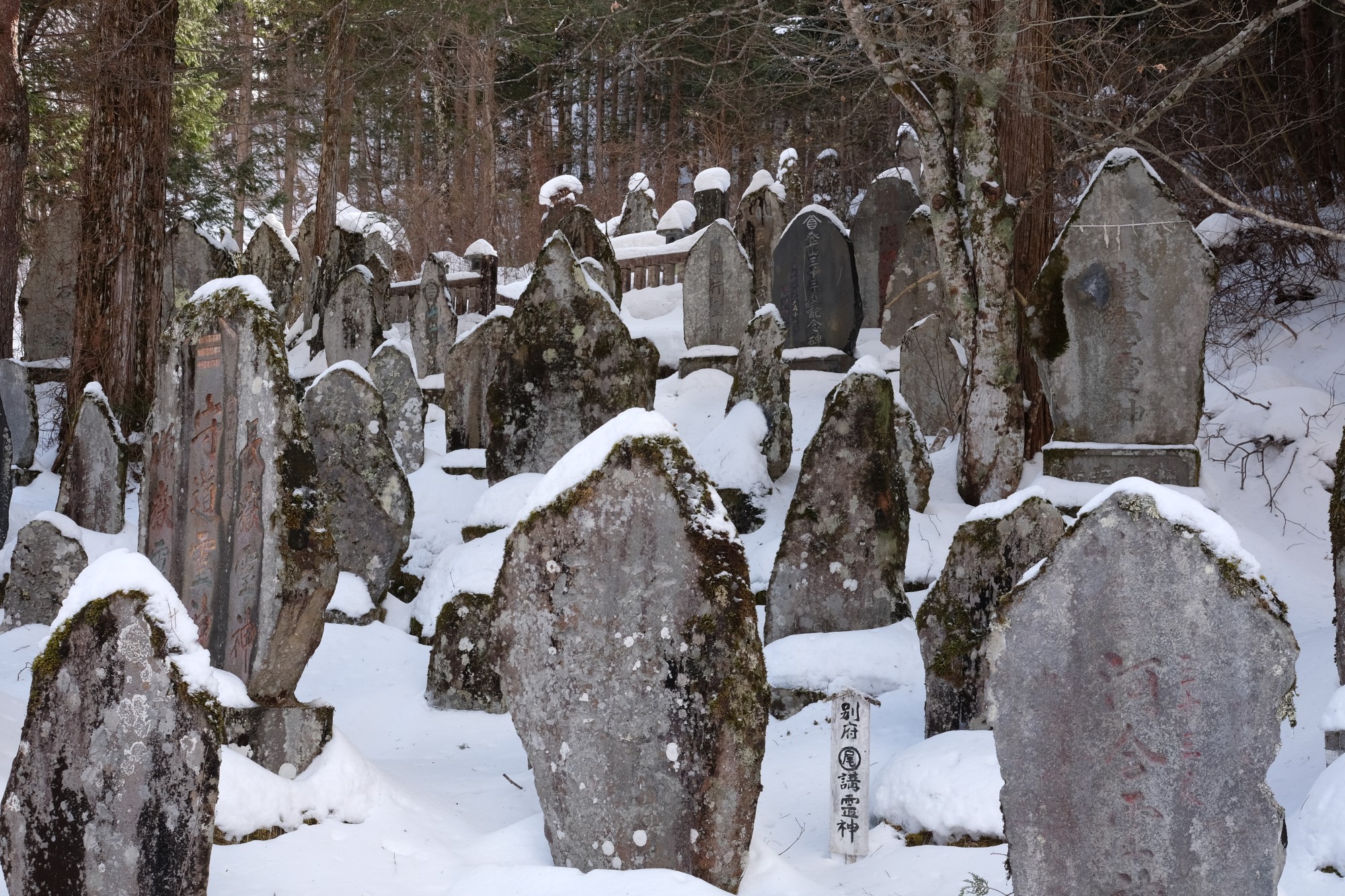
With our guide leading the way, we enjoy a walk up through forests to a low pass, where pilgrims often caught their first sight of the object of their devotion, Ontake-san. It is an impressive sight with its five peaks ranging over 3.5km north to south. The pass, which few visit today, was once a thriving spot with a large torii gateway indicating a sacred spot and a tea house for visitors to relax in. Now, only standing stones engraved with religious texts remain. We descend to a village, where adherents still spend the night before ascending the volcano. Here a warm welcome and delicious lunch await us.
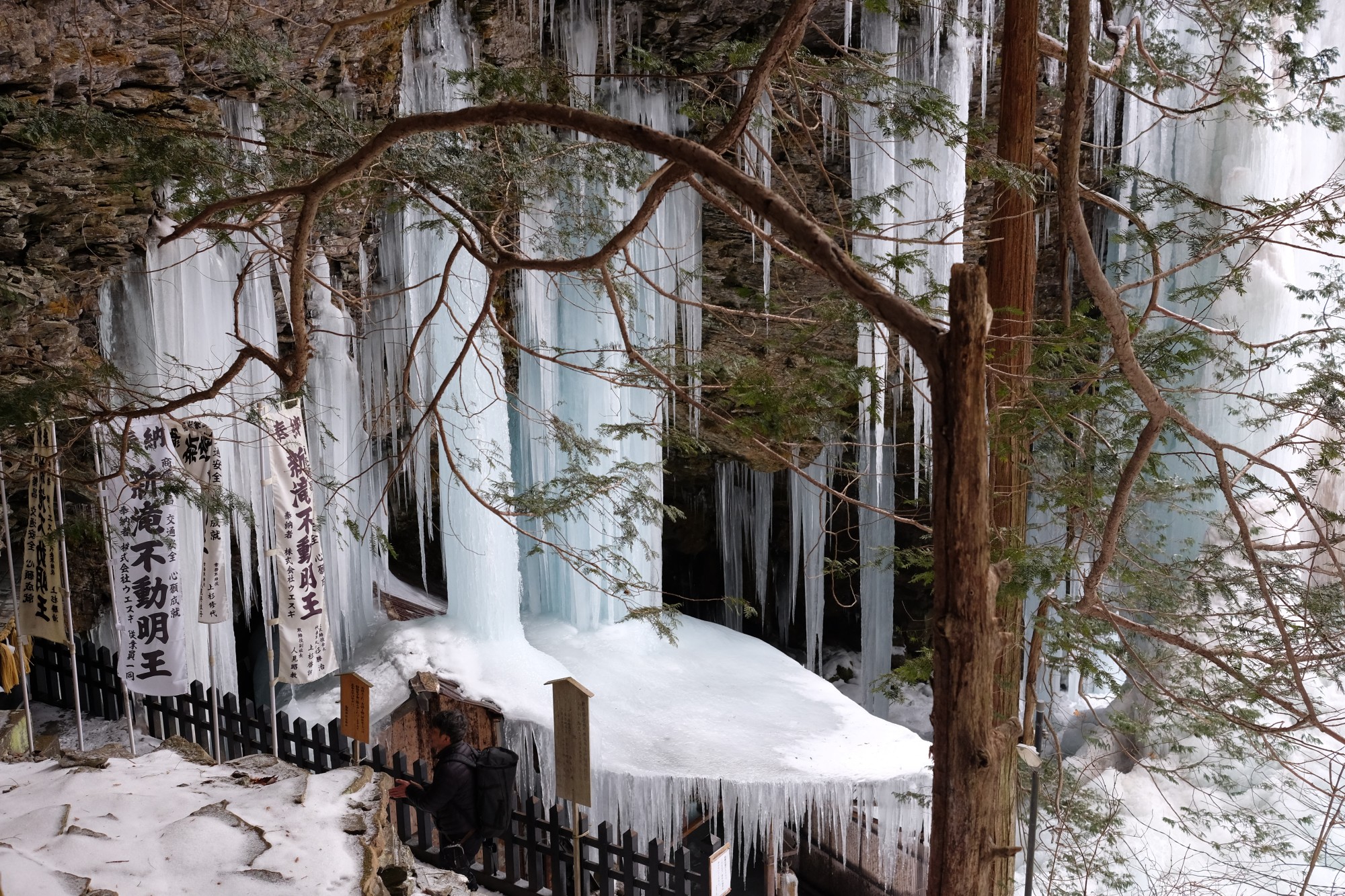
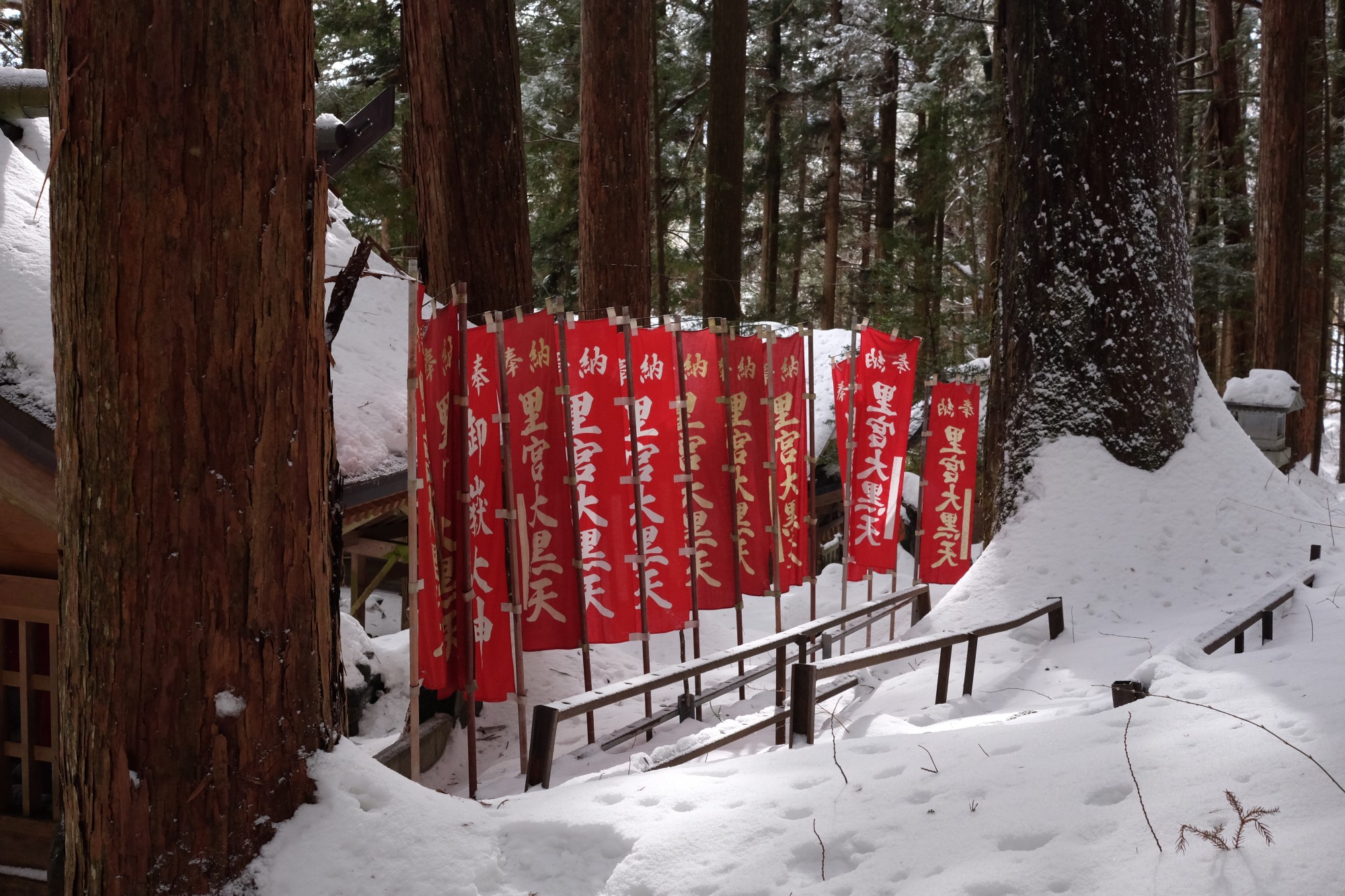
As we drive deeper into Ontake san’s foothills an increasing number of shrines and a large number of standing stones attest to the religion’s impact on the area. We pay our respects at an atmospheric shrine and visit nearby waterfalls, where adherents for centuries have been purifying themselves in prayer under the frigid cascading waters.
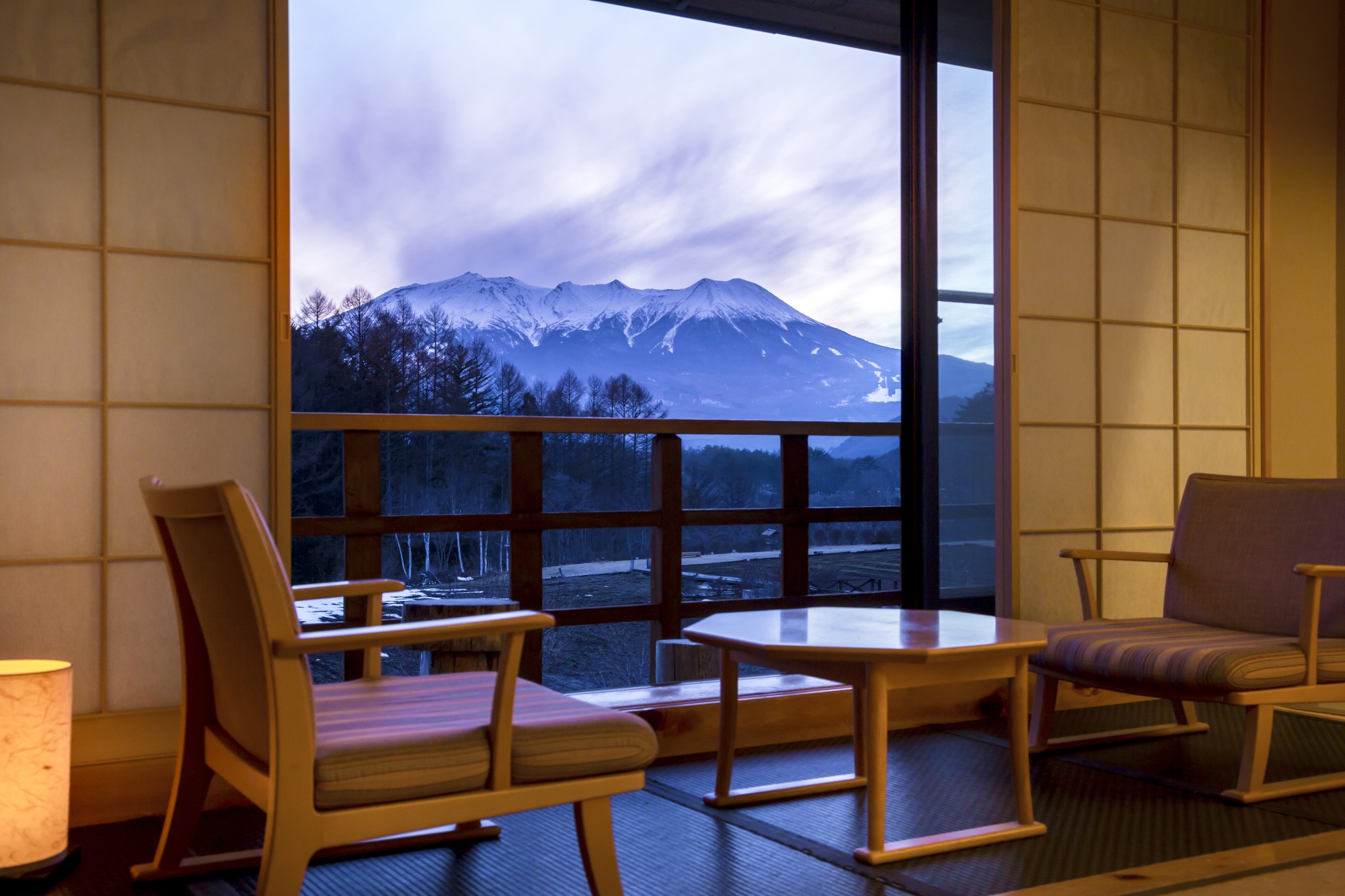
Our journey continues on to our evening’s accommodation on the Kaida Plateau. Amongst its attractions are excellent views of the sacred mountain, onsen hot spring baths and delicious cuisine. We stay here for two nights.
Accommodation: Japanese inn with onsen hot spring baths.
Meals: Breakfast, lunch & dinner provided.
Total walking: 2.6km (1.62 miles).
Total elevation gain: 117m (384ft).
Those who arise early enough can relish the rising sun reflecting spectacularly off Ontake-san, especially when its peaks are still covered in snow. Today, our activities depend upon the season and weather.
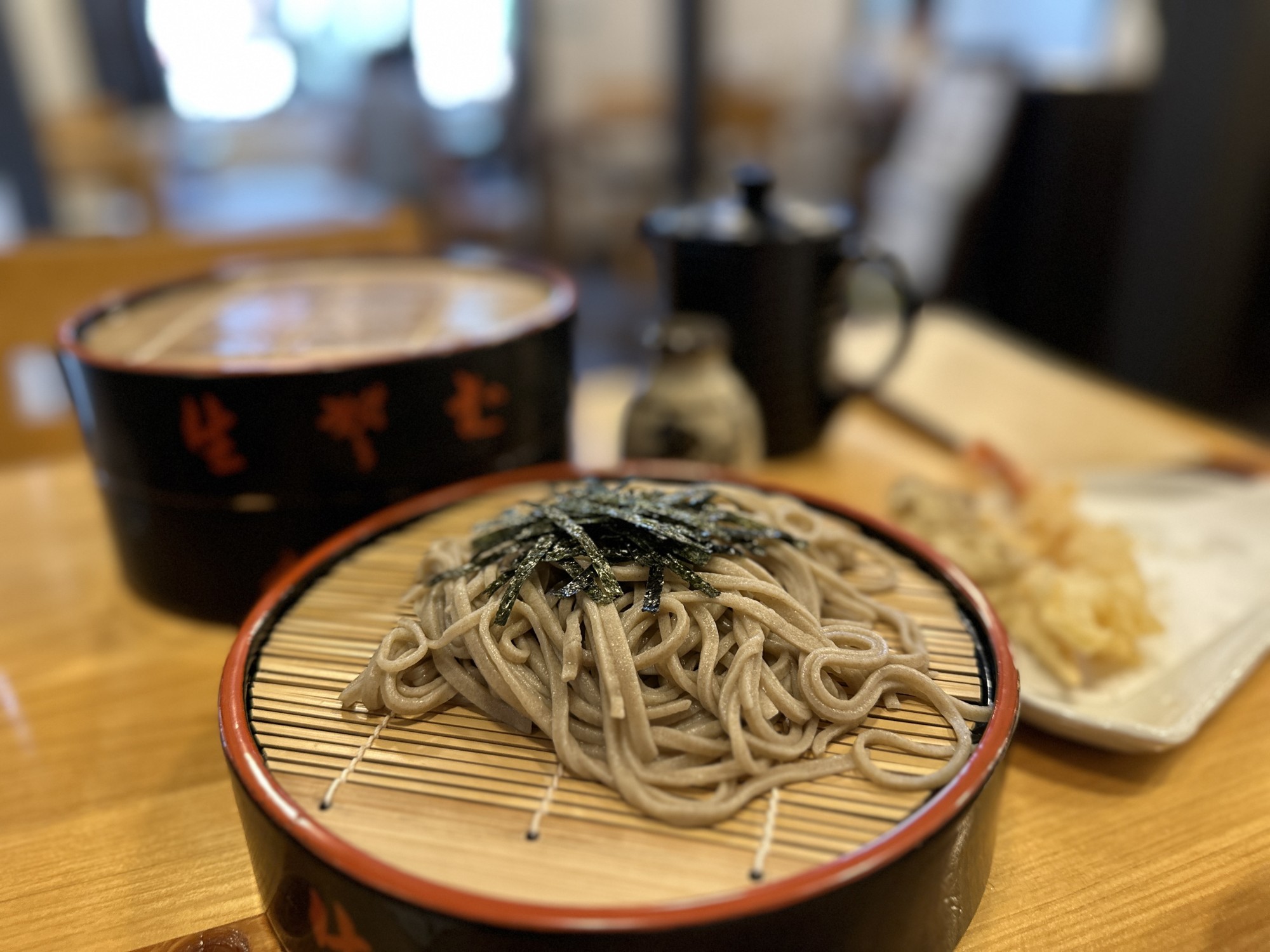
During most of the year we ride a cable car up Ontake-san to 2,150m. Here we wave off pilgrims and climbers, who are on their way to the top, before enjoying an easy woodland stroll and also glorious views from on high across the Kaida Plateau. In winter, when the cable car is not operational, we set out across deep snows on snowshoes. Regardless of the time of year, we savour Kaida's highly regarded ice cream, blueberries and soba buckwheat noodles, and also meet Kiso-uma, the gentle but stout ponies of the region.
We retire to our accommodation for our last evening together and another sumptuous dinner.
Accommodation: Japanese inn with onsen hot spring baths.
Meals: Breakfast, lunch & dinner provided.
Total walking: 2.2km (1.4 miles).
Total elevation gain: 37m (121ft).
After breakfast, we relax until mid-morning when we set off together for Kiso-Fukushima Station, where our tour comes to a close. From here journeys by train to Nagoya, Tokyo, Kyoto, Osaka, Matumoto, Nagano and beyond are easily undertaken.
Accommodation: N/A.
Meals: Breakfast provided.
Total walking: N/A.
This itinerary is subject to change.
Day 1 Nagoya – Kiso-Fukushima
Your tour starts mid-morning at Nagoya Station, where the Walk Japan Tour Leader awaits your arrival. Together we travel on an express train north to Kiso-Fukushima, a compact town set in the narrow and wooded Kiso Valley. Our accommodation, a pleasant modern Japanese inn, is set aside the famous Nakasendo Way, a strategic highway stretching 540km from Kyoto to Edo, now modern-day Tokyo. After leaving our luggage here, we set out on a comfortable stroll to explore our pleasant surroundings. Kiso-Fukushima was the site of a sekisho, a formidable barrier station that strictly controlled travellers along the old highway in the Edo Period (1603 - 1868). This was the time when samurai warriors were at their peak led by the Tokugawa shogunate and, because of relative peace for over 250 years, culture flourished.
First, however, we enjoy lunch nearby at a popular restaurant serving traditional local dishes. Satiated, we begin our amble through the atmospheric post-town district, which is still redolent of the Edo samurai years, via the barrier station to the residence of the daikan, the shogun’s representative and senior official who once held sway over the whole region and anyone passing through.
On return to our accommodation, we luxuriate in onsen hot spring baths before enjoying dinner. Our evening meal feels like a modern approximation of the feasts provided by the daikan to honoured guests when they were staying overnight either on their way to or from paying the shogun homage at his citadel in Edo. Most visitors of yesteryear would usually only stay for one night in Kiso-Fukushima, but we have the luxury of being here for two.
Accommodation: Japanese inn with onsen hot spring baths.
Meals: Lunch & dinner provided.
Total walking: 2.2km (1.3 miles).
Total elevation gain: 72m (236ft).
Day 2 Kiso-Fukushima – Narai – Yabuhara – Kiso-Fukushima
After breakfast, we board a local train to journey a few stops north to Hirasawa, a quiet town locally famed for its lacquerware. The plates and bowls created here were once an essential element of the daikan’s feasts, but today have become a familiar feature in many Japanese homes. We meet an artisan and browse the work crafted in studios throughout the town.
A short stroll alongside a tumbling river brings us to Narai, a post-town that thrived in the Edo Period. It lies on the north side of the Torii-toge, one of the highest mountain passes along the Nakasendo Way. Travellers would rest here anxiously before making the climb or gratefully thank their gods if they had arrived safely after successfully negotiating it from Yabuhara, the post-town on the other side of the pass.
Narai has retained its period charm and is popular with visitors. We explore before enjoying lunch composed of a variety of local delicacies. Before leaving, we visit a shop specialising in an ancient herbal remedy that has its roots in a religious group that venerates Ontake-san, Japan’s second tallest volcano at 3,067m. But more on this tomorrow when we visit the foothills of the mountain.
A private-hire vehicle whisks us through a tunnel so that we do not have to climb the pass to Yabuhara, where we visit a boutique nihonshu Japanese sake brewery. The sakes produced here have won awards and we have an agreeable time sampling the libation to Japan’s gods before returning to Kiso-Fukushima and our accommodation for the evening.
Accommodation: Japanese inn with onsen hot spring baths.
Meals: Breakfast, lunch & dinner provided.
Total walking: 3.3km (2 miles).
Total elevation gain: 41m (134ft).
Day 3 Kiso-Fukushima – Mitake – Kaida Plateau
Kiso-Fukushima has long been the gathering point for pilgrims on their way to worship on Ontake-san and today, in their footsteps, we explore the lower elevation of their pilgrimage that, for the earnest, reaches the very top of the volcanic peak.
After breakfast, we board a private-hire vehicle, which stays with us for the rest of the day, to leave the narrow Kiso Valley and journey into a very different terrain of rolling hills and wide valleys that surround the eastern side of Ontake-san.
A local resident, who is very knowledgeable about the pilgrimage, joins us as our local guide for the day at a delightful and interesting museum. Here we are introduced to the geology of Ontake-san, its sometimes dramatic volcanic activity, the flora and fauna of the area, and the religion that has attracted devotees for centuries. Its displays provide us with a virtual experience of the mountain, which otherwise remains out of our reach on this gentle tour.
With our guide leading the way, we enjoy a walk up through forests to a low pass, where pilgrims often caught their first sight of the object of their devotion, Ontake-san. It is an impressive sight with its five peaks ranging over 3.5km north to south. The pass, which few visit today, was once a thriving spot with a large torii gateway indicating a sacred spot and a tea house for visitors to relax in. Now, only standing stones engraved with religious texts remain. We descend to a village, where adherents still spend the night before ascending the volcano. Here a warm welcome and delicious lunch await us.
As we drive deeper into Ontake san’s foothills an increasing number of shrines and a large number of standing stones attest to the religion’s impact on the area. We pay our respects at an atmospheric shrine and visit nearby waterfalls, where adherents for centuries have been purifying themselves in prayer under the frigid cascading waters.
Our journey continues on to our evening’s accommodation on the Kaida Plateau. Amongst its attractions are excellent views of the sacred mountain, onsen hot spring baths and delicious cuisine. We stay here for two nights.
Accommodation: Japanese inn with onsen hot spring baths.
Meals: Breakfast, lunch & dinner provided.
Total walking: 2.6km (1.62 miles).
Total elevation gain: 117m (384ft).
Day 4 Kaida Plateau
Those who arise early enough can relish the rising sun reflecting spectacularly off Ontake-san, especially when its peaks are still covered in snow. Today, our activities depend upon the season and weather.
During most of the year we ride a cable car up Ontake-san to 2,150m. Here we wave off pilgrims and climbers, who are on their way to the top, before enjoying an easy woodland stroll and also glorious views from on high across the Kaida Plateau. In winter, when the cable car is not operational, we set out across deep snows on snowshoes. Regardless of the time of year, we savour Kaida's highly regarded ice cream, blueberries and soba buckwheat noodles, and also meet Kiso-uma, the gentle but stout ponies of the region.
We retire to our accommodation for our last evening together and another sumptuous dinner.
Accommodation: Japanese inn with onsen hot spring baths.
Meals: Breakfast, lunch & dinner provided.
Total walking: 2.2km (1.4 miles).
Total elevation gain: 37m (121ft).
Day 5 Kaida Plateau – Kiso-Fukushima
After breakfast, we relax until mid-morning when we set off together for Kiso-Fukushima Station, where our tour comes to a close. From here journeys by train to Nagoya, Tokyo, Kyoto, Osaka, Matumoto, Nagano and beyond are easily undertaken.
Accommodation: N/A.
Meals: Breakfast provided.
Total walking: N/A.
This itinerary is subject to change.
The itinerary for the Onsen Gastronomy: Kiso in Nagano tour is ground-only, beginning in Nagoya and ending in Kiso-Fukushima.
The airport closest to the tour’s start at Nagoya Station is Nagoya’s Central Japan Airport. The journey is also easily made from Osaka’s Kansai International Airport and both Tokyo’s Narita and Haneda International Airports.
-----
FROM NAGOYA’S CENTRAL JAPAN INTERNATIONAL AIRPORT (NGO)
From Nagoya’s Central Japan International Airport, Meitetsu Line trains depart to Nagoya. The journey takes approximately 40 minutes.
-----
FROM OSAKA’S KANSAI INTERNATIONAL AIRPORT (KIX)
From Osaka’s Kansai International Airport, Haruka Express trains depart to Shin-Osaka Station, where Shinkansen bullet trains then depart for Nagoya. The journey takes approximately 2 hours.
-----
FROM TOKYO’S HANEDA AIRPORT (HND)
From Tokyo’s Haneda International Airport, Keikyu Line trains depart to Shinagawa Station, where Shinkansen bullet trains then depart for Nagoya. The journey takes approximately 2 hours.
-----
FROM TOKYO’S NARITA AIRPORT (NRT)
From Tokyo’s Narita International Airport, Narita Express trains depart to Tokyo Station, where Shinkansen bullet trains then depart for Nagoya. The journey takes approximately 3 hours.
The pre-tour pack includes detailed instructions, including a map, for travel to the accommodation at the start of the tour.
Tour participants are advised not to book themselves out on an early morning flight at the end of the tour, as the journey from Kiso-Fukushima to the nearest international airport takes approximately 3.5 hours.
The airport closest to the tour’s start at Nagoya Station is Nagoya’s Central Japan Airport. The journey is also easily made from Osaka’s Kansai International Airport and both Tokyo’s Narita and Haneda International Airports.
-----
FROM NAGOYA’S CENTRAL JAPAN INTERNATIONAL AIRPORT (NGO)
From Nagoya’s Central Japan International Airport, Meitetsu Line trains depart to Nagoya. The journey takes approximately 40 minutes.
-----
FROM OSAKA’S KANSAI INTERNATIONAL AIRPORT (KIX)
From Osaka’s Kansai International Airport, Haruka Express trains depart to Shin-Osaka Station, where Shinkansen bullet trains then depart for Nagoya. The journey takes approximately 2 hours.
-----
FROM TOKYO’S HANEDA AIRPORT (HND)
From Tokyo’s Haneda International Airport, Keikyu Line trains depart to Shinagawa Station, where Shinkansen bullet trains then depart for Nagoya. The journey takes approximately 2 hours.
-----
FROM TOKYO’S NARITA AIRPORT (NRT)
From Tokyo’s Narita International Airport, Narita Express trains depart to Tokyo Station, where Shinkansen bullet trains then depart for Nagoya. The journey takes approximately 3 hours.
The pre-tour pack includes detailed instructions, including a map, for travel to the accommodation at the start of the tour.
Tour participants are advised not to book themselves out on an early morning flight at the end of the tour, as the journey from Kiso-Fukushima to the nearest international airport takes approximately 3.5 hours.