A self-guided walking tour following the Salt Road, an old trading route in central Japan.
A self-guided exploration of the Salt Road, an old trading path in Nagano and Niigata Prefectures; walking in the spectacular Japan Alps region on a trail once used by porters to transport merchandise, including salt, from the Sea of Japan to landlocked Matsumoto; atmospheric inns, delicious mountain and coastal cuisine, and onsen thermal hot spring baths.
May - June & September - November.
The Salt Road Wayfarer is a self-guided tour recommended for the reasonably fit who can walk comfortably for five to six hours. The route is a combination of country lanes and forest trails, including a number of short, steep climbs. Please read more on Tour Levels here.
Tour accommodation is in hotels and Japanese inns. Please read more on accommodation here. For more information, please contact us.
Walk Japan’s Salt Road Wayfarer follows some of the best sections of The Salt Road, an ancient path that became an essential trading route in the samurai Edo Period (1603-1868). At just over 100km in length, it connected Matsumoto, a strategically important landlocked castle town, with Itoigawa, a port on the Sea of Japan coast. Vital supplies, epitomised by salt and fish, were transported inland by male and female bokka porters, who would carry up to 60kg on their backs. On their return they would be weighed down by tobacco, hemp, soya beans and washi paper. While their task was strenuous, undoubtedly it was made more agreeable by the spectacular scenery of the Japanese Alps through which they passed. Today, with only a far lighter day pack to shoulder, walkers can relish the same soaring scenery in much greater comfort.
The Salt Road provides an enthralling experience in a largely remote and little-visited yet beautiful region in the Japan Alps. This is an area that is mostly renowned for some of the deepest snow accumulation anywhere in Japan and, consequently, excellent for winter sports, so much so that the 1998 Winter Olympics were held here. More clement seasons, however, bring delightful walking, which for this tour begins in Omachi, a charming rural town in Nagano Prefecture. From here it follows the Salt Road through spectacular scenery to Itoigawa in Niigata Prefecture. Today a quiet seaside town, in the Edo Period Itoigawa provided harbour to kitamae-bune merchant ships, which plied their trade around the west of Japan between Osaka and Hokkaido.
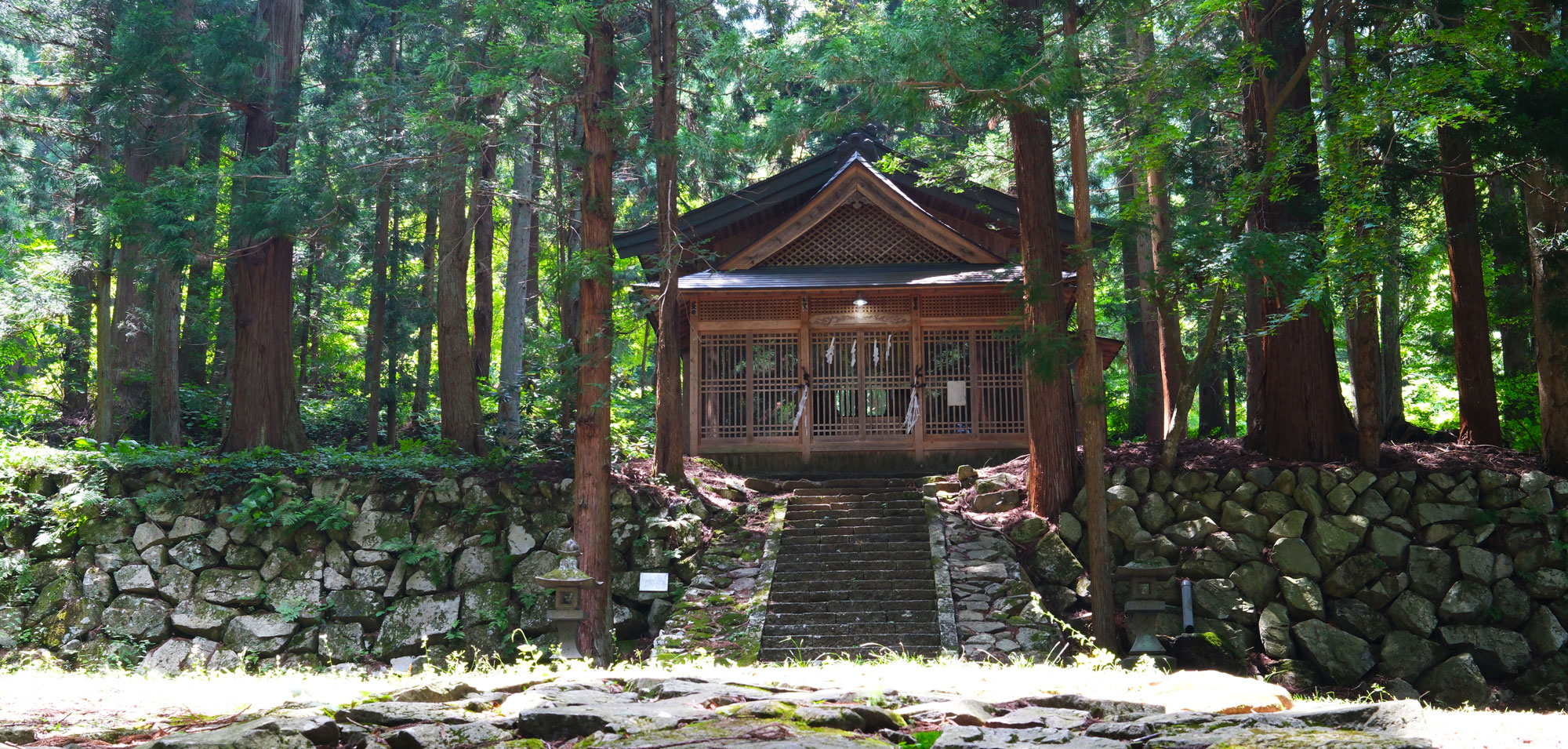
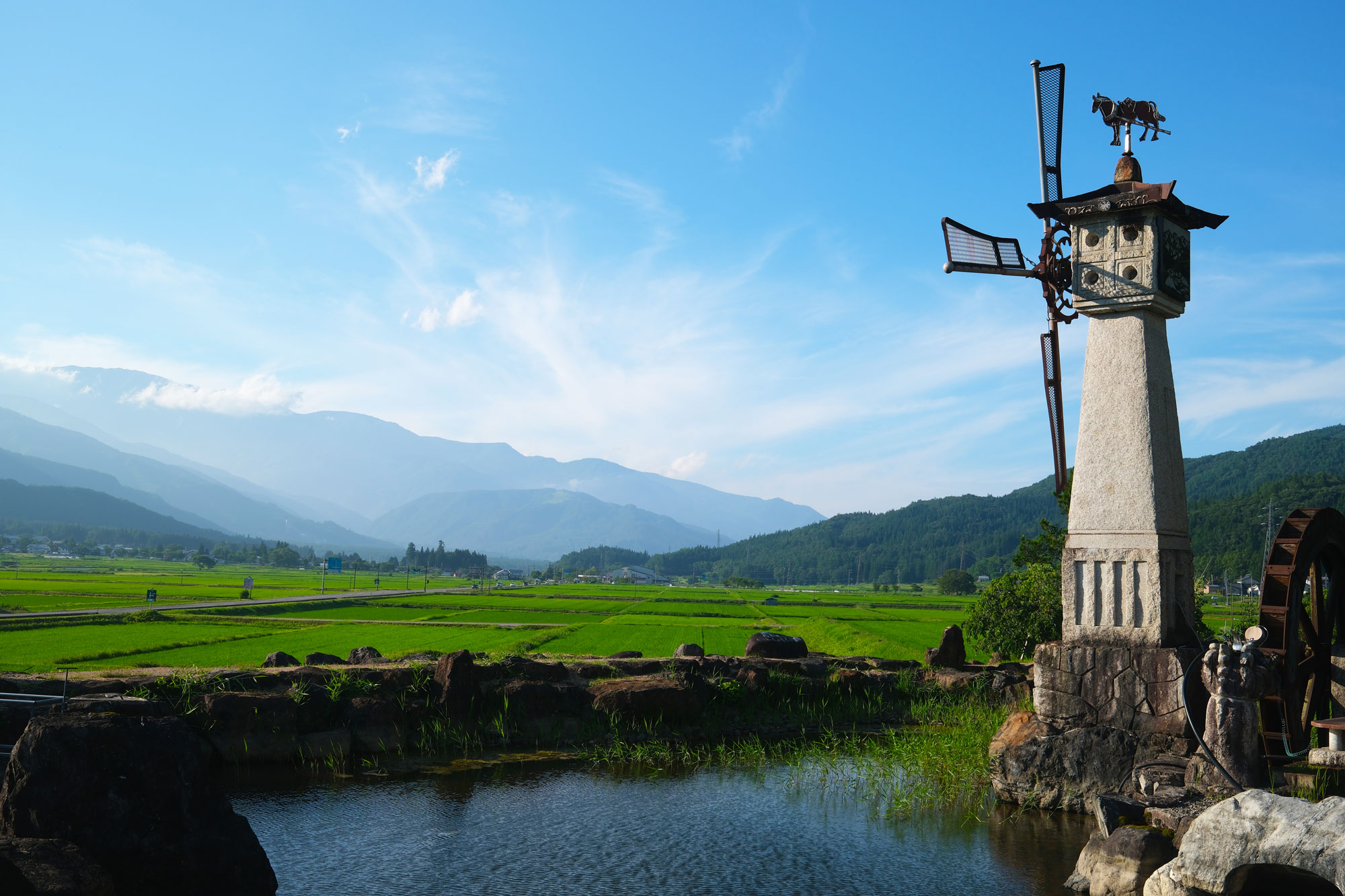
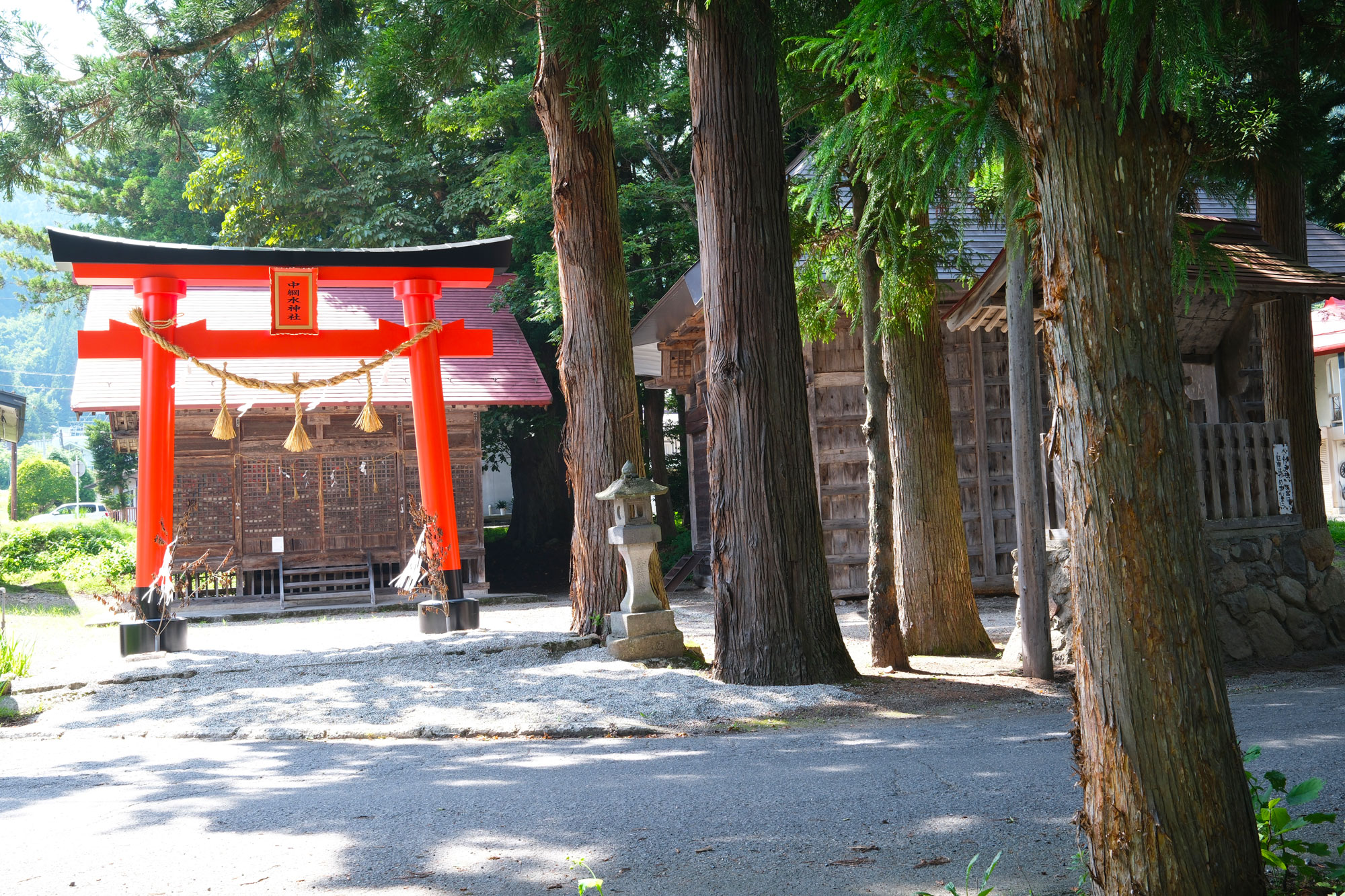
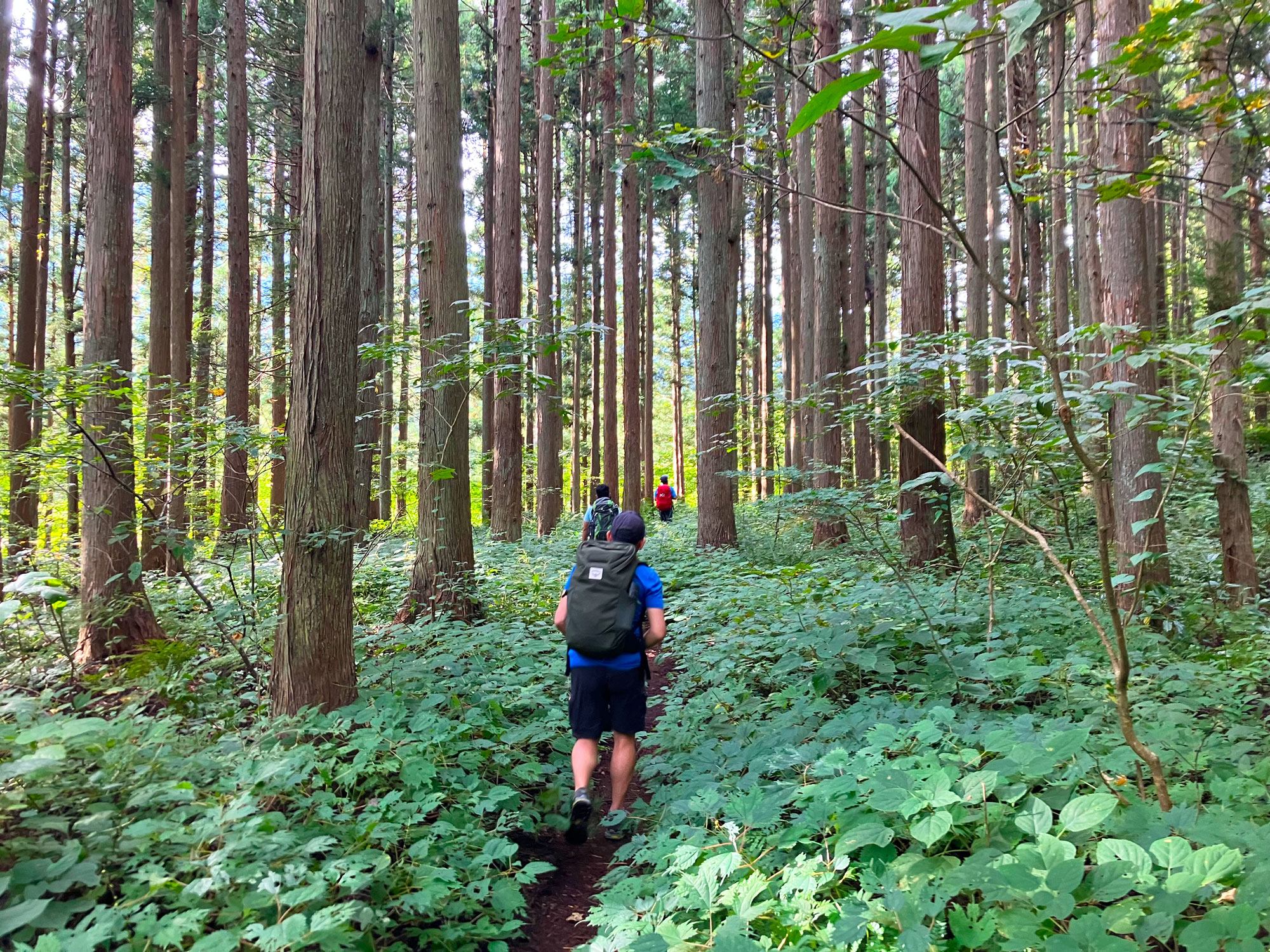
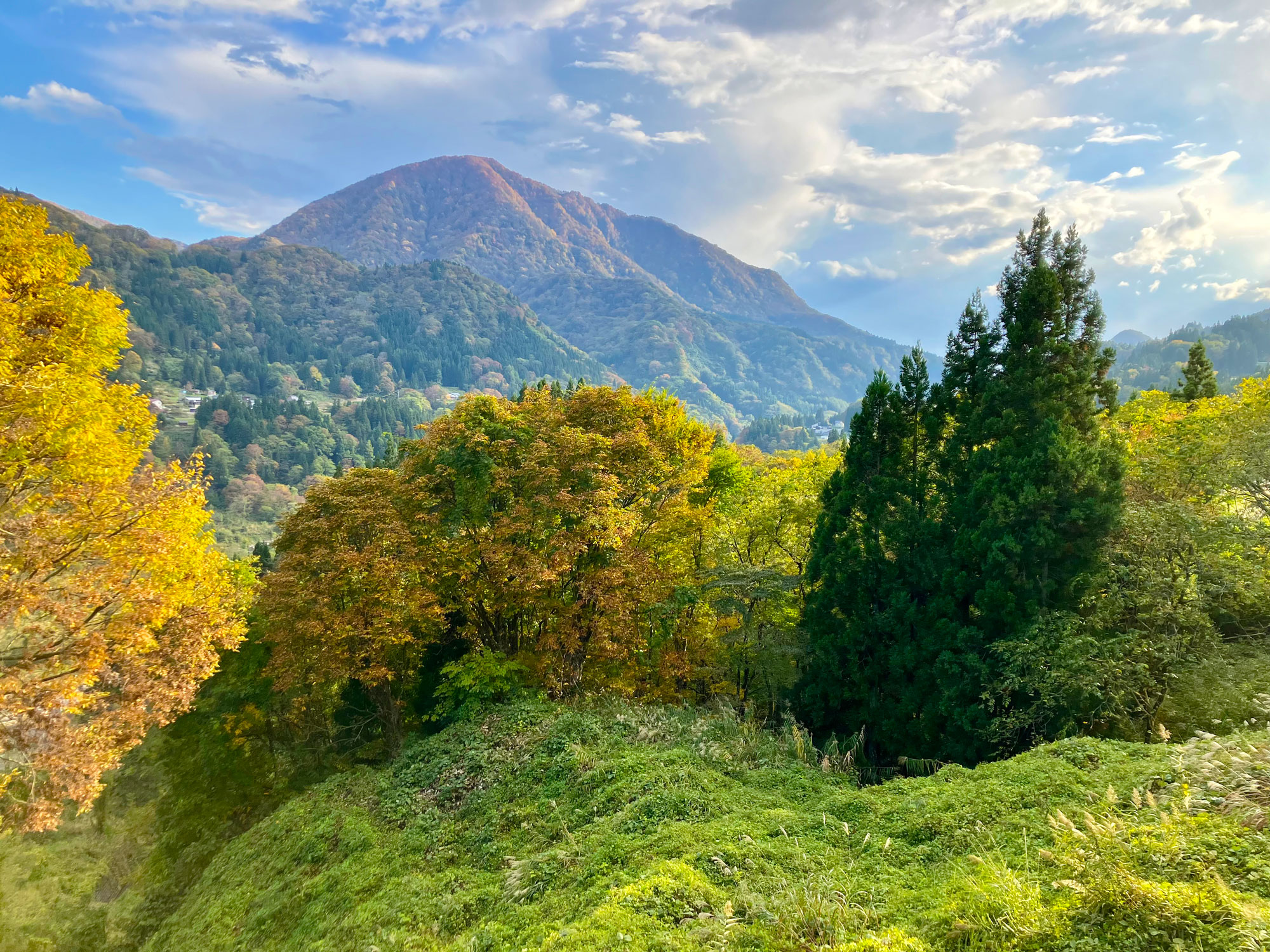
Towering and, in the late spring, snow-capped mountains are an almost continuous backdrop as the tour progresses through deep valleys, peaceful mountain villages and emerald forests, crosses over myriad streams, and crests several mountain passes. Ages-old, atmospheric Shinto Shrines, Buddhist statues and temples, which still line the route, once provided succour to the numerous weary porters and other travellers that made their way along this historic path. Today, these provide spaces of quiet respite and contemplation to the few modern-day walkers who venture along the Salt Road.
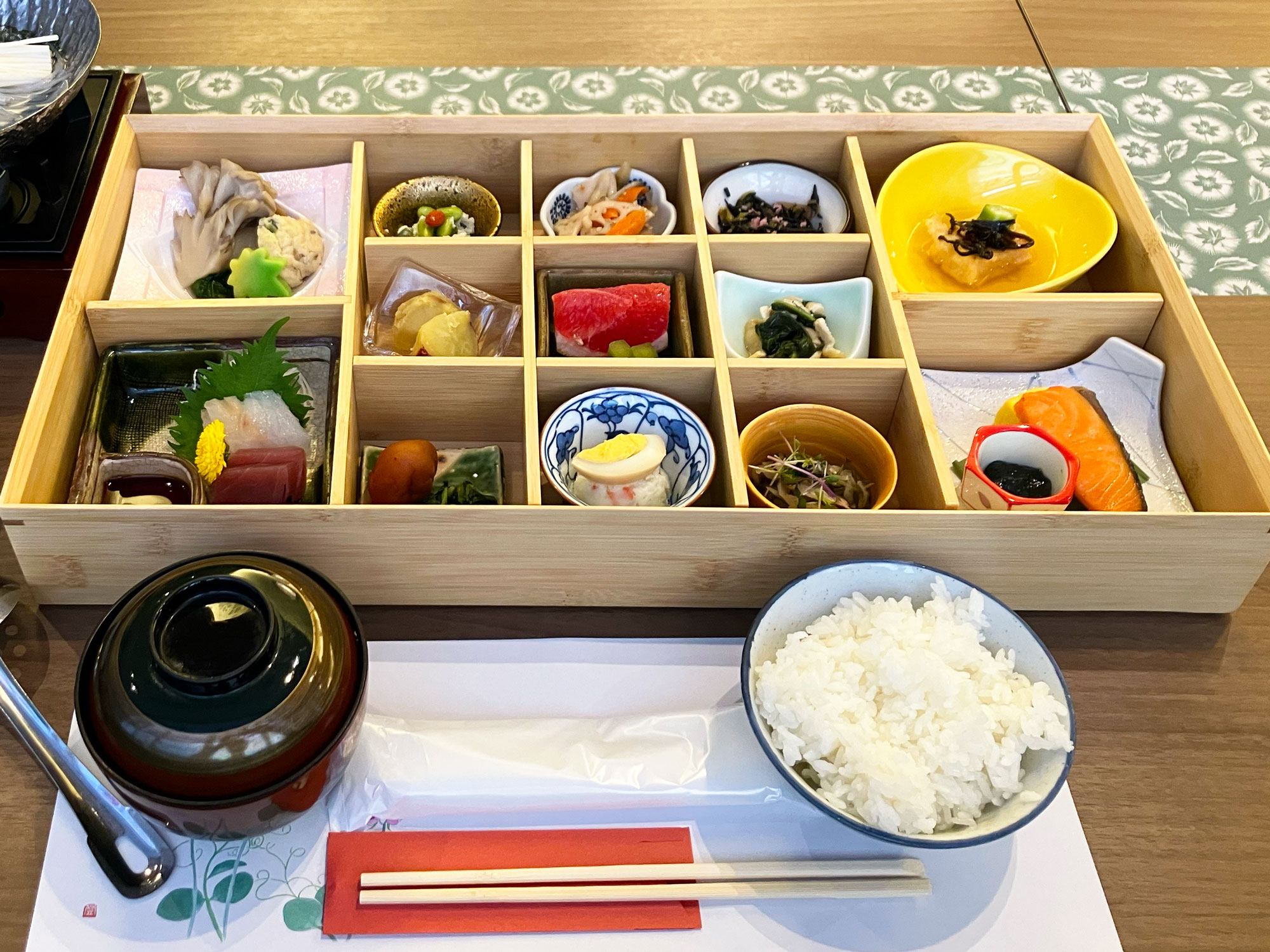
Therapeutic and relaxing onsen hot spring baths are a feature each night of the tour. Meals are mostly multi-course traditional feasts with ingredients freshly sourced from the surrounding farms, local rivers and mountains, and the Sea of Japan.
The Salt Road Wayfarer includes some uneven terrain and steep climbs. As such it is recommended for fit individuals who are used to trekking. Please contact us for guidance if you are not sure whether this tour is suitable for you.
A pre-tour pack. Each pack should answer most, if not all, of the questions you may have and includes such details as how to prepare for your Wayfarer Tour, how to travel from your arrival point in Japan to the accommodation on the tour's first night, an accommodation list, and travel advice. Upon receipt of a completed manifest form, your pre-tour pack will be made available for online viewing approximately two months prior to the start date of your tour. It can also be downloaded as a PDF file for offline use.
A Wayfarer Route Booklet. This is provided on arrival at your first night’s accommodation, and is an easily portable booklet. This includes detailed walking directions and logistical information, including maps, photographs and site-specific information such as lunch/cafe recommendations, museum/gallery recommendations and historical points of interest. A rain-resistant pouch and shoulder strap are also provided for ease of carrying the booklet while walking.
Click here for a sample of the Wayfarer booklet.
5-nights’ accommodation, 5 breakfasts and 5 dinners.
Main baggage transfer between your accommodations.
Two reserved taxi transfers to the start of some walks.
In-country (Japan), English-language support for the duration of the tour.
Not included are flights, 6 lunches and drinks with meals, transfers other than those noted in the itinerary.
Please note that Wayfarer self-guided tours sometimes require transfers by public buses and/or trains that are not included in the tour price. This is either because it is not possible to reserve them in advance or to allow maximum flexibility for tour participants. Please contact us for further details.
Please see the itinerary for this tour by clicking on the button found further up this page.
Tour accommodation is in hotels and Japanese inns. Please read more on accommodation here. For more information, please contact us.
Walk Japan’s Salt Road Wayfarer follows some of the best sections of The Salt Road, an ancient path that became an essential trading route in the samurai Edo Period (1603-1868). At just over 100km in length, it connected Matsumoto, a strategically important landlocked castle town, with Itoigawa, a port on the Sea of Japan coast. Vital supplies, epitomised by salt and fish, were transported inland by male and female bokka porters, who would carry up to 60kg on their backs. On their return they would be weighed down by tobacco, hemp, soya beans and washi paper. While their task was strenuous, undoubtedly it was made more agreeable by the spectacular scenery of the Japanese Alps through which they passed. Today, with only a far lighter day pack to shoulder, walkers can relish the same soaring scenery in much greater comfort.
The Salt Road provides an enthralling experience in a largely remote and little-visited yet beautiful region in the Japan Alps. This is an area that is mostly renowned for some of the deepest snow accumulation anywhere in Japan and, consequently, excellent for winter sports, so much so that the 1998 Winter Olympics were held here. More clement seasons, however, bring delightful walking, which for this tour begins in Omachi, a charming rural town in Nagano Prefecture. From here it follows the Salt Road through spectacular scenery to Itoigawa in Niigata Prefecture. Today a quiet seaside town, in the Edo Period Itoigawa provided harbour to kitamae-bune merchant ships, which plied their trade around the west of Japan between Osaka and Hokkaido.
Towering and, in the late spring, snow-capped mountains are an almost continuous backdrop as the tour progresses through deep valleys, peaceful mountain villages and emerald forests, crosses over myriad streams, and crests several mountain passes. Ages-old, atmospheric Shinto Shrines, Buddhist statues and temples, which still line the route, once provided succour to the numerous weary porters and other travellers that made their way along this historic path. Today, these provide spaces of quiet respite and contemplation to the few modern-day walkers who venture along the Salt Road.
Therapeutic and relaxing onsen hot spring baths are a feature each night of the tour. Meals are mostly multi-course traditional feasts with ingredients freshly sourced from the surrounding farms, local rivers and mountains, and the Sea of Japan.
The Salt Road Wayfarer includes some uneven terrain and steep climbs. As such it is recommended for fit individuals who are used to trekking. Please contact us for guidance if you are not sure whether this tour is suitable for you.
What is included?
A pre-tour pack. Each pack should answer most, if not all, of the questions you may have and includes such details as how to prepare for your Wayfarer Tour, how to travel from your arrival point in Japan to the accommodation on the tour's first night, an accommodation list, and travel advice. Upon receipt of a completed manifest form, your pre-tour pack will be made available for online viewing approximately two months prior to the start date of your tour. It can also be downloaded as a PDF file for offline use.
A Wayfarer Route Booklet. This is provided on arrival at your first night’s accommodation, and is an easily portable booklet. This includes detailed walking directions and logistical information, including maps, photographs and site-specific information such as lunch/cafe recommendations, museum/gallery recommendations and historical points of interest. A rain-resistant pouch and shoulder strap are also provided for ease of carrying the booklet while walking.
Click here for a sample of the Wayfarer booklet.
5-nights’ accommodation, 5 breakfasts and 5 dinners.
Main baggage transfer between your accommodations.
Two reserved taxi transfers to the start of some walks.
In-country (Japan), English-language support for the duration of the tour.
What is not included?
Not included are flights, 6 lunches and drinks with meals, transfers other than those noted in the itinerary.
Please note that Wayfarer self-guided tours sometimes require transfers by public buses and/or trains that are not included in the tour price. This is either because it is not possible to reserve them in advance or to allow maximum flexibility for tour participants. Please contact us for further details.
Please see the itinerary for this tour by clicking on the button found further up this page.

The itinerary for the Self-guided Salt Road Wayfarer is ground-only beginning in Omachi and ending in Itoigawa.
Your tour begins at the tour accommodation in Omachi, a small, quiet town surrounded by the soaring Japanese Alps in northern Nagano Prefecture. Most visitors travel here by rail from Matsumoto over a wide plain that narrows to a steep-sided valley as mountains close in on either side as the train journeys north.
Omachi was once vital for respite and accommodation for travellers journeying along the Salt Road in the Edo Period (1603–1868). Although long past its post-town heyday, today it is an attractive destination. Early arrivals may like to explore its neighbourhoods and visit two museums, one focused on the history of the old road and the other on the region’s alpine environment. Take a short taxi ride to your evening accommodation, which features onsen hot spring baths to enjoy a relaxing soak in before enjoying a delectable evening meal of local seasonal fare.
Accommodation: Japanese-style hotel with onsen hot spring baths.
Meals: Dinner provided.
Total walking: N/A.
Total elevation gain: N/A.
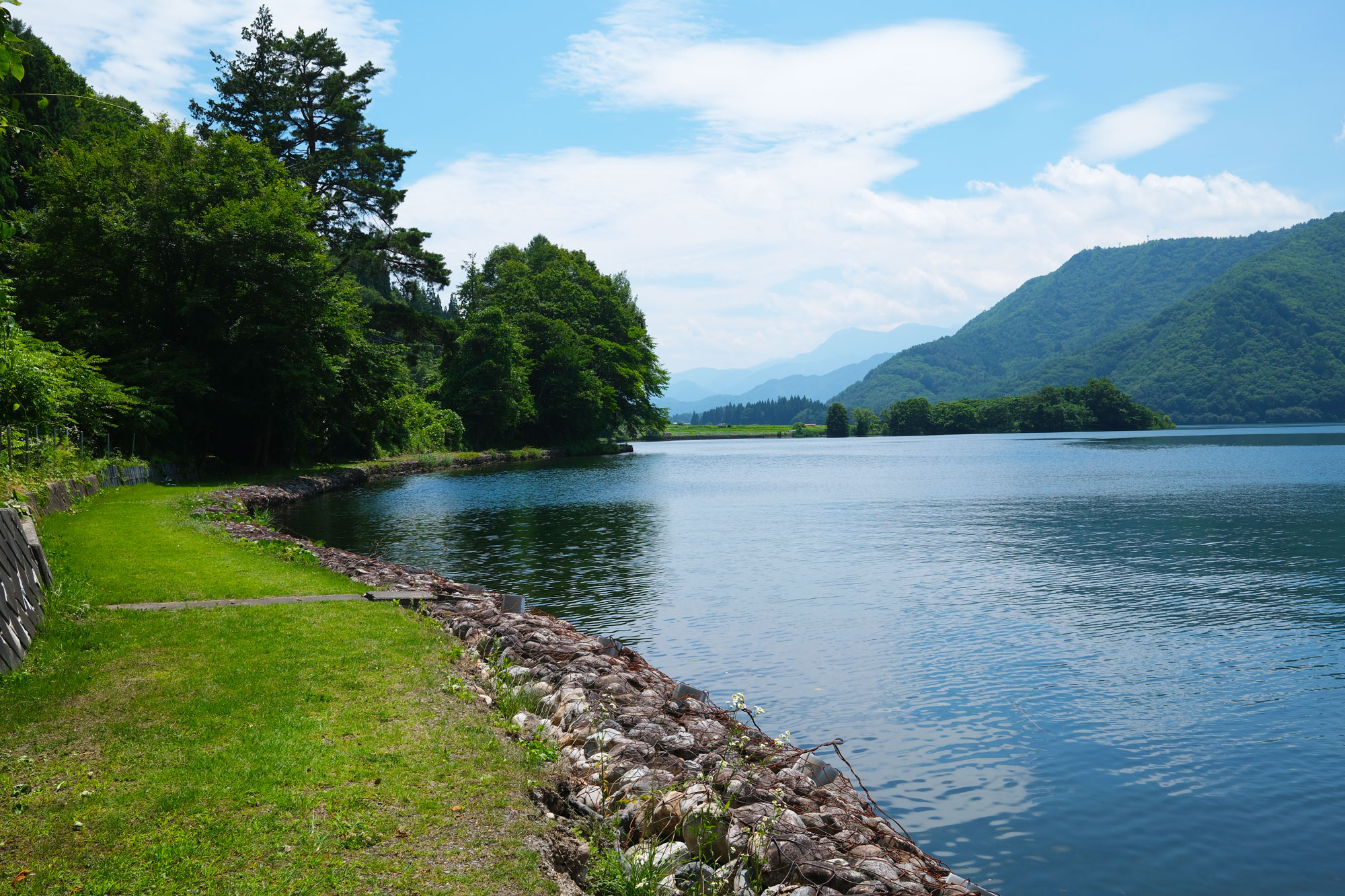
After breakfast, a reserved taxi transfers you further north and deeper into rural countryside to the start of today’s walk. Here, the Salt Road is a pleasant trail following the shore of Kizaki-ko, the first of three lakes passed today. The lake is popular amongst anglers who fish for sakura and yamame trout, some of which may well end up on your plate at dinner. Beyond, your path winds its way past rice fields, Shinto shrines and Buddhist statues.
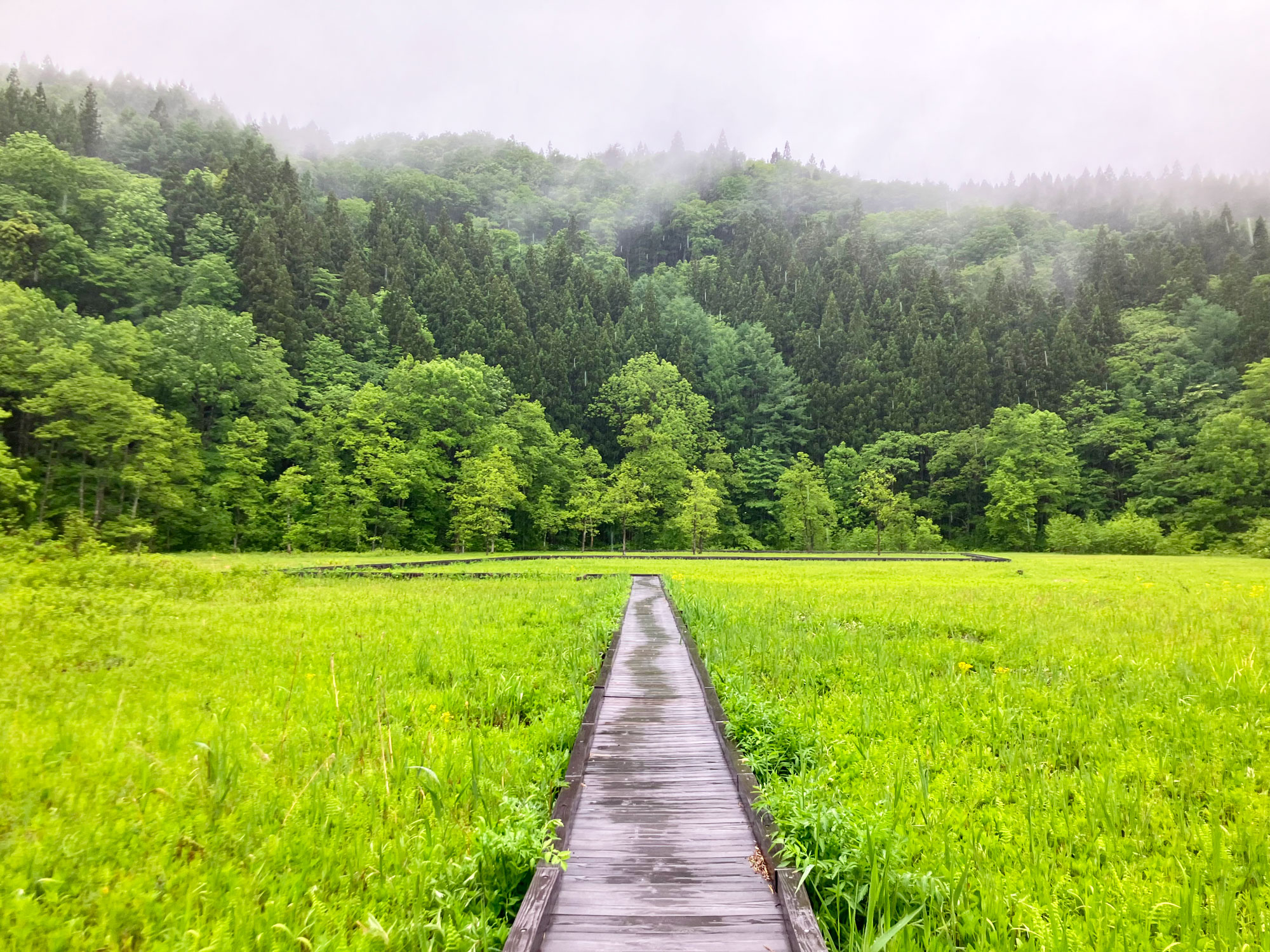
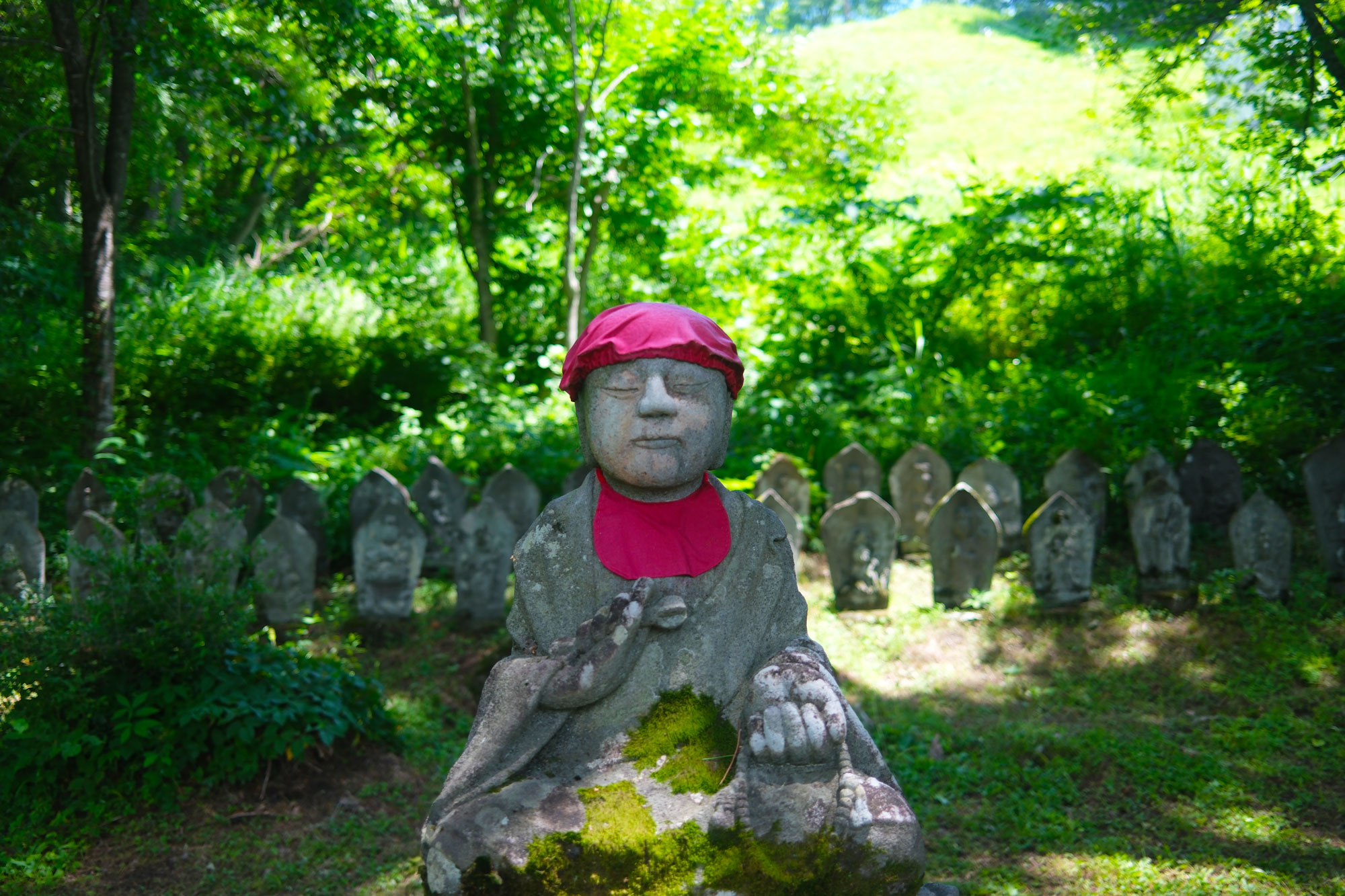
A gentle climb leads to a picnic lunch spot with views over the second lake of the day, Nakatsuna-ko. The Salt Road then ascends to the final lake of the day, Aoki-ko. Hereon, 33 statues of Kannon the Goddess of Compassion, which have been providing spiritual protection and comfort to travellers over the centuries, line the path. A short descent brings you to a wetland reserve, which provides an optional looping walk following a boardwalk for those who would like to stretch their legs a little further. A short train ride away is Hakuba, which is blanketed in deep snows every winter and has been long-popular with skiers. So much so that it found world fame as the main venue for the 1998 Winter Olympics. Outside of this season, however, the town reverts to being a sleepy, rural backwater.
Your evening accommodation is a family-run traditional inn with onsen hot spring baths to luxuriate in. A multi-course dinner is served with great care and attention to detail by your hosts.
Accommodation: Japanese inn with onsen hot spring baths.
Meals: Breakfast & dinner provided.
Total walking: 17km (10.5 miles).
Total elevation gain: 200m (650ft).
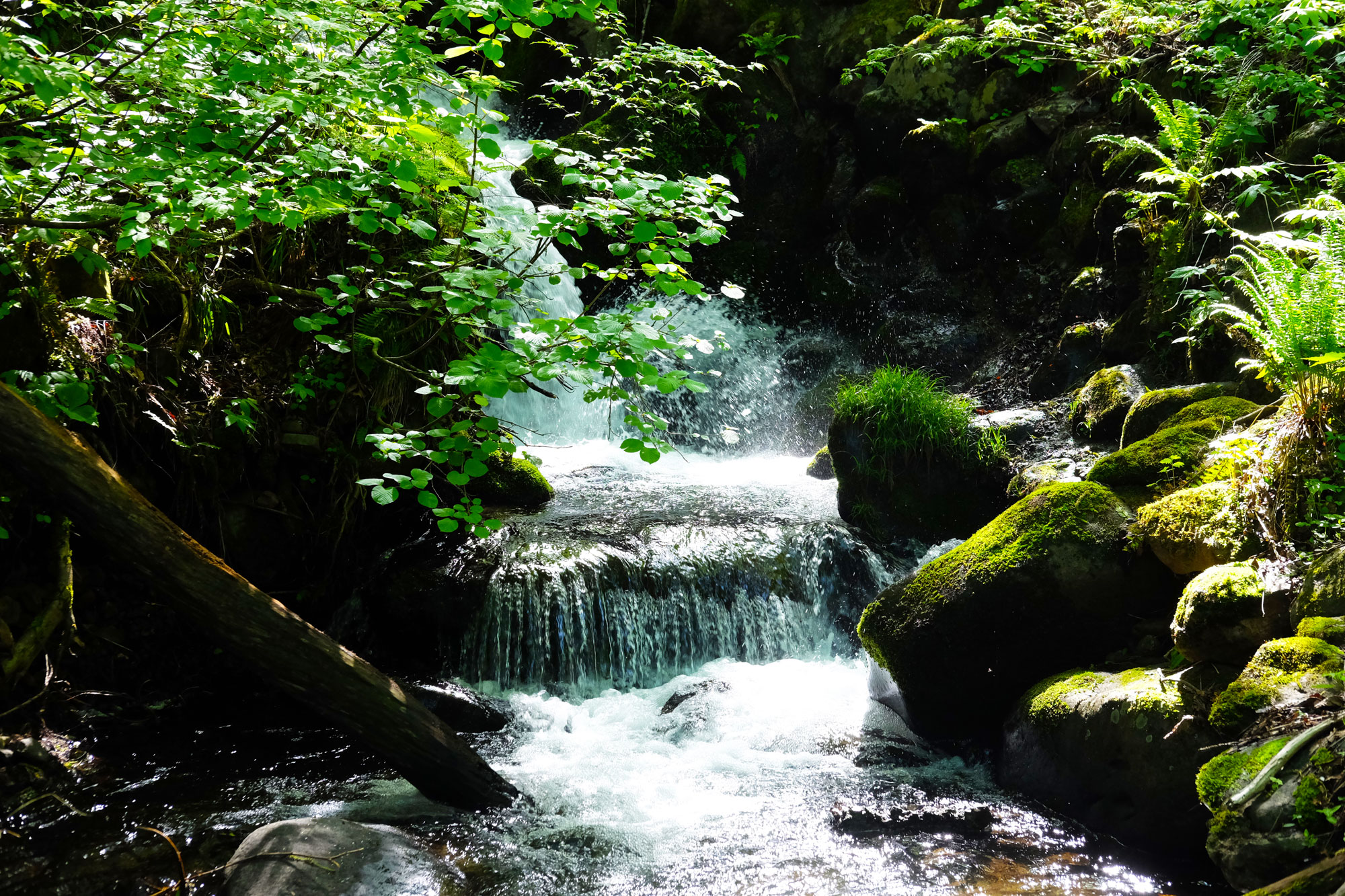
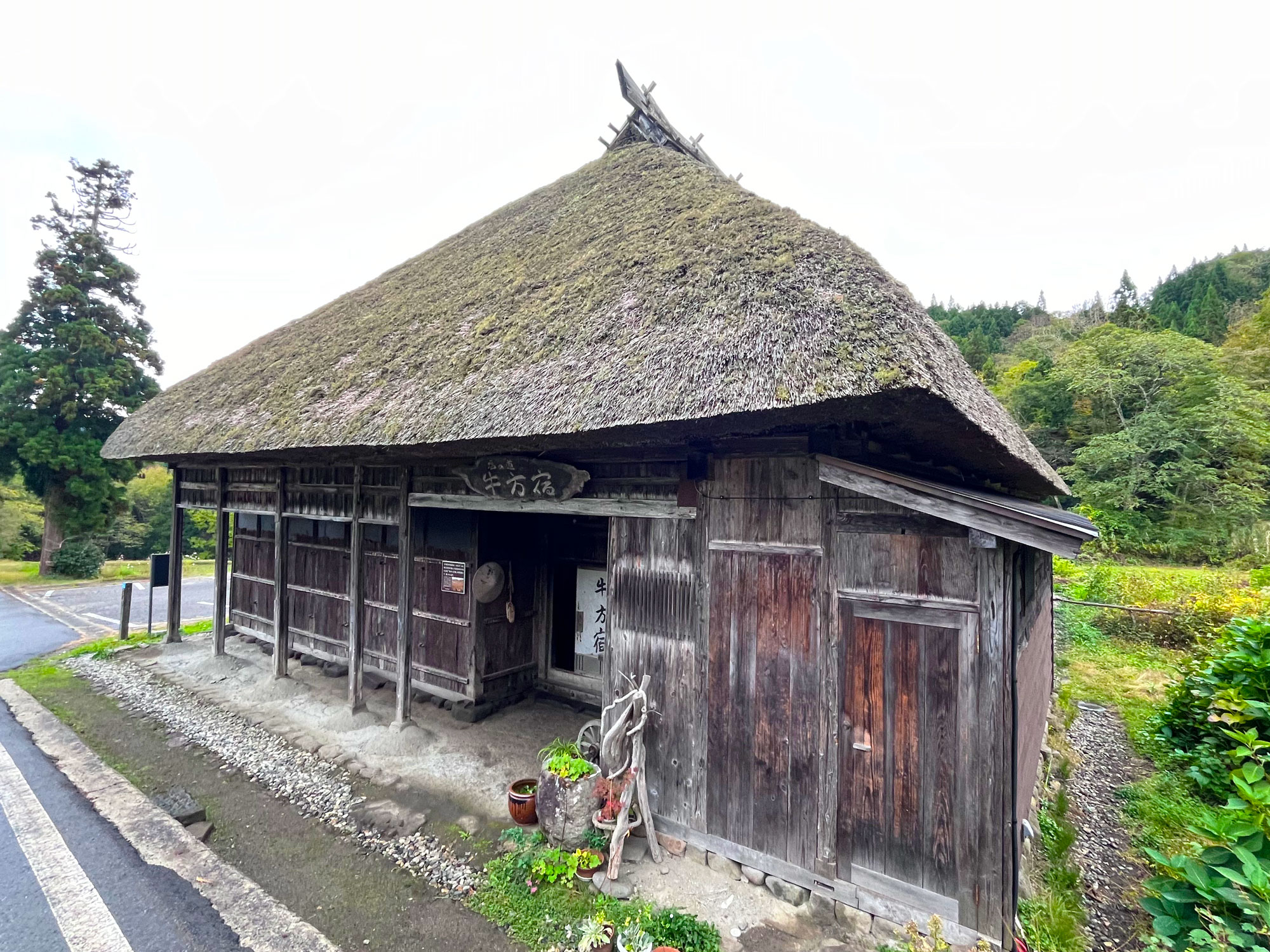
Today’s walk goes deeper into the dramatic landscape of the Japanese Alps. The trail begins at your inn’s doorstep on a quiet country lane, which passes farm houses and rice paddies, before turning into a woodland path that frequently crosses sparkling streams. Ancient Buddhist statues dot the route that leads eventually to a distinctive thatched building, which once provided food and lodging to bokka porters and ushikata oxen masters. Oxen are sure-footed, if slow, beasts of burden and were usually employed on more challenging terrain. This included the series of steeper switchbacks to be negotiated beyond here that lead to Otari, one of Japan’s remoter towns. A sekisho, an Edo Period checkpoint, has been reconstructed here and is another atmospheric reminder of older times when the Salt Road was a busy thoroughfare. Fearsome samurai warriors would stand guard to verify traveller’s credentials and extract tolls on any goods they were carrying. Fortunately, these days the locals, in common with the Japanese people at large, are much more welcoming and amenable.
Rest here before negotiating a series of steep ascents and descents through forests to Kudarise Onsen. Your accommodation is set in a deep valley and aside the Himekawa, a river that flows from the wetlands seen late yesterday afternoon. More onsen hot spring baths provide a well-earned reviving soak prior to dining on a hearty rural meal.
Accommodation: Japanese-style hotel with onsen hot spring baths.
Meals: Breakfast & dinner provided.
Total walking: 21km (13.0 miles).
Total elevation gain:320m (1,050ft).
This area, together with neighbouring Hakuba, sees some of the heaviest snowfalls in the world, let alone Japan. Although long melted away by the time of this tour, snow here can reach an accumulated depth of 11 metres making passage very difficult in winter.
Once again, step out onto the Salt Road from your accommodation to follow an ascending trail through forests to a mountain hamlet with well-tended rice paddies and steeply-roofed houses, which are designed to easily shed heavy snows. As their forebears did over the centuries, locals diligently care for the Buddhist statues, protectors of travellers, found aside the path here.
Continue on climbing through terraced fields and a cedar forest to the top of a pass, below which lies another charming hamlet. A little further on the Salt Road makes use of a modern bridge to cross a wide river before following a mountain stream through woodlands. A Shinto shrine and Zen Buddhist temple are passed in succession before the trail leads through more hamlets to a popular rural roadside rest stop, which includes a food market, restaurant and hot springs.
Depending on energy levels, from here either catch a train or continue walking the Salt Road to your destination this evening. Walkers follow a path that ascends and descends through forests over two steeper passes before a final easier stretch, which provides grand views over a verdant valley as far as your accommodation for the evening. Here, onsen hot spring baths and a sumptuous dinner are grand rewards for the effort made today.
Accommodation: Japanese-style hotel with onsen hot spring baths.
Meals: Breakfast & dinner provided.
Total walking: 21.5km (13.3 miles).
Total elevation gain: 515m (1,690ft).
After breakfast, today’s journey starts with a reserved taxi ride over the prefectural border from landlocked Nagano to coastal Niigata and onto the start of today’s walk. The Salt Road quickly leads to the Fossa Magna Park, which is a fascinating geological site recognised by UNESCO. Whilst small in itself, the park provides clear evidence of the Fossa Magna, a very wide rift, running north to south that divides Japan east to west.
Although the Salt Road is now beyond the Japanese Alps, this impressive mountain range continues to provide a grand backdrop throughout the day. Ahead is the Sea of Japan and Itoigawa, which is today a quiet coastal town that once bustled with kitamae-bune merchant ships trading goods as they sailed to and fro around west Japan.
Today’s trail covers gentler ground, first through forests and farmland before reaching the outskirts of Itoigawa. The end of the Salt Road on the coast is a 2.5km stroll through town, an urban contrast to the bucolic rural countryside experienced so far. At your hotel enjoy a leisurely soak in the onsen baths before dinner, another Japanese feast composed of produce from the Sea of Japan, the surrounding farmland and mountains.
Accommodation: Japanese hotel with onsen hot spring baths.
Meals: Breakfast & dinner provided.
Total walking: 17.5km (11 miles).
Total elevation gain: 280m (918ft).
The tour finishes after breakfast in your accommodation. Onward journeys by Shinkansen bullet and express trains to major destinations are conveniently made from Itoigawa.
Accommodation: N/A.
Meals: Breakfast provided.
Total walking: N/A.
Total elevation gain: N/A.
This itinerary is subject to change.
Day 1 Omachi
Your tour begins at the tour accommodation in Omachi, a small, quiet town surrounded by the soaring Japanese Alps in northern Nagano Prefecture. Most visitors travel here by rail from Matsumoto over a wide plain that narrows to a steep-sided valley as mountains close in on either side as the train journeys north.
Omachi was once vital for respite and accommodation for travellers journeying along the Salt Road in the Edo Period (1603–1868). Although long past its post-town heyday, today it is an attractive destination. Early arrivals may like to explore its neighbourhoods and visit two museums, one focused on the history of the old road and the other on the region’s alpine environment. Take a short taxi ride to your evening accommodation, which features onsen hot spring baths to enjoy a relaxing soak in before enjoying a delectable evening meal of local seasonal fare.
Accommodation: Japanese-style hotel with onsen hot spring baths.
Meals: Dinner provided.
Total walking: N/A.
Total elevation gain: N/A.
Day 2 Omachi – Hakuba
After breakfast, a reserved taxi transfers you further north and deeper into rural countryside to the start of today’s walk. Here, the Salt Road is a pleasant trail following the shore of Kizaki-ko, the first of three lakes passed today. The lake is popular amongst anglers who fish for sakura and yamame trout, some of which may well end up on your plate at dinner. Beyond, your path winds its way past rice fields, Shinto shrines and Buddhist statues.
A gentle climb leads to a picnic lunch spot with views over the second lake of the day, Nakatsuna-ko. The Salt Road then ascends to the final lake of the day, Aoki-ko. Hereon, 33 statues of Kannon the Goddess of Compassion, which have been providing spiritual protection and comfort to travellers over the centuries, line the path. A short descent brings you to a wetland reserve, which provides an optional looping walk following a boardwalk for those who would like to stretch their legs a little further. A short train ride away is Hakuba, which is blanketed in deep snows every winter and has been long-popular with skiers. So much so that it found world fame as the main venue for the 1998 Winter Olympics. Outside of this season, however, the town reverts to being a sleepy, rural backwater.
Your evening accommodation is a family-run traditional inn with onsen hot spring baths to luxuriate in. A multi-course dinner is served with great care and attention to detail by your hosts.
Accommodation: Japanese inn with onsen hot spring baths.
Meals: Breakfast & dinner provided.
Total walking: 17km (10.5 miles).
Total elevation gain: 200m (650ft).
Day 3 Hakuba – Kudarise Onsen
Today’s walk goes deeper into the dramatic landscape of the Japanese Alps. The trail begins at your inn’s doorstep on a quiet country lane, which passes farm houses and rice paddies, before turning into a woodland path that frequently crosses sparkling streams. Ancient Buddhist statues dot the route that leads eventually to a distinctive thatched building, which once provided food and lodging to bokka porters and ushikata oxen masters. Oxen are sure-footed, if slow, beasts of burden and were usually employed on more challenging terrain. This included the series of steeper switchbacks to be negotiated beyond here that lead to Otari, one of Japan’s remoter towns. A sekisho, an Edo Period checkpoint, has been reconstructed here and is another atmospheric reminder of older times when the Salt Road was a busy thoroughfare. Fearsome samurai warriors would stand guard to verify traveller’s credentials and extract tolls on any goods they were carrying. Fortunately, these days the locals, in common with the Japanese people at large, are much more welcoming and amenable.
Rest here before negotiating a series of steep ascents and descents through forests to Kudarise Onsen. Your accommodation is set in a deep valley and aside the Himekawa, a river that flows from the wetlands seen late yesterday afternoon. More onsen hot spring baths provide a well-earned reviving soak prior to dining on a hearty rural meal.
Accommodation: Japanese-style hotel with onsen hot spring baths.
Meals: Breakfast & dinner provided.
Total walking: 21km (13.0 miles).
Total elevation gain:320m (1,050ft).
Day 4 Kudarise Onsen – Himekawa Onsen
This area, together with neighbouring Hakuba, sees some of the heaviest snowfalls in the world, let alone Japan. Although long melted away by the time of this tour, snow here can reach an accumulated depth of 11 metres making passage very difficult in winter.
Once again, step out onto the Salt Road from your accommodation to follow an ascending trail through forests to a mountain hamlet with well-tended rice paddies and steeply-roofed houses, which are designed to easily shed heavy snows. As their forebears did over the centuries, locals diligently care for the Buddhist statues, protectors of travellers, found aside the path here.
Continue on climbing through terraced fields and a cedar forest to the top of a pass, below which lies another charming hamlet. A little further on the Salt Road makes use of a modern bridge to cross a wide river before following a mountain stream through woodlands. A Shinto shrine and Zen Buddhist temple are passed in succession before the trail leads through more hamlets to a popular rural roadside rest stop, which includes a food market, restaurant and hot springs.
Depending on energy levels, from here either catch a train or continue walking the Salt Road to your destination this evening. Walkers follow a path that ascends and descends through forests over two steeper passes before a final easier stretch, which provides grand views over a verdant valley as far as your accommodation for the evening. Here, onsen hot spring baths and a sumptuous dinner are grand rewards for the effort made today.
Accommodation: Japanese-style hotel with onsen hot spring baths.
Meals: Breakfast & dinner provided.
Total walking: 21.5km (13.3 miles).
Total elevation gain: 515m (1,690ft).
Day 5 Himekawa Onsen – Itoigawa
After breakfast, today’s journey starts with a reserved taxi ride over the prefectural border from landlocked Nagano to coastal Niigata and onto the start of today’s walk. The Salt Road quickly leads to the Fossa Magna Park, which is a fascinating geological site recognised by UNESCO. Whilst small in itself, the park provides clear evidence of the Fossa Magna, a very wide rift, running north to south that divides Japan east to west.
Although the Salt Road is now beyond the Japanese Alps, this impressive mountain range continues to provide a grand backdrop throughout the day. Ahead is the Sea of Japan and Itoigawa, which is today a quiet coastal town that once bustled with kitamae-bune merchant ships trading goods as they sailed to and fro around west Japan.
Today’s trail covers gentler ground, first through forests and farmland before reaching the outskirts of Itoigawa. The end of the Salt Road on the coast is a 2.5km stroll through town, an urban contrast to the bucolic rural countryside experienced so far. At your hotel enjoy a leisurely soak in the onsen baths before dinner, another Japanese feast composed of produce from the Sea of Japan, the surrounding farmland and mountains.
Accommodation: Japanese hotel with onsen hot spring baths.
Meals: Breakfast & dinner provided.
Total walking: 17.5km (11 miles).
Total elevation gain: 280m (918ft).
Day 6 Itoigawa
The tour finishes after breakfast in your accommodation. Onward journeys by Shinkansen bullet and express trains to major destinations are conveniently made from Itoigawa.
Accommodation: N/A.
Meals: Breakfast provided.
Total walking: N/A.
Total elevation gain: N/A.
This itinerary is subject to change.
The itinerary for the Salt Road Wayfarer tour is ground only, beginning in Omachi and ending in Itoigawa.
The major international airports convenient for the tour's start at Omachi are Tokyo’s Haneda and Narita Airports, Nagoya’s Chubu Airport and Osaka’s Kansai Airport.
-----
FROM TOKYO’S HANEDA AIRPORT (HND)
From Tokyo’s Haneda Airport, transfer by the Tokyo Monorail or Keikyu Railway and then JR line trains to Shinjuku Station, from where Azusa Express trains depart for Matsumoto. From Matsumoto, board a local train on the Oito Line for Shinano-Omachi Station. The total journey takes approximately 5.5 hours. Take a taxi to the accommodation.
-----
FROM TOKYO’S NARITA AIRPORT (NRT)
From Tokyo’s Narita Airport, Narita Express trains depart to Shinjuku Station, from where Azusa Express trains depart for Matsumoto. From Matsumoto, board a local train on the Oito Line depart for Shinano-Omachi Station. The total journey takes approximately 6 hours. Take a taxi to the accommodation.
-----
FROM NAGOYA’S CENTRAL JAPAN INTERNATIONAL AIRPORT (NGO)
From Nagoya’s Central Japan Airport, Meitetsu Line trains depart for Nagoya Station. Change here to the neighbouring JR Station for the Shinano Express train to Matsumoto, from where local trains on the Oito Line depart for Shinano-Omachi Station. The journey takes approximately 5 hours. Take a taxi to the accommodation.
-----
FROM OSAKA’S KANSAI INTERNATIONAL AIRPORT (KIX)
From Osaka’s Kansai International Airport, Haruka Express trains depart for Shin-Osaka Station. Change here to the Tokaido Shinkansen bullet train for Nagoya, from where Shinano Express trains depart for Matsumoto. From Matsumoto, board a local train on the Oito Line for Shinano-Omachi Station. The total journey takes approximately 6 hours. Take a taxi to the accommodation.
-----
The Pre-tour Pack includes detailed instructions, including a map, for travel to the accommodation at the start of the tour.
Please note that the journey at the end of the tour by Shinkansen bullet train from Itoigawa to Tokyo and then on by express train to Narita Airport is approximately 3.5 hours and to Haneda Airport 3 hours. Travel to Nagoya by Shinkansen via Tokyo is approximately 4.5 hours. Travel by express via Osaka to Kansai Airport is approximately 5 hours.
The major international airports convenient for the tour's start at Omachi are Tokyo’s Haneda and Narita Airports, Nagoya’s Chubu Airport and Osaka’s Kansai Airport.
-----
FROM TOKYO’S HANEDA AIRPORT (HND)
From Tokyo’s Haneda Airport, transfer by the Tokyo Monorail or Keikyu Railway and then JR line trains to Shinjuku Station, from where Azusa Express trains depart for Matsumoto. From Matsumoto, board a local train on the Oito Line for Shinano-Omachi Station. The total journey takes approximately 5.5 hours. Take a taxi to the accommodation.
-----
FROM TOKYO’S NARITA AIRPORT (NRT)
From Tokyo’s Narita Airport, Narita Express trains depart to Shinjuku Station, from where Azusa Express trains depart for Matsumoto. From Matsumoto, board a local train on the Oito Line depart for Shinano-Omachi Station. The total journey takes approximately 6 hours. Take a taxi to the accommodation.
-----
FROM NAGOYA’S CENTRAL JAPAN INTERNATIONAL AIRPORT (NGO)
From Nagoya’s Central Japan Airport, Meitetsu Line trains depart for Nagoya Station. Change here to the neighbouring JR Station for the Shinano Express train to Matsumoto, from where local trains on the Oito Line depart for Shinano-Omachi Station. The journey takes approximately 5 hours. Take a taxi to the accommodation.
-----
FROM OSAKA’S KANSAI INTERNATIONAL AIRPORT (KIX)
From Osaka’s Kansai International Airport, Haruka Express trains depart for Shin-Osaka Station. Change here to the Tokaido Shinkansen bullet train for Nagoya, from where Shinano Express trains depart for Matsumoto. From Matsumoto, board a local train on the Oito Line for Shinano-Omachi Station. The total journey takes approximately 6 hours. Take a taxi to the accommodation.
-----
The Pre-tour Pack includes detailed instructions, including a map, for travel to the accommodation at the start of the tour.
Please note that the journey at the end of the tour by Shinkansen bullet train from Itoigawa to Tokyo and then on by express train to Narita Airport is approximately 3.5 hours and to Haneda Airport 3 hours. Travel to Nagoya by Shinkansen via Tokyo is approximately 4.5 hours. Travel by express via Osaka to Kansai Airport is approximately 5 hours.