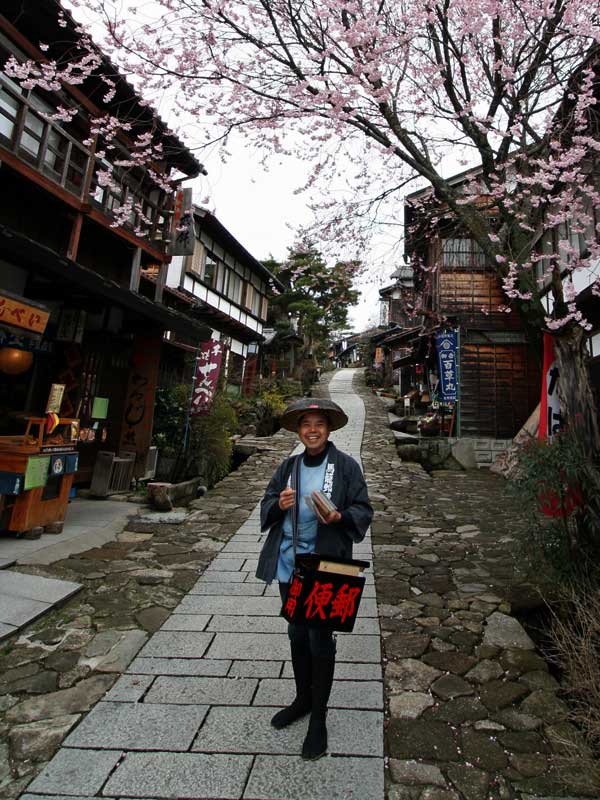
A walking tour along a continuous route in central Japan.
The abridged version of Walk Japan’s Nakasendo Way tour focuses on the mid-section of this historical road through the mountains of central Japan; great walking with many of the attributes that made the Nakasendo Way a classic tour of Japan.
Year-round.
The Nakasendo Way: The Kiso Road is a fully-guided tour suitable for anyone who is an occasional walker and can walk for more than three to four hours in comfort. In general, the route is gently undulating but also it includes some short, steeper climbs. Please read more on Tour Levels here.
Tour accommodation is in Japanese inns and hotels. Please read more on accommodation here. The small, intimate nature of the inns makes the maximum group size 12 people. We have no minimum size. If we accept a booking we guarantee to run the tour.
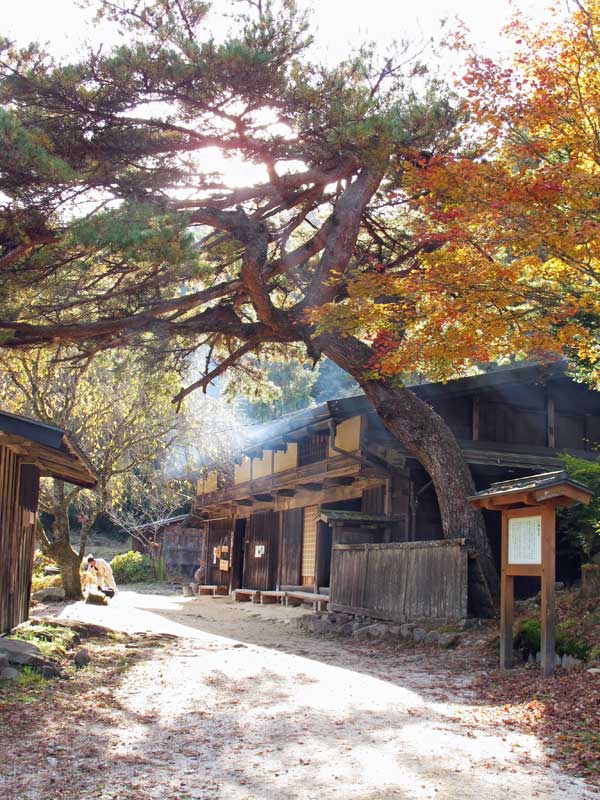
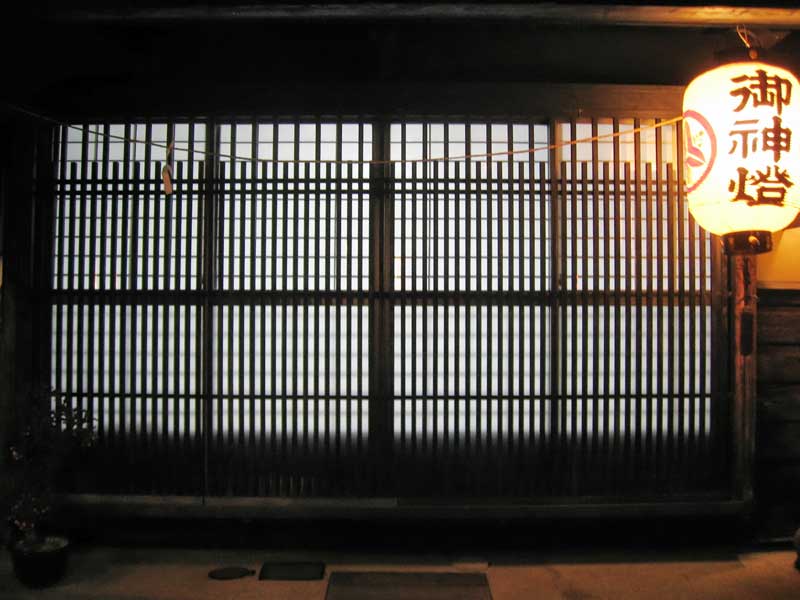
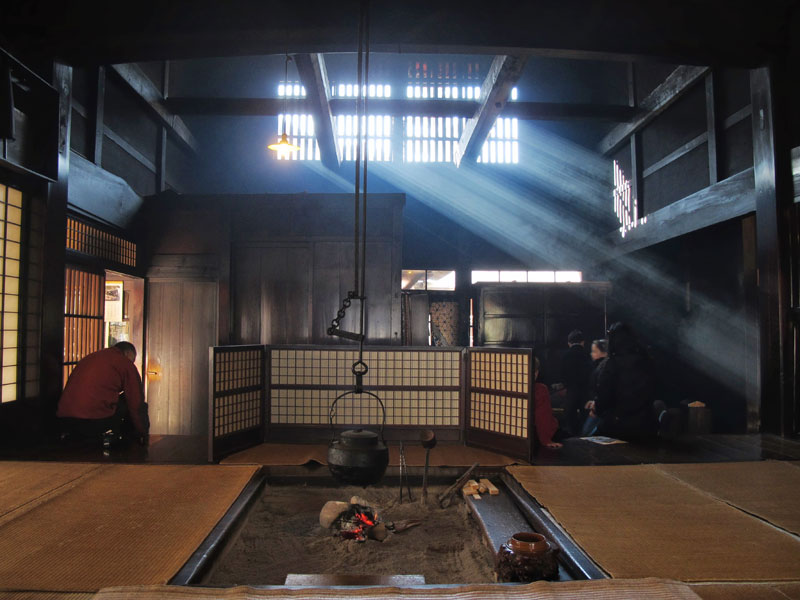
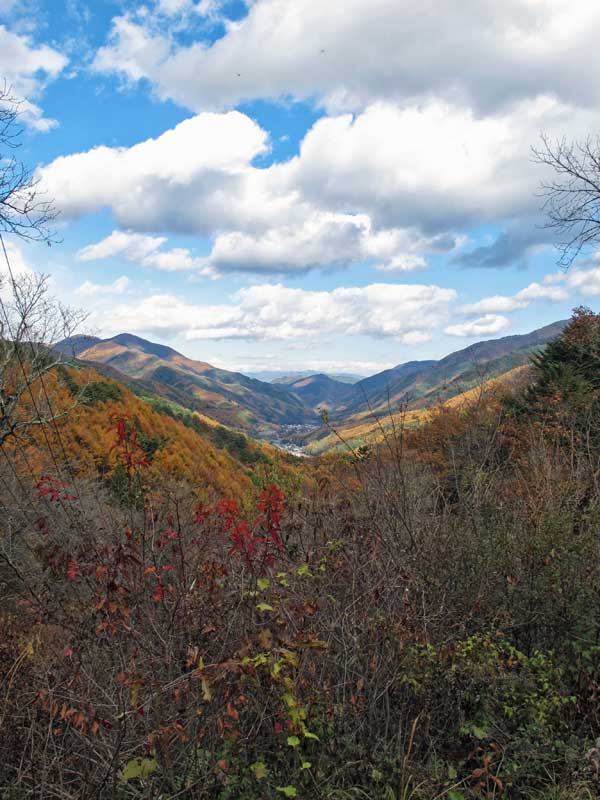
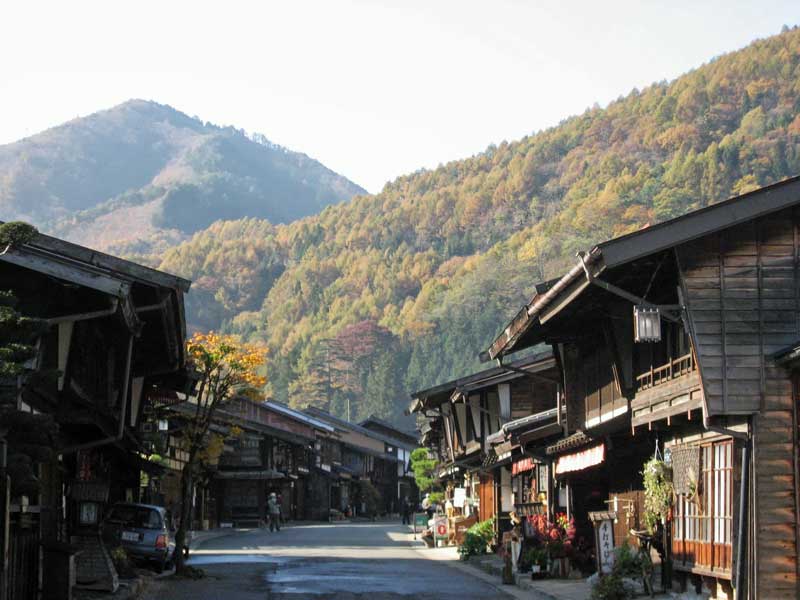
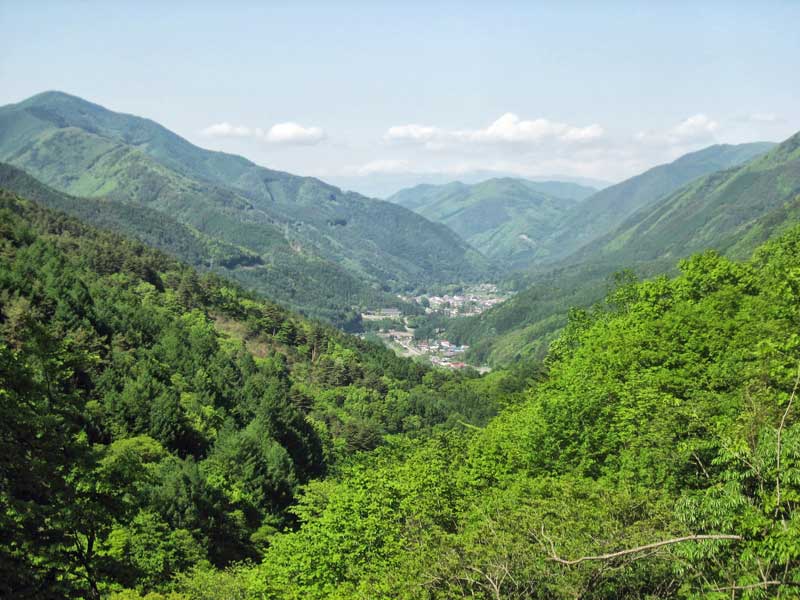
The Kiso Road is one of the most beautiful sections of the Nakasendo Way, our original tour that has become the classic walking tour in Japan. This short-stay, fully-guided walking tour follows the ancient Nakasendo Way through the Kiso Valley of central Japan and also reaches the high alpine Kaida Plateau. Our route takes us into a world far removed from the modern bustle of Japan’s megacities. We travel through some of the most picturesque and historical villages in the nation, stay in rural family-run Japanese inns and relax in onsen thermal hot spring baths. Meals are a treat of Japanese cuisine, and because we are deep in the rural mountains of Japan, ingredients include many locally grown vegetables, morsels foraged in the surrounding mountains and fresh-water fish caught in the nearby streams and rivers.
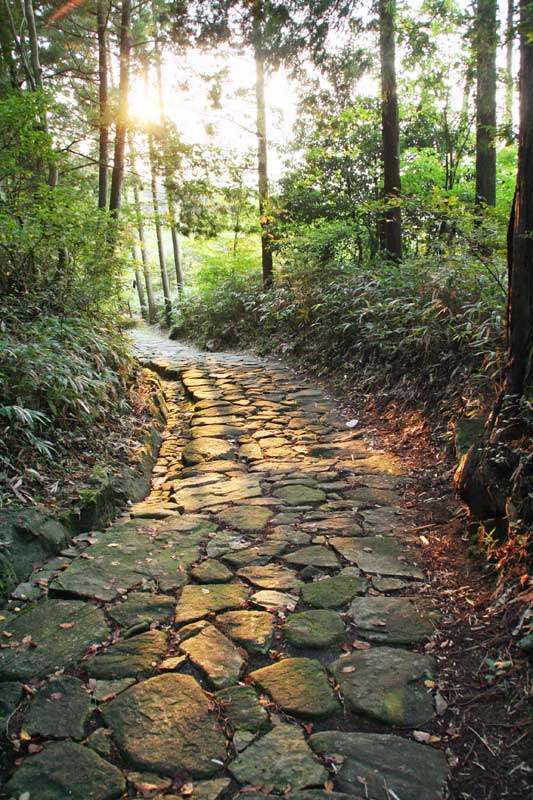
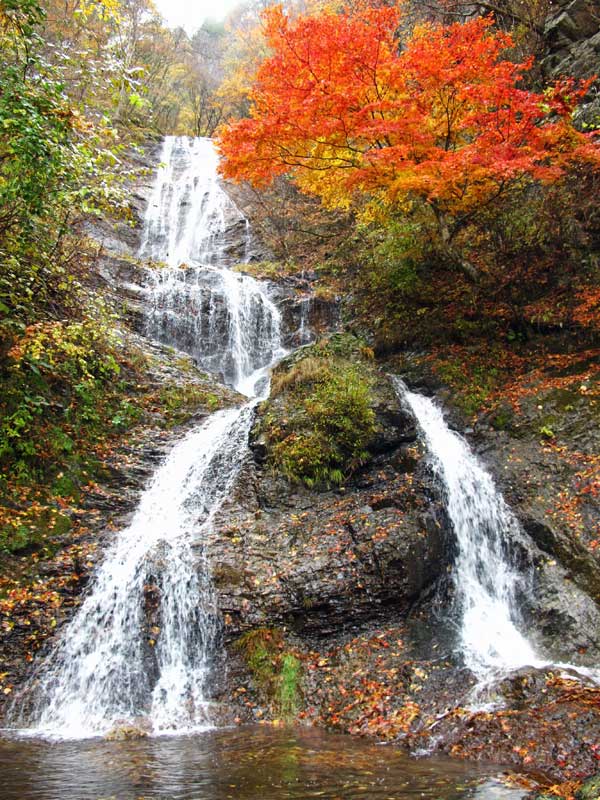
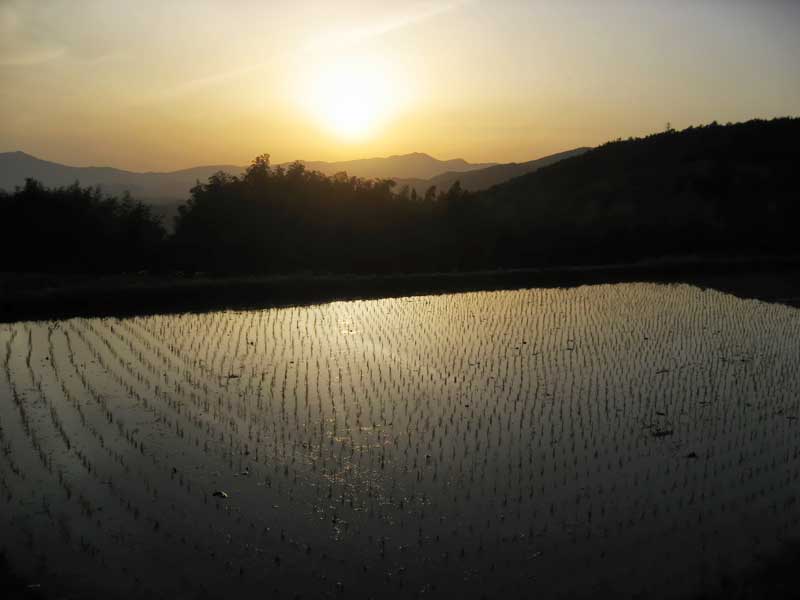
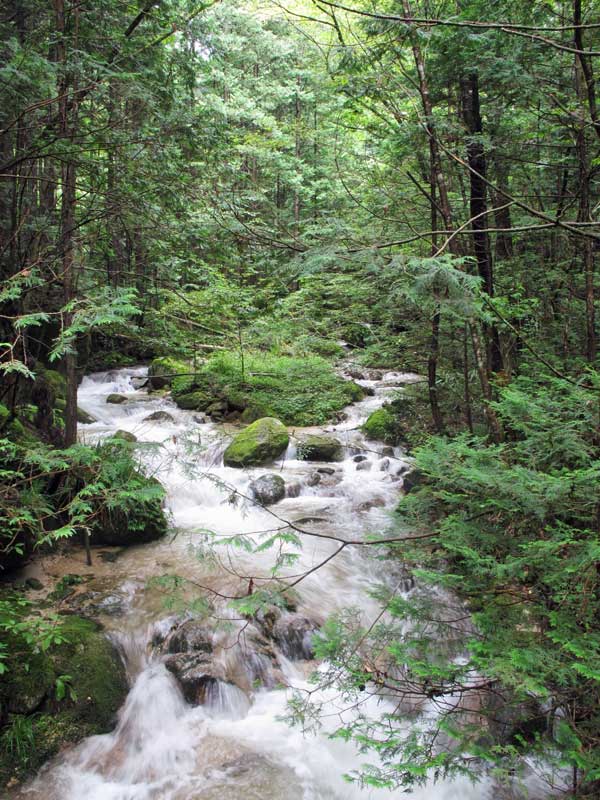
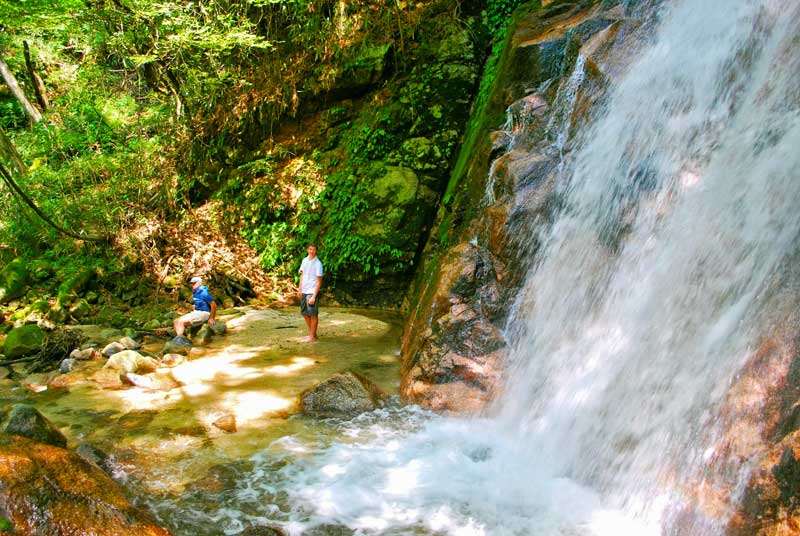
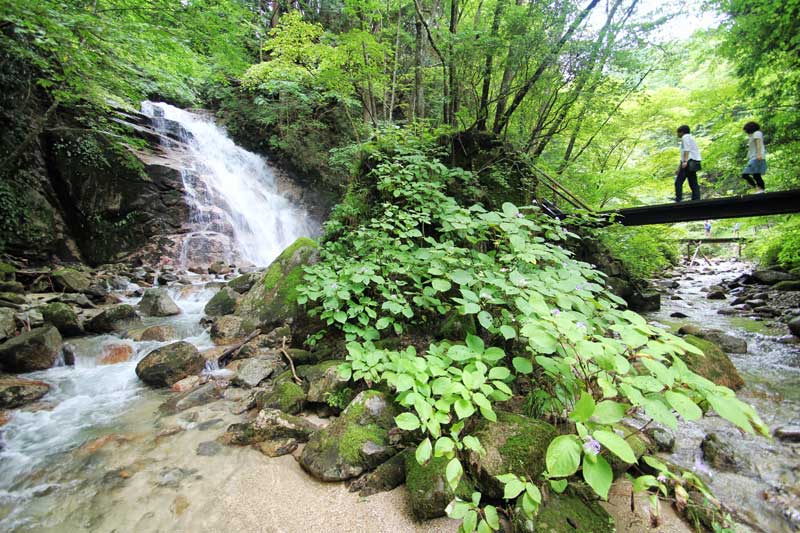
The tour starts in Ena or Nagoya, from where we travel to the Kiso Road section of the Nakasendo Way. Soon afterwards, we begin our walk in the traditional countryside of stepped paddy fields, shrines, farmhouses with carefully tended gardens, woods and hills. Further into the hills, our trail takes us through deep verdant forests, past fast-flowing mountain streams and waterfalls before we reach our destination for the night, an atmospheric inn in a remote hamlet. Here, physically and emotionally, we are a long way from the big cities into the old heart of Japan.
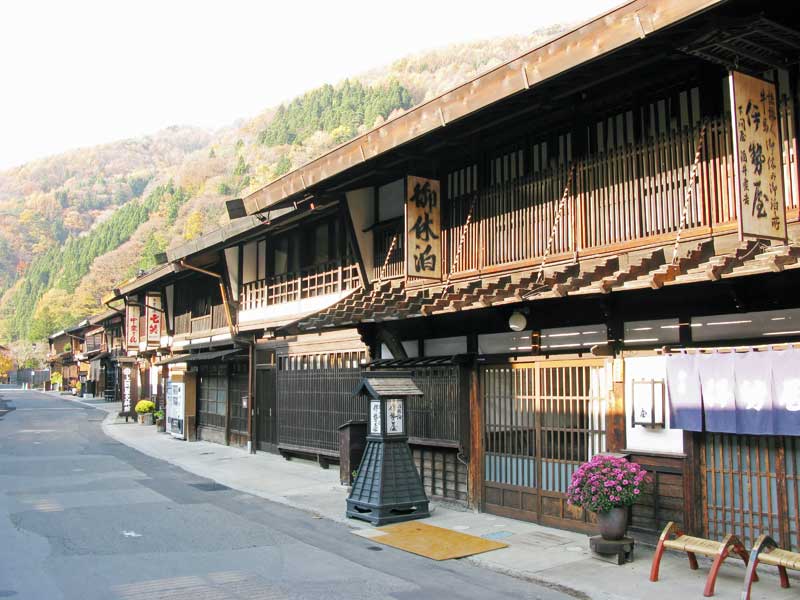
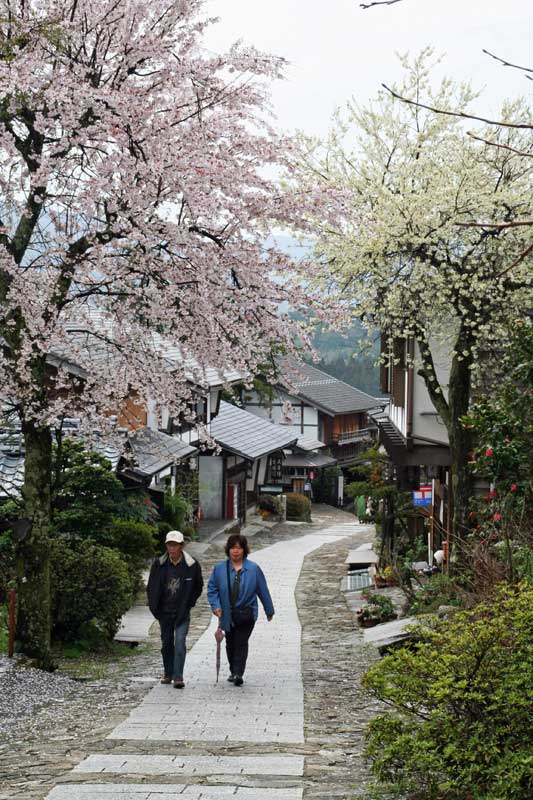
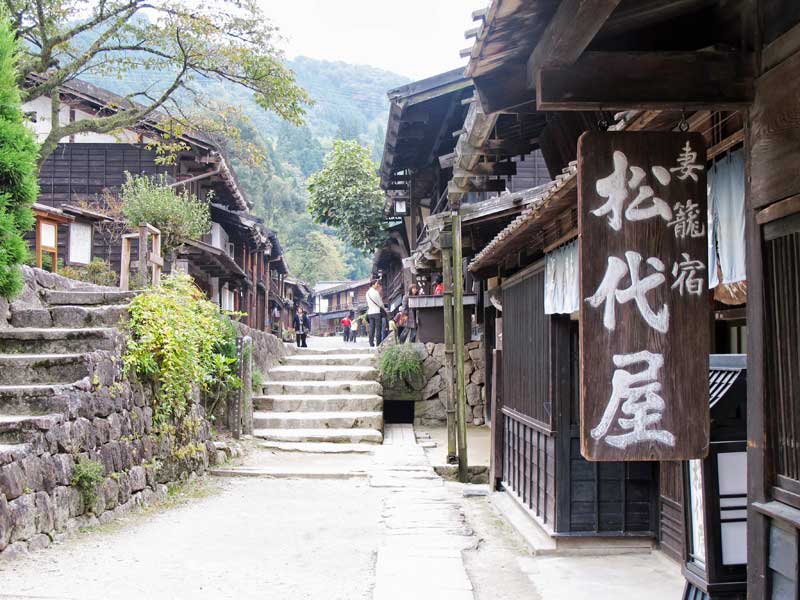
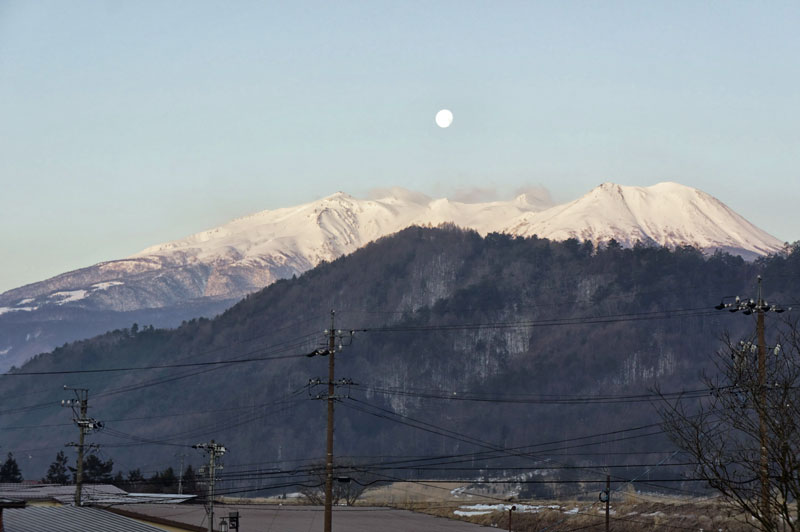
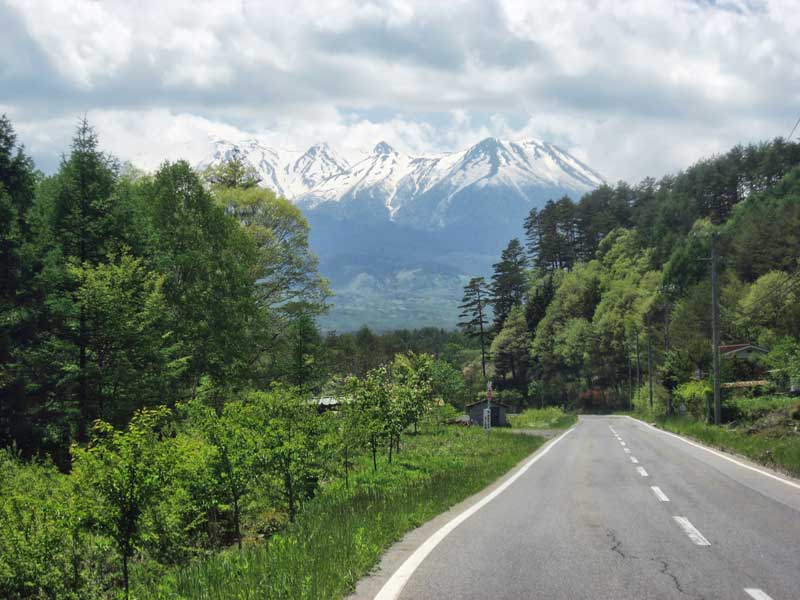
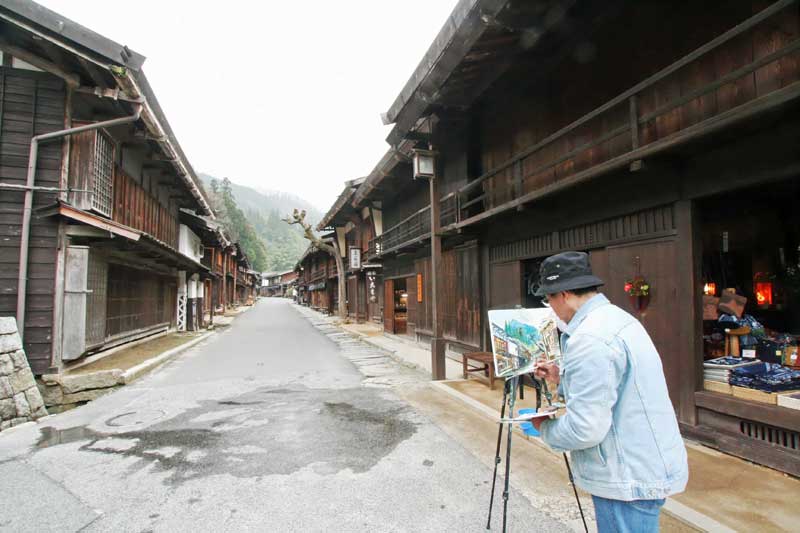
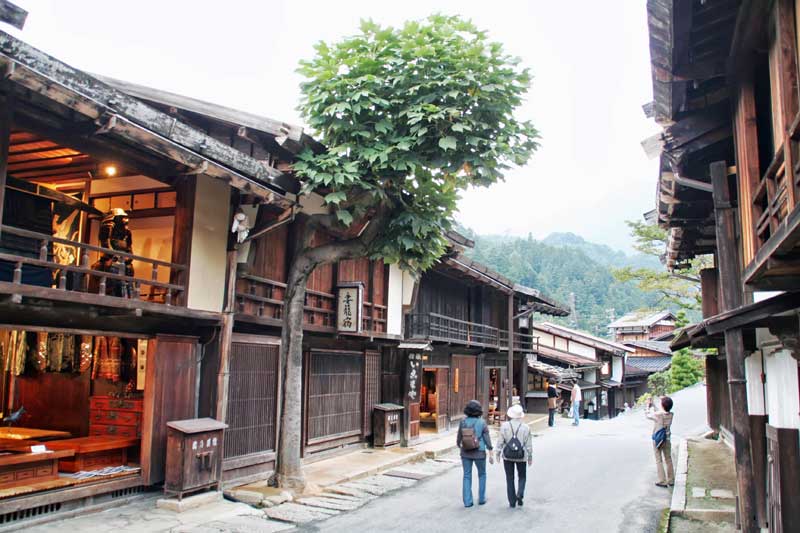
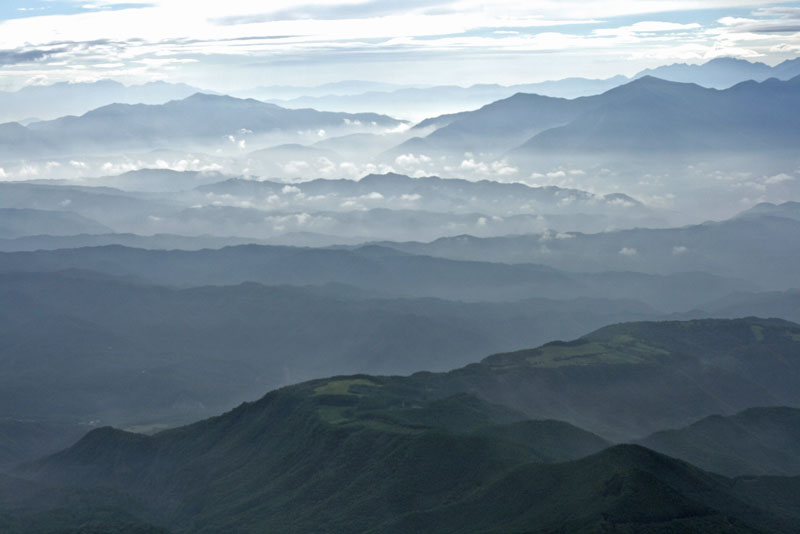
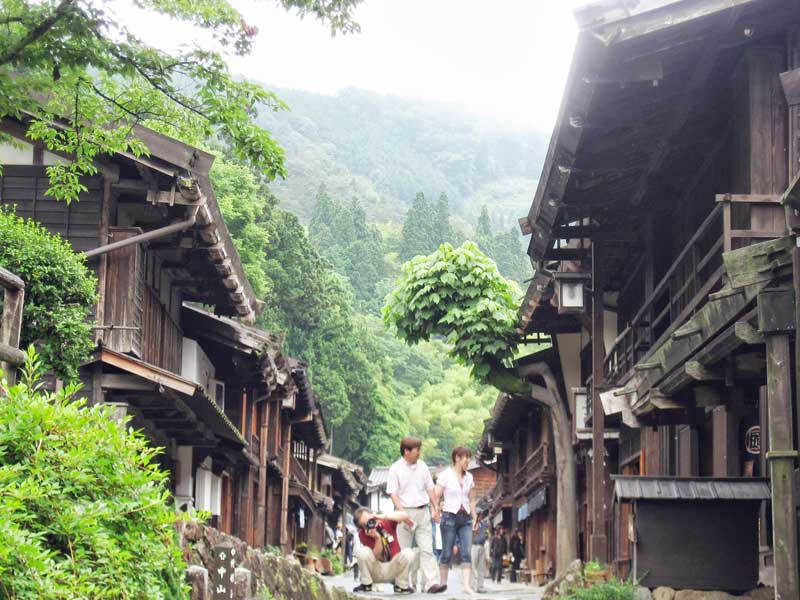
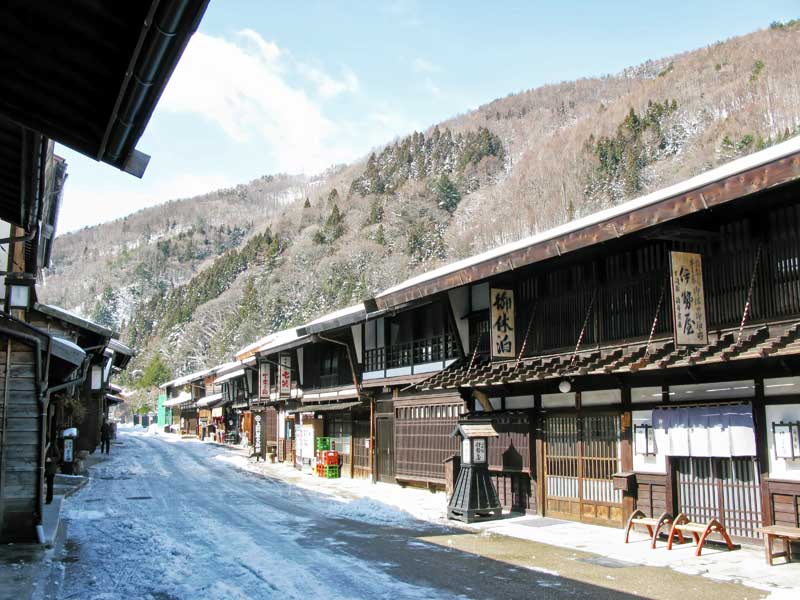
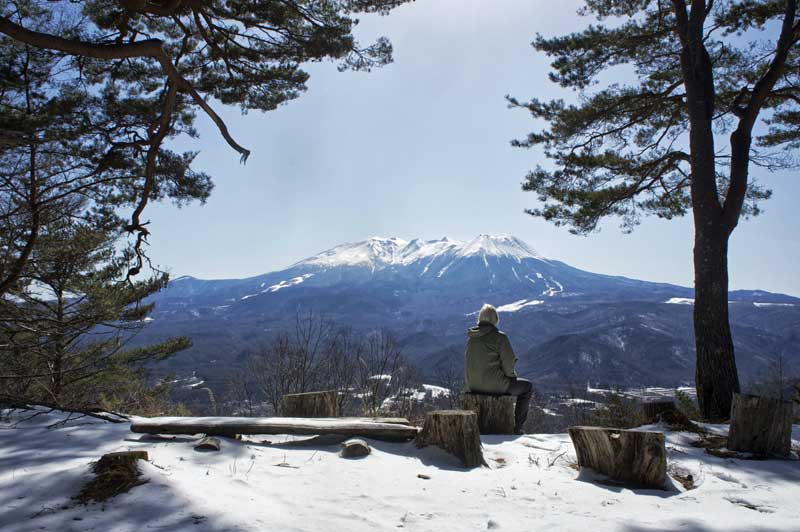
The following day our travels take us through beautiful Tsumago, probably the best preserved post town in Japan, and further north, into the southern end of the Central Alps of Japan, where some of Japan’s highest mountains are found. We visit the Kaida Plateau, which we reach over a high pass of the old Hida Trail. This trail once linked to the Nakasendo Way but today barely anyone other than ourselves walks this route. Once over the pass we descend onto the Kaida Plateau. The Plateau is considered one of the most beautiful areas of Japan, not least because of the spectacular backdrop of Mt. Ontake, a sacred mountain and one of Japan’s largest volcanos. The onsen hot spring baths at our inn for the night provide a delightful way to relax before our dinner, another feast, together. Our final day on the road takes us back to the Nakasendo Way and over the Torii Pass, one of the old road’s highest points. We descend to Narai, another delightful old post town. Depending on the version of this tour, we either travel on to Matsumoto, a delightful castle city surrounded by Japan’s Central Alps, or complete our journey at Kiso-Fukushima.
More information about the history of the Nakasendo highway is available at our complementary website: Nakasendo Way: A Journey to the Heart of Japan.
Tour accommodation is in Japanese inns and hotels. Please read more on accommodation here. The small, intimate nature of the inns makes the maximum group size 12 people. We have no minimum size. If we accept a booking we guarantee to run the tour.
The Kiso Road is one of the most beautiful sections of the Nakasendo Way, our original tour that has become the classic walking tour in Japan. This short-stay, fully-guided walking tour follows the ancient Nakasendo Way through the Kiso Valley of central Japan and also reaches the high alpine Kaida Plateau. Our route takes us into a world far removed from the modern bustle of Japan’s megacities. We travel through some of the most picturesque and historical villages in the nation, stay in rural family-run Japanese inns and relax in onsen thermal hot spring baths. Meals are a treat of Japanese cuisine, and because we are deep in the rural mountains of Japan, ingredients include many locally grown vegetables, morsels foraged in the surrounding mountains and fresh-water fish caught in the nearby streams and rivers.
The tour starts in Ena or Nagoya, from where we travel to the Kiso Road section of the Nakasendo Way. Soon afterwards, we begin our walk in the traditional countryside of stepped paddy fields, shrines, farmhouses with carefully tended gardens, woods and hills. Further into the hills, our trail takes us through deep verdant forests, past fast-flowing mountain streams and waterfalls before we reach our destination for the night, an atmospheric inn in a remote hamlet. Here, physically and emotionally, we are a long way from the big cities into the old heart of Japan.
The following day our travels take us through beautiful Tsumago, probably the best preserved post town in Japan, and further north, into the southern end of the Central Alps of Japan, where some of Japan’s highest mountains are found. We visit the Kaida Plateau, which we reach over a high pass of the old Hida Trail. This trail once linked to the Nakasendo Way but today barely anyone other than ourselves walks this route. Once over the pass we descend onto the Kaida Plateau. The Plateau is considered one of the most beautiful areas of Japan, not least because of the spectacular backdrop of Mt. Ontake, a sacred mountain and one of Japan’s largest volcanos. The onsen hot spring baths at our inn for the night provide a delightful way to relax before our dinner, another feast, together. Our final day on the road takes us back to the Nakasendo Way and over the Torii Pass, one of the old road’s highest points. We descend to Narai, another delightful old post town. Depending on the version of this tour, we either travel on to Matsumoto, a delightful castle city surrounded by Japan’s Central Alps, or complete our journey at Kiso-Fukushima.
More information about the history of the Nakasendo highway is available at our complementary website: Nakasendo Way: A Journey to the Heart of Japan.
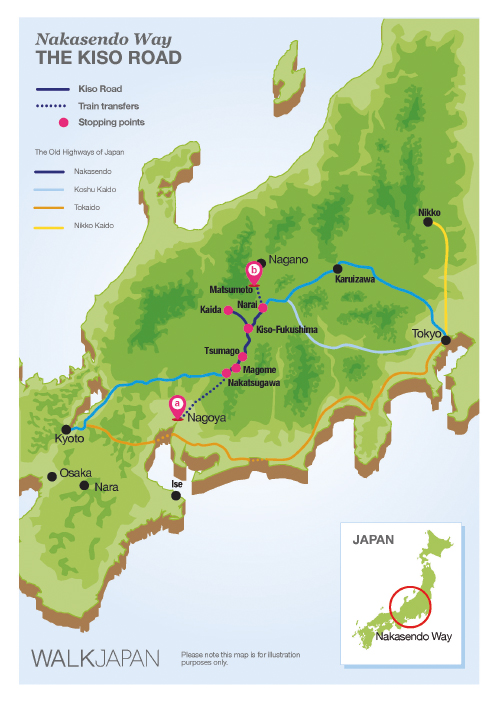
This original itinerary for the Nakasendo Way: The Kiso Road is ground-only, beginning in the early afternoon in Ena and ending in Matsumoto. We walk a moderate 34km (21.1 miles) over four days for a gentle introduction to the sights and experiences of travelling the old highway.
The Walk Japan Tour Leader meets the tour group at the exit of Ena Station in the early afternoon. After dropping off our luggage at the tour accommodation, we take a short stroll to the charming local museum dedicated to Hiroshige. He is one of Japan’s two most famous woodblock printmakers, the other one being Hokusai, and here we learn about his intricate craft while looking at original Edo-period prints.
A tour briefing is held later in the accommodation, a delightful family-run Japanese inn. Here we also enjoy our first evening meal, which is composed of delicious Japanese fare.
Accommodation: Traditional Japanese inn.
Meals: Dinner provided.
Total walking: N/A.
Total elevation gain: N/A.
After breakfast, we travel by train and taxi to the southern gateway of the Kiso Valley. From here we begin our walk along the Kiso Road section of the Nakasendo Way. Following this ancient road we pass paddy fields and quiet farmhouses on our way to the pleasant post town of Magome, which was the home of Shimazaki Toson. Toson wrote Before the Dawn, a novel set in the days of Japan’s change from a feudal country dominated by the samurai to a fledgling industrial nation. The book is considered to be Japan's first modern novel.
We continue on over the Magome Pass, through old forests and past pristine mountain streams to O-tsumago. This lovely hamlet is composed of a few traditional houses and inns set in a deep valley, aside a fast-flowing river.
Accommodation: Traditional Japanese inn.
Meals: Breakfast, lunch & dinner provided.
Total walking: 10km (6.2 miles).
Total elevation gain: 461m (1,510ft).
After an early breakfast we set off again along the Nakasendo for nearby Tsumago, a beautifully maintained, traditional post town. We spend a little time exploring here before continuing on our way for about six kilometres (3.75 miles) to Nagiso. Here an interesting footbridge provides us with a hint of two colourful people once associated with the area; a geisha, who appeared on the front cover of Harper's Bazaar magazine in 1900, and her tycoon partner, who built the first of the many hydro-electric power stations found in the Kiso Valley.
We catch a local train to Kiso-Fukushima for the beginning of our walk over a pass on the Hida Road, an old trail that connected with the Nakasendo Way that leads us through forests to the Kaida Plateau. The plateau is dominated by the sacred Mt. Ontake, an active volcano that provides an impressive backdrop to one of the most picturesque areas of Japan. We return to Kiso-Fukushima and our accommodation, a delightful inn with onsen thermal hot spring baths, for the night.
Please note that from December to mid-March our walking route may be changed according to snowfall.
Accommodation: Traditional Japanese inn with onsen hot spring baths.
Meals: Breakfast, lunch & dinner provided.
Total walking: 12km (7.5 miles).
Total elevation gain: 371m (1,215ft).
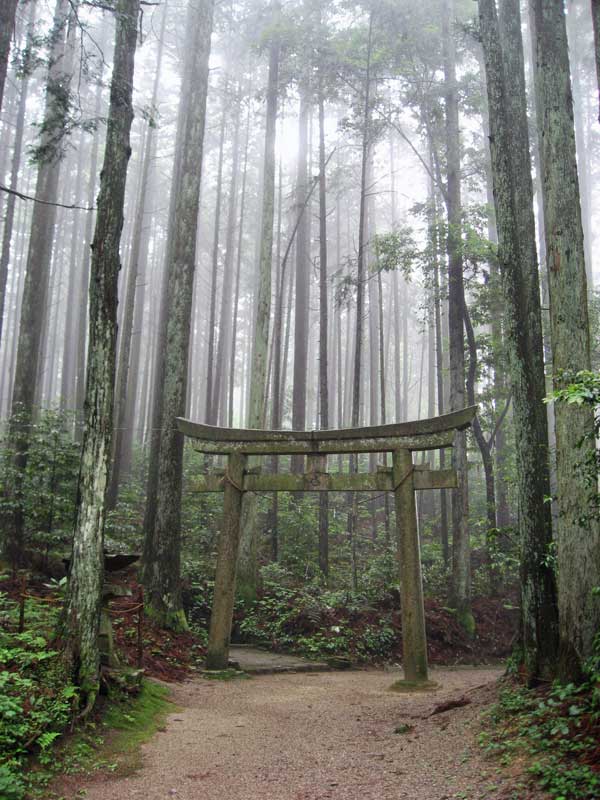
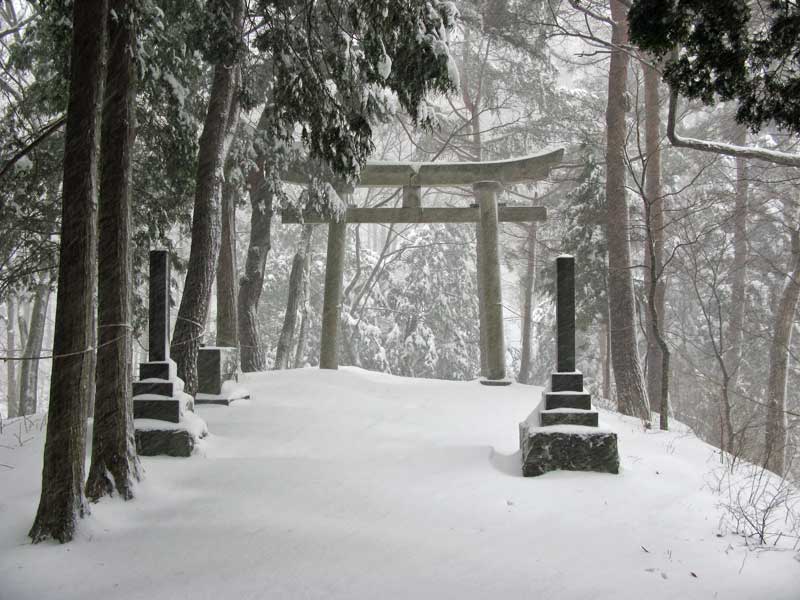
After breakfast, we transfer by local train to Yabuhara, from where we rejoin the Nakasendo Way to climb the Torii Pass. The pass is named after the Shinto torii gate, which marks one of four protective sites surrounding Mt. Ontake. At 1,197 meters, the Torii Pass is also the second highest point on the Nakasendo. Our descent from here takes us along narrow mountain paths until we emerge at the outskirts of Narai, a lovely post town. Here we have free time to explore, relax in cafes, and shop in this well-preserved and atmospheric town before transferring by train to Matsumoto. We walk to our hotel, a charming and comfortable establishment in the centre of the city, where we enjoy our last dinner together.
Accommodation: Western-style hotel.
Meals: Breakfast, lunch & dinner provided.
Total walking: 10km (6.2 miles).
Total elevation gain: 373m (1,220ft).
Breakfast is followed by a guided visit to Matsumoto Castle, the keep of which is an impressive structure, symbolic of the powerful samurai clan that once controlled this region. Now a rarity, it is one of only four keeps listed as National Treasures in Japan. The tour finishes after visiting the castle but the city has plenty more to explore if you wish to do so, including the Matsumoto City Museum of Art, which has an excellent permanent collection of work by Kusama Yayoi, probably Japan’s most famous living artist.
Express trains connect Matsumoto to Tokyo and Nagoya, where onward Shinkansen bullet trains speed to Kyoto. Your Walk Japan Tour Leader will be on hand to help you purchase your train tickets for your onward journey.
Accommodation: N/A.
Meals: Breakfast provided.
Total walking: 2km (1.2 miles).
Total elevation gain: N/A.
This itinerary is subject to change.
For more information about the history of the Nakasendo highway is available at our complementary website Nakasendo Way: A Journey to the Heart of Japan.
Day 1 Ena
The Walk Japan Tour Leader meets the tour group at the exit of Ena Station in the early afternoon. After dropping off our luggage at the tour accommodation, we take a short stroll to the charming local museum dedicated to Hiroshige. He is one of Japan’s two most famous woodblock printmakers, the other one being Hokusai, and here we learn about his intricate craft while looking at original Edo-period prints.
A tour briefing is held later in the accommodation, a delightful family-run Japanese inn. Here we also enjoy our first evening meal, which is composed of delicious Japanese fare.
Accommodation: Traditional Japanese inn.
Meals: Dinner provided.
Total walking: N/A.
Total elevation gain: N/A.
Day 2 Ena – O-tsumago
After breakfast, we travel by train and taxi to the southern gateway of the Kiso Valley. From here we begin our walk along the Kiso Road section of the Nakasendo Way. Following this ancient road we pass paddy fields and quiet farmhouses on our way to the pleasant post town of Magome, which was the home of Shimazaki Toson. Toson wrote Before the Dawn, a novel set in the days of Japan’s change from a feudal country dominated by the samurai to a fledgling industrial nation. The book is considered to be Japan's first modern novel.
We continue on over the Magome Pass, through old forests and past pristine mountain streams to O-tsumago. This lovely hamlet is composed of a few traditional houses and inns set in a deep valley, aside a fast-flowing river.
Accommodation: Traditional Japanese inn.
Meals: Breakfast, lunch & dinner provided.
Total walking: 10km (6.2 miles).
Total elevation gain: 461m (1,510ft).
Day 3 O-tsumago – Kaida Plateau – Kiso-Fukushima
After an early breakfast we set off again along the Nakasendo for nearby Tsumago, a beautifully maintained, traditional post town. We spend a little time exploring here before continuing on our way for about six kilometres (3.75 miles) to Nagiso. Here an interesting footbridge provides us with a hint of two colourful people once associated with the area; a geisha, who appeared on the front cover of Harper's Bazaar magazine in 1900, and her tycoon partner, who built the first of the many hydro-electric power stations found in the Kiso Valley.
We catch a local train to Kiso-Fukushima for the beginning of our walk over a pass on the Hida Road, an old trail that connected with the Nakasendo Way that leads us through forests to the Kaida Plateau. The plateau is dominated by the sacred Mt. Ontake, an active volcano that provides an impressive backdrop to one of the most picturesque areas of Japan. We return to Kiso-Fukushima and our accommodation, a delightful inn with onsen thermal hot spring baths, for the night.
Please note that from December to mid-March our walking route may be changed according to snowfall.
Accommodation: Traditional Japanese inn with onsen hot spring baths.
Meals: Breakfast, lunch & dinner provided.
Total walking: 12km (7.5 miles).
Total elevation gain: 371m (1,215ft).
Day 4 Kiso-Fukushima – Narai – Matsumoto
After breakfast, we transfer by local train to Yabuhara, from where we rejoin the Nakasendo Way to climb the Torii Pass. The pass is named after the Shinto torii gate, which marks one of four protective sites surrounding Mt. Ontake. At 1,197 meters, the Torii Pass is also the second highest point on the Nakasendo. Our descent from here takes us along narrow mountain paths until we emerge at the outskirts of Narai, a lovely post town. Here we have free time to explore, relax in cafes, and shop in this well-preserved and atmospheric town before transferring by train to Matsumoto. We walk to our hotel, a charming and comfortable establishment in the centre of the city, where we enjoy our last dinner together.
Accommodation: Western-style hotel.
Meals: Breakfast, lunch & dinner provided.
Total walking: 10km (6.2 miles).
Total elevation gain: 373m (1,220ft).
Day 5 Matsumoto
Breakfast is followed by a guided visit to Matsumoto Castle, the keep of which is an impressive structure, symbolic of the powerful samurai clan that once controlled this region. Now a rarity, it is one of only four keeps listed as National Treasures in Japan. The tour finishes after visiting the castle but the city has plenty more to explore if you wish to do so, including the Matsumoto City Museum of Art, which has an excellent permanent collection of work by Kusama Yayoi, probably Japan’s most famous living artist.
Express trains connect Matsumoto to Tokyo and Nagoya, where onward Shinkansen bullet trains speed to Kyoto. Your Walk Japan Tour Leader will be on hand to help you purchase your train tickets for your onward journey.
Accommodation: N/A.
Meals: Breakfast provided.
Total walking: 2km (1.2 miles).
Total elevation gain: N/A.
This itinerary is subject to change.
For more information about the history of the Nakasendo highway is available at our complementary website Nakasendo Way: A Journey to the Heart of Japan.
A more active version of the original itinerary for the Nakasendo Way: The Kiso Road is ground-only, beginning mid-morning in Nagoya and ending in Matsumoto. Compared with Itinerary I, Itinerary II includes an additional 14km (8.7 miles) for a 48km (29.8 miles) total over five days.
After meeting mid-morning in Nagoya we catch a train to Nakatsugawa, formerly an old post town and now a pleasant regional town. We have a leisurely lunch and tour briefing here before an afternoon walk in hilly countryside through the small post-town of Ochiai towards Magome, our destination for today. It’s a stiff climb, but the last section passes along one of the best-preserved parts of the old highway, and perhaps one of the most photogenic too.
Accommodation: Traditional Japanese inn.
Meals: Lunch & dinner provided.
Total walking: 8km (5 miles).
Total elevation gain: 320m (1,148ft).
Today we begin by exploring Magome post town, birth-place of Shimazaki Toson, Japan’s first modern novelist and author of Before the Dawn. Perched on a hill and boasting grand views of the surrounding countryside, Magome retains a charming character despite increasing numbers of visitors. Leaving the town, we follow the way up the appropriately named Magome Pass and meander slowly downhill through the woods, passing a pair of historic waterfalls before we reach the small hamlet of O-tsumago and, about 20 minutes further on, the village of Tsumago itself.
Tsumago is the best preserved and arguably the most attractive of all the post towns. The inhabitants take great pride in their town and have banished telephone poles, electric lines and vending machines from the main street. We follow the old highway on, passing idyllic hamlets and fields, until it descends to the town of Nagiso. From here, a local train takes us to Kiso-Fukushima and our accommodation for the evening.
Accommodation: Traditional Japanese inn with onsen hot spring baths.
Meals: Breakfast, lunch & dinner provided.
Total walking: 13km (8.1 miles).
Total elevation gain: 520m (1,706ft).
Transfer part-way to the Kaida Plateau where our morning’s walk follows an ancient path over the Jizo Pass and then down onto the Kaida Plateau. The plateau is dominated by Mt. Ontake, an active volcano that is considered sacred by one esoteric Buddhist sect.
After lunch, our afternoon’s excursion takes us over another high pass that, on a clear day, provides views high over the plateau to Mt. Ontake. We descend from here to our accommodation, a delightful Japanese inn with onsen baths.
Accommodation: Traditional Japanese inn with onsen hot spring baths.
Meals: Breakfast, lunch & dinner provided.
Total walking: 14km (8.7 miles).
Total elevation gain: 673m (2,200ft).
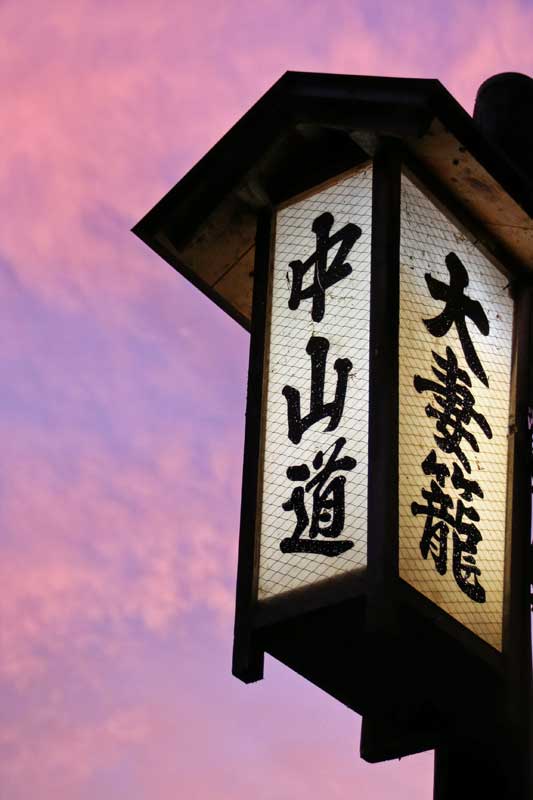
Returning from the Kaida Plateau to Kiso Fukushima, we stroll through the town and visit the reconstructed barrier station that stood here during the Edo period. A short rail transfer then takes us to Yabuhara, where we begin our climb of the Torii Toge (Torii Pass). The pass is named after the Shinto torii gate that marks one of four protective sites surrounding the sacred Mt. Ontake. At 1,197 meters, the Torii Pass is also the second highest point on the Nakasendo. The descent into Narai post town takes us along narrow mountain paths until we emerge at the outskirts of this famous post-town next to a joyato stone night lantern.
We have some time to explore Narai before transferring by train to Matsumoto, set in Japan’s Central Alps on a plateau famous in Japan for its apples, grapes and wine. Our final night is spent here at a modern hotel, dining together at a restaurant in the city.
Accommodation: Western-style hotel.
Meals: Breakfast & dinner provided.
Total walking: 11km (6.8 miles).
Total elevation gain: 373m (1,220ft).
Breakfast is followed by a guided visit to Matsumoto Castle, the keep of which is an impressive structure, symbolic of the powerful samurai clan that once controlled this region. Now a rarity, it is one of only four keeps listed as National Treasures in Japan. The tour finishes after visiting the castle but the city has plenty more to explore if you wish to do so, including the Matsumoto City Museum of Art, which has an excellent permanent collection of work by Kusama Yayoi, probably Japan’s most famous living artist.
Express trains connect Matsumoto to Tokyo and Nagoya, where onward shinkansen bullet trains speed to Kyoto. Your Walk Japan Tour Leader will be on hand to help you purchase your train tickets for your onward journey.
Accommodation: N/A.
Meals: Breakfast provided.
Total walking: 2km (1.2 miles).
Total elevation gain: N/A.
This itinerary is subject to change...
For more information about the history of the Nakasendo highway is available at our complementary website Nakasendo Way: A Journey to the Heart of Japan.
Day 1 Nagoya – Nakatsugawa – Magome
After meeting mid-morning in Nagoya we catch a train to Nakatsugawa, formerly an old post town and now a pleasant regional town. We have a leisurely lunch and tour briefing here before an afternoon walk in hilly countryside through the small post-town of Ochiai towards Magome, our destination for today. It’s a stiff climb, but the last section passes along one of the best-preserved parts of the old highway, and perhaps one of the most photogenic too.
Accommodation: Traditional Japanese inn.
Meals: Lunch & dinner provided.
Total walking: 8km (5 miles).
Total elevation gain: 320m (1,148ft).
Day 2 Magome – Tsumago – Nagiso – Kiso-Fukushima
Today we begin by exploring Magome post town, birth-place of Shimazaki Toson, Japan’s first modern novelist and author of Before the Dawn. Perched on a hill and boasting grand views of the surrounding countryside, Magome retains a charming character despite increasing numbers of visitors. Leaving the town, we follow the way up the appropriately named Magome Pass and meander slowly downhill through the woods, passing a pair of historic waterfalls before we reach the small hamlet of O-tsumago and, about 20 minutes further on, the village of Tsumago itself.
Tsumago is the best preserved and arguably the most attractive of all the post towns. The inhabitants take great pride in their town and have banished telephone poles, electric lines and vending machines from the main street. We follow the old highway on, passing idyllic hamlets and fields, until it descends to the town of Nagiso. From here, a local train takes us to Kiso-Fukushima and our accommodation for the evening.
Accommodation: Traditional Japanese inn with onsen hot spring baths.
Meals: Breakfast, lunch & dinner provided.
Total walking: 13km (8.1 miles).
Total elevation gain: 520m (1,706ft).
Day 3 Kiso-Fukushima – Kaida-Kogen
Transfer part-way to the Kaida Plateau where our morning’s walk follows an ancient path over the Jizo Pass and then down onto the Kaida Plateau. The plateau is dominated by Mt. Ontake, an active volcano that is considered sacred by one esoteric Buddhist sect.
After lunch, our afternoon’s excursion takes us over another high pass that, on a clear day, provides views high over the plateau to Mt. Ontake. We descend from here to our accommodation, a delightful Japanese inn with onsen baths.
Accommodation: Traditional Japanese inn with onsen hot spring baths.
Meals: Breakfast, lunch & dinner provided.
Total walking: 14km (8.7 miles).
Total elevation gain: 673m (2,200ft).
Day 4 Kaida-Kogen – Narai – Matsumoto
Returning from the Kaida Plateau to Kiso Fukushima, we stroll through the town and visit the reconstructed barrier station that stood here during the Edo period. A short rail transfer then takes us to Yabuhara, where we begin our climb of the Torii Toge (Torii Pass). The pass is named after the Shinto torii gate that marks one of four protective sites surrounding the sacred Mt. Ontake. At 1,197 meters, the Torii Pass is also the second highest point on the Nakasendo. The descent into Narai post town takes us along narrow mountain paths until we emerge at the outskirts of this famous post-town next to a joyato stone night lantern.
We have some time to explore Narai before transferring by train to Matsumoto, set in Japan’s Central Alps on a plateau famous in Japan for its apples, grapes and wine. Our final night is spent here at a modern hotel, dining together at a restaurant in the city.
Accommodation: Western-style hotel.
Meals: Breakfast & dinner provided.
Total walking: 11km (6.8 miles).
Total elevation gain: 373m (1,220ft).
Day 5 Matsumoto
Breakfast is followed by a guided visit to Matsumoto Castle, the keep of which is an impressive structure, symbolic of the powerful samurai clan that once controlled this region. Now a rarity, it is one of only four keeps listed as National Treasures in Japan. The tour finishes after visiting the castle but the city has plenty more to explore if you wish to do so, including the Matsumoto City Museum of Art, which has an excellent permanent collection of work by Kusama Yayoi, probably Japan’s most famous living artist.
Express trains connect Matsumoto to Tokyo and Nagoya, where onward shinkansen bullet trains speed to Kyoto. Your Walk Japan Tour Leader will be on hand to help you purchase your train tickets for your onward journey.
Accommodation: N/A.
Meals: Breakfast provided.
Total walking: 2km (1.2 miles).
Total elevation gain: N/A.
This itinerary is subject to change...
For more information about the history of the Nakasendo highway is available at our complementary website Nakasendo Way: A Journey to the Heart of Japan.
A summer version of the original itinerary for the Nakasendo Way: The Kiso Road is ground-only, beginning mid-morning in Nagoya and ending in Kiso-Fukushima. The walking is relaxed to take into account the hot humid summer weather.
Your Walk Japan Tour Leader meets the tour group at Nagoya Station in the morning. Together we ride the train to Nakatsugawa from where a private-hire vehicle takes us to the start of our walk in the middle of beautiful countryside along the Nakasendo Way. We stroll along this old historic highway, now a quiet byway, to Magome, a post town and the birth-place of Shimazaki Toson, Japan's first modern novelist. Perched on a hill and boasting grand views of the surrounding countryside, Magome retains a charming period character.
After cresting the Magome Pass our path takes us down through verdant woodlands and aside tumbling streams. We relax beside two cooling waterfalls before reaching Tsumago, which is probably the best preserved and arguably the most attractive of all Japan’s post towns. We make the most of Tsumago’s attractions including its historic townscape and cafes. Our private vehicle whisks further up the Kiso Valley to our Japanese inn in Kiso-Fukushima where we stay for two nights.
Accommodation: Japanese inn with onsen hot spring baths.
Meals: Lunch & dinner provided.
Total walking: 10km (6.2 miles)
Total elevation gain: 461m (1510ft)
After breakfast in our inn, a short rail transfer brings us to Yabuhara, where we begin our climb of the Torii Pass. The pass is named after the Shinto torii gate that marks one of four protective sites surrounding the sacred Mt. Ontake, Japan’s second highest volcano. At 1,197 meters, the Torii Pass is also the second highest point on the Nakasendo.
The descent takes us along a narrow mountain path until we emerge on the outskirts of Narai, yet another picturesque post-town. We enjoy lunch here before walking on to Hirasawa, a town that is renowned for its lacquerware, before returning to Kiso-Fukushima and our accommodation.
Accommodation: Traditional Japanese inn with onsen hot spring baths.
Meals: Breakfast, lunch & dinner provided.
Total walking: 9km (5.6miles).
Total elevation gain: 343m (1,125ft).
Our day starts with a visit to the town's reconstructed barrier station that straddles the old highway. Here, all travellers were scrutinised by samurai warriors on the look out for unsanctioned passage and illicit goods, such as weapons.
We leave the Kiso Valley for the beautiful Kaida Kogen, a plateau overlooked by Mt. Ontake, which is a three kilometre-long range of peaks. Karasawa-no-taki, a 100 metre high waterfall, marks the start of today's walk along the route of the old Hida Highway. Our path climbs up through forests to the Jizo Pass before descending to the Kaida Plateau.
Mt. Ontake, which is an active volcano that is revered by an esoteric Buddhist sect, provides an impressive backdrop to the area. Rightly, Kaida Kogen is considered one of the most beautiful places in Japan.
We enjoy lunch of soba buckwheat noodles, a delicacy of Kaida, before continuing on our path, which winds gently over rolling countryside through hamlets and forests to stables where Kiso-uma ponies are bred. These stocky and strong, but gentle creatures were once used throughout central Japan as pack animals. A short local bus ride brings us to our accommodation, a delightful modern inn with onsen hot springs, where we stay for the next two nights.
Accommodation: Japanese inn with onsen hot spring baths.
Meals: Breakfast, lunch & dinner provided.
Total walking: 5.8km (3.6miles).
Total elevation gain: 264m (866ft).
Our exploration of Kaida Kogen continues with a morning walk over the Nishino Pass. We climb through delightful woodlands to a low peak where a fortification once stood. The final leg of the climb is steep but we are rewarded with wonderful views over the plateau to Mt. Ontake.
In the afternoon, we walk over the Sekiya Pass, further along the Hida Highway before returning for a well-earned rest and dinner at our accommodation.
Accommodation: Traditional Japanese inn with onsen hot spring baths.
Meals: Breakfast & dinner provided.
Total walking: 7km (4.3 miles).
Total elevation gain: 468m (1,535ft).
Following breakfast, we transfer back to Kiso-Fukushima Station, where the tour ends mid-morning. Onward transport to Nagoya, Tokyo, Kyoto and many other regions in Japan is easily made by train from here. Your Tour Leader is on hand to advise on your travels and help you purchase tickets.
Accommodation: N/A.
Meals: Breakfast provided.
Total walking: N/A.
Total elevation gain: N/A.
This itinerary is subject to change.
For more information about the history of the Nakasendo highway is available at our complementary website Nakasendo Way: A Journey to the Heart of Japan.
Day 1 Nagoya – Nakatsugawa – Magome – Tsumago – Kiso-Fukushima
Your Walk Japan Tour Leader meets the tour group at Nagoya Station in the morning. Together we ride the train to Nakatsugawa from where a private-hire vehicle takes us to the start of our walk in the middle of beautiful countryside along the Nakasendo Way. We stroll along this old historic highway, now a quiet byway, to Magome, a post town and the birth-place of Shimazaki Toson, Japan's first modern novelist. Perched on a hill and boasting grand views of the surrounding countryside, Magome retains a charming period character.
After cresting the Magome Pass our path takes us down through verdant woodlands and aside tumbling streams. We relax beside two cooling waterfalls before reaching Tsumago, which is probably the best preserved and arguably the most attractive of all Japan’s post towns. We make the most of Tsumago’s attractions including its historic townscape and cafes. Our private vehicle whisks further up the Kiso Valley to our Japanese inn in Kiso-Fukushima where we stay for two nights.
Accommodation: Japanese inn with onsen hot spring baths.
Meals: Lunch & dinner provided.
Total walking: 10km (6.2 miles)
Total elevation gain: 461m (1510ft)
Day 2 Kiso-Fukushima – Narai – Kiso-Fukushima
After breakfast in our inn, a short rail transfer brings us to Yabuhara, where we begin our climb of the Torii Pass. The pass is named after the Shinto torii gate that marks one of four protective sites surrounding the sacred Mt. Ontake, Japan’s second highest volcano. At 1,197 meters, the Torii Pass is also the second highest point on the Nakasendo.
The descent takes us along a narrow mountain path until we emerge on the outskirts of Narai, yet another picturesque post-town. We enjoy lunch here before walking on to Hirasawa, a town that is renowned for its lacquerware, before returning to Kiso-Fukushima and our accommodation.
Accommodation: Traditional Japanese inn with onsen hot spring baths.
Meals: Breakfast, lunch & dinner provided.
Total walking: 9km (5.6miles).
Total elevation gain: 343m (1,125ft).
Day 3 Kiso-Fukushima – Kaida Kogen
Our day starts with a visit to the town's reconstructed barrier station that straddles the old highway. Here, all travellers were scrutinised by samurai warriors on the look out for unsanctioned passage and illicit goods, such as weapons.
We leave the Kiso Valley for the beautiful Kaida Kogen, a plateau overlooked by Mt. Ontake, which is a three kilometre-long range of peaks. Karasawa-no-taki, a 100 metre high waterfall, marks the start of today's walk along the route of the old Hida Highway. Our path climbs up through forests to the Jizo Pass before descending to the Kaida Plateau.
Mt. Ontake, which is an active volcano that is revered by an esoteric Buddhist sect, provides an impressive backdrop to the area. Rightly, Kaida Kogen is considered one of the most beautiful places in Japan.
We enjoy lunch of soba buckwheat noodles, a delicacy of Kaida, before continuing on our path, which winds gently over rolling countryside through hamlets and forests to stables where Kiso-uma ponies are bred. These stocky and strong, but gentle creatures were once used throughout central Japan as pack animals. A short local bus ride brings us to our accommodation, a delightful modern inn with onsen hot springs, where we stay for the next two nights.
Accommodation: Japanese inn with onsen hot spring baths.
Meals: Breakfast, lunch & dinner provided.
Total walking: 5.8km (3.6miles).
Total elevation gain: 264m (866ft).
Day 4 Kaida Kogen
Our exploration of Kaida Kogen continues with a morning walk over the Nishino Pass. We climb through delightful woodlands to a low peak where a fortification once stood. The final leg of the climb is steep but we are rewarded with wonderful views over the plateau to Mt. Ontake.
In the afternoon, we walk over the Sekiya Pass, further along the Hida Highway before returning for a well-earned rest and dinner at our accommodation.
Accommodation: Traditional Japanese inn with onsen hot spring baths.
Meals: Breakfast & dinner provided.
Total walking: 7km (4.3 miles).
Total elevation gain: 468m (1,535ft).
Day 5 Kiso-Fukushima
Following breakfast, we transfer back to Kiso-Fukushima Station, where the tour ends mid-morning. Onward transport to Nagoya, Tokyo, Kyoto and many other regions in Japan is easily made by train from here. Your Tour Leader is on hand to advise on your travels and help you purchase tickets.
Accommodation: N/A.
Meals: Breakfast provided.
Total walking: N/A.
Total elevation gain: N/A.
This itinerary is subject to change.
For more information about the history of the Nakasendo highway is available at our complementary website Nakasendo Way: A Journey to the Heart of Japan.
The itinerary for the Nakasendo Way: The Kiso Road tour is ground-only, beginning in Ena or Nagoya and ending in Matsumoto or Kiso-Fukushima.
The airport closest to the tour’s start is Nagoya’s Central Japan Airport. The journey is also easily made from Osaka’s Kansai International Airport and both Tokyo’s Narita and Haneda International Airports.
-----
FROM NAGOYA’S CENTRAL JAPAN INTERNATIONAL AIRPORT (NGO)
From Nagoya’s Central Japan International Airport, Meitetsu Line trains depart to Nagoya. The journey takes approximately 40 minutes.
-----
FROM OSAKA’S KANSAI INTERNATIONAL AIRPORT (KIX)
From Osaka’s Kansai International Airport, Haruka Express trains depart to Shin-Osaka Station, where shinkansen bullet trains then depart for Nagoya. The journey takes approximately 2 hours.
-----
FROM TOKYO’S HANEDA AIRPORT (HND)
From Tokyo’s Haneda International Airport, Keikyu Line trains depart to Shinagawa Station, where shinkansen bullet trains then depart for Nagoya. The journey takes approximately 2 hours.
-----
FROM TOKYO’S NARITA AIRPORT (NRT)
From Tokyo’s Narita International Airport, Narita Express (N'EX) trains depart to Tokyo Station, where shinkansen bullet trains then depart for Nagoya. The journey takes approximately 3 hours.
-----
FROM NAGOYA STATION TO ENA
Ena station can be reached by JR Shinano Express or Chuo Local line trains from Nagoya Station.
The pre-tour pack includes detailed instructions, including a map, for travel to the accommodation at the start of the tour.
Tour participants are advised not to book themselves out on an early morning flight at the end of the tour, as the journey from Matsumoto to the nearest international airport takes approximately 3.5 hours and 4 hours or more from Kiso Fukushima.
The airport closest to the tour’s start is Nagoya’s Central Japan Airport. The journey is also easily made from Osaka’s Kansai International Airport and both Tokyo’s Narita and Haneda International Airports.
-----
FROM NAGOYA’S CENTRAL JAPAN INTERNATIONAL AIRPORT (NGO)
From Nagoya’s Central Japan International Airport, Meitetsu Line trains depart to Nagoya. The journey takes approximately 40 minutes.
-----
FROM OSAKA’S KANSAI INTERNATIONAL AIRPORT (KIX)
From Osaka’s Kansai International Airport, Haruka Express trains depart to Shin-Osaka Station, where shinkansen bullet trains then depart for Nagoya. The journey takes approximately 2 hours.
-----
FROM TOKYO’S HANEDA AIRPORT (HND)
From Tokyo’s Haneda International Airport, Keikyu Line trains depart to Shinagawa Station, where shinkansen bullet trains then depart for Nagoya. The journey takes approximately 2 hours.
-----
FROM TOKYO’S NARITA AIRPORT (NRT)
From Tokyo’s Narita International Airport, Narita Express (N'EX) trains depart to Tokyo Station, where shinkansen bullet trains then depart for Nagoya. The journey takes approximately 3 hours.
-----
FROM NAGOYA STATION TO ENA
Ena station can be reached by JR Shinano Express or Chuo Local line trains from Nagoya Station.
The pre-tour pack includes detailed instructions, including a map, for travel to the accommodation at the start of the tour.
Tour participants are advised not to book themselves out on an early morning flight at the end of the tour, as the journey from Matsumoto to the nearest international airport takes approximately 3.5 hours and 4 hours or more from Kiso Fukushima.